Alan Turing Profile & Biography

Alan Turing

Born: June 23, 1912
Died: June 7, 1954
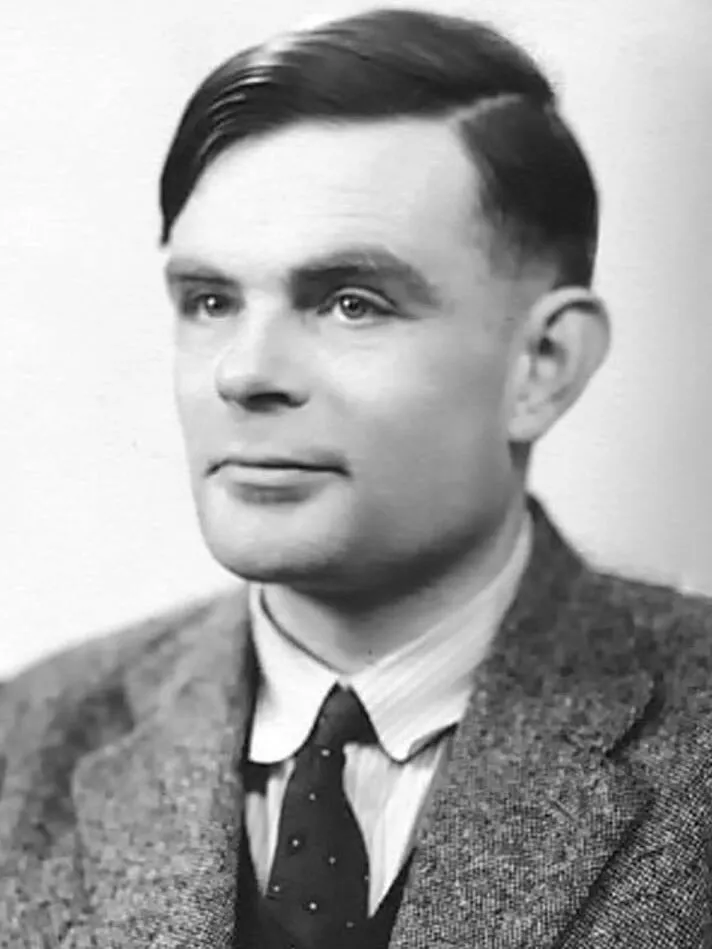
Alan Mathison Turing, a British mathematician and cryptanalyst, played a pivotal role in cracking Nazi Germany's Enigma code during World War II. Born on June 2

Who is Alan Turing?

Alan Mathison Turing (June 23, 1912 – June 7, 1954) was a British mathematician and cryptanalyst who is widely regarded as the father of computer science and artificial intelligence. His work during World War II in cracking Nazi Germany’s Enigma code is considered to have significantly shortened the war.

Turing was born in Paddington, London, to Julius Mathison Turing and Ethel Sara Stoney. From a young age, Turing showed an aptitude for mathematics and science. He attended Sherborne School where he developed his interest in these subjects further despite the school’s emphasis on classical education over modern sciences.

After Sherborne, Turing enrolled at King’s College, Cambridge, where he studied mathematics and was elected to a fellowship based on his dissertation under the supervision of noted mathematician G.H. Hardy. In 1936, Turing published his groundbreaking paper ‘On Computable Numbers with an Application to the Entscheidungsproblem,’ in which he introduced the concept of a universal machine capable of computing anything that is computable—a theoretical model later known as the Turing Machine.

In 1938, Turing moved to Princeton University for further studies and returned to Britain at the outbreak of World War II. He joined the Government Code and Cypher School (GC&CS) where he played a crucial role in breaking Enigma messages, leading to critical victories against German U-boats. His work laid foundational principles for modern computing.

Turing’s personal life was marked by his complex relationships and struggles with societal norms of his time. He had an intense but short-lived romantic relationship with Christopher Morcom, which influenced much of Turing’s later work in cryptanalysis and the theory of computation.

Despite his groundbreaking contributions to science and national security during World War II, Turing faced severe personal challenges after the war due to his homosexuality. In 1952, he was convicted under the UK’s gross indecency laws for a consensual relationship with another man. As part of his punishment, he underwent chemical castration. Tragically, on June 7, 1954, Turing died from cyanide poisoning at age 41, an event that many believe to be suicide.

Today, Alan Mathison Turing is remembered not only for his wartime achievements but also for pioneering the field of computer science and artificial intelligence. His legacy continues to inspire scientists and mathematicians around the world. In recognition of his enduring impact on technology and society, the United Kingdom officially pardoned him in 2013 through the ‘Alan Turing Law.’

Common Questions

What were Alan Mathison Turing's major contributions during World War II?
During WWII, Turing was instrumental in cracking the Enigma code used by Nazi Germany. His work significantly contributed to Allied intelligence efforts and is believed to have shortened the war.
When did Alan Turing publish his seminal paper on the Turing Machine?
In 1936, Turing published 'On Computable Numbers with an Application to the Entscheidungsproblem,' in which he introduced the concept of a universal machine now known as the Turing Machine.
How did Alan Turing's personal life influence his professional work?
Turing's relationship with Christopher Morcom and his interest in cryptanalysis were interconnected. The loss of Morcom led him to delve deeper into these subjects, influencing his later work.
What was the legal consequence for Alan Turing after World War II?
In 1952, Turing was convicted under the UK's gross indecency laws for a consensual relationship with another man. He was subjected to chemical castration as part of his punishment.
Why is Alan Mathison Turing considered the father of computer science and AI?
Turing laid foundational principles in computer science through concepts like the Turing Machine and contributed significantly to artificial intelligence with the Turing Test, a measure for machine intelligence.

People Also Viewed