-
01
Cervantes lived at the same time as William Shakespeare, though Spain and England were bitter enemies during his life.
-
02
His exact birth date is unknown, but it is generally assumed to be September 30, 1547.
-
03
A donkey named Don Quixote appeared on Mister Rogers’ Neighborhood, based on Cervantes’ creation.
-
04
Cervantes was descended from the very knights-errant whose adventures he spoofs in Don Quixote.
-
05
The character Cardenio from Don Quixote inspired a lost play by William Shakespeare titled The History of Cardenio.
-
06
A revision of Don Quixote shortly after its first publication added a scene where Sancho Panza’s donkey is stolen, forcing rewrites of subsequent chapters.
-
07
Cervantes lost the use of his left hand at the Battle of Lepanto in 1571.
-
08
He lived in poverty on a farm at one point.
-
09
The expression I’ve got bigger fish to fry first appeared in Don Quixote.
-
10
The full title of Don Quixote is El ingenioso hidalgo Don Quijote de la Mancha.
-
11
His only child, Isabel de Saavedra, was born in 1584 to his mistress, actress Ana Franca de Rojas; his marriage was childless.
-
12
His Eight Interludes were written in colloquial prose and were initially considered unworthy but later highly regarded by critics.
-
13
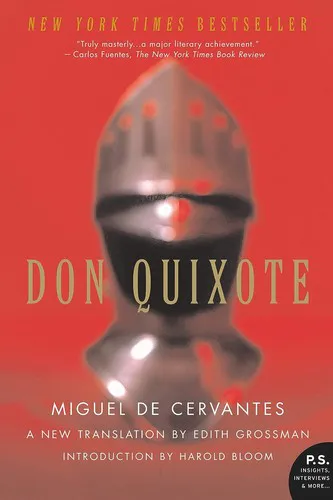
English translations of Don Quixote have been published frequently: one in the 1600s, three in the 1700s, several in the 1800s, and multiple since 1993.
-
14
At least eight of his plays have survived, contrary to the belief that only two remain.
-
15
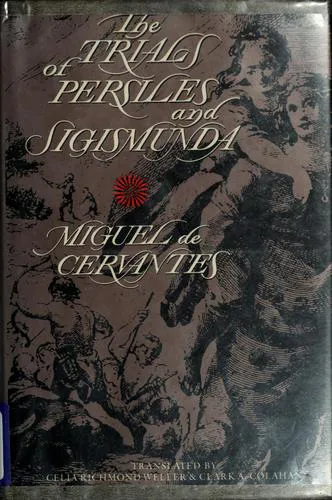
His last work, The Travails of Persiles and Segismunda, was published posthumously in 1617, but it has rarely been translated into English.
-
16
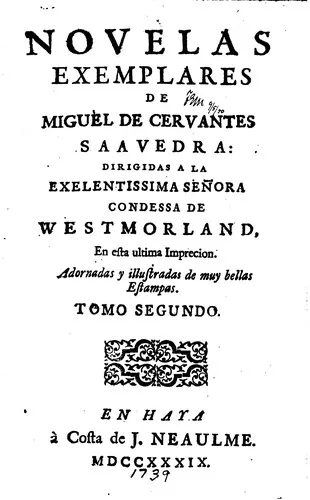
Some of his Exemplary Stories have been filmed, including La Gitanilla which was adapted three times.
![Cover for Prentice Hall Literature [Grade Ten]](https://cdn.famousy.org/book-covers/OL7948415W-prentice-hall-literature-grade-ten-book-1280w.webp)