-
01
Zelda Fitzgerald died in a fire at the mental hospital where she was a voluntary patient, eight years after Scott’s death; she spent less than nine months in hospitals during the decade after his death.
-
02
Fitzgerald popularized the phrase the Jazz Age to describe the riotous 1920s; the Roaring Twenties entered popular use only in the 1940s.
-
03
He overcame alcoholism and was sober for over a year before his death, which occurred from a heart attack at Sheilah Graham’s apartment.
-
04
He was a mentor and close friend of Ernest Hemingway, but they grew apart as Hemingway’s fame rose and Fitzgerald’s declined; Hemingway disapproved of Fitzgerald writing for commercial magazines and Hollywood.
-
05
He struggled with writing screenplays because of the image-based medium, which contrasted with his language-based novel and short story skills.
-
06
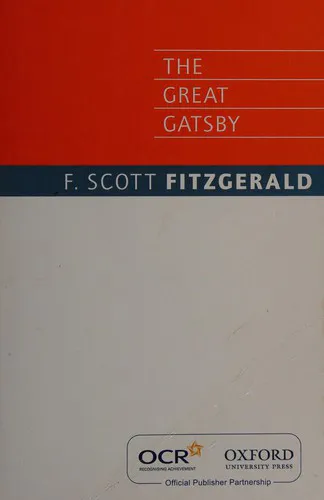
He moved to Paris in 1924, writing The Great Gatsby there; the Fitzgeralds returned to the U.S. in 1930.
-
07
His unfinished novel The Last Tycoon was published posthumously.
-
08
He was portrayed by Tom Hiddleston in Woody Allen’s Midnight in Paris 2011.
-
09
Frances Scott Fitzgerald Smith was his only child with Zelda.
-
10
He was named after Francis Scott Key, a distant relative.
-
11
He was of Irish-American descent.
-
12
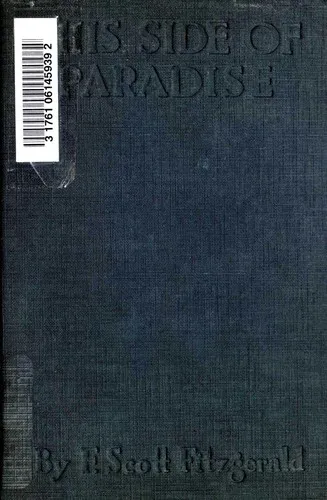
His first novel, This Side of Paradise, was written shortly after attending Princeton.
-
13
In the late 1930s, he rented a house from Edward Everett Horton on his Encino estate for $200 a month; the area is now part of Highway 101.
-
14
He was a fourth cousin once removed of Wallis Warfield Simpson, Duchess of Windsor, through the Warfield family.
-
15
He cited Flaming Youth 1923 as the only film capturing the 1920s sexual revolution, lamenting that its success led to less daring imitations.
-
16
He is buried at St. Mary’s Catholic Cemetery in Rockville, Maryland.
-
17
He left Princeton during his junior year to join the U.S. Army after a rejection by Ginevra King.
-
18
The Gatsby Style was honored on a 32¢ U.S. postage stamp in the Celebrate the Century series released May 28, 1998.
-
19
He was portrayed by Malcolm Gets in Mrs. Parker and the Vicious Circle 1994.
-
20
He was nominated in the 2007 inaugural New Jersey Hall of Fame and elected in 2008.
-
21
A 23¢ U.S. postage stamp in the Literary Arts series debuted on September 27, 1996, in St. Paul, Minnesota.
-
22
Hofstra University established the F. Scott Fitzgerald Society in 1990, which became an affiliate of the American Literature Association; during the COVID-19 pandemic, the society organized an online reading of This Side of Paradise for its centenary.
-
23
He was portrayed by David Hoflin in Z: The Beginning of Everything 2015.