Germany Who is Rudolf Hess?
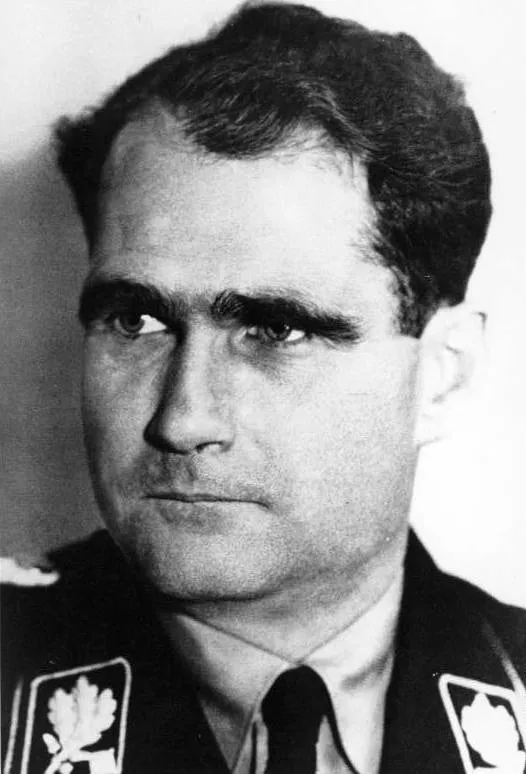
Rudolf Walter Richard Heß, better known as Rudolf Hess, is one of history’s most enigmatic figures. Born on April 26, 1894, in Alexandria, Egypt, to Fritz and Clara Münch (née Heß), he was raised in Germany where his father held a diplomatic post.
His formative years were marked by a complex family life; Hess’s father was strict and demanding while his mother supported her son’s education at the Ludwig-Maximilians-Universität München. Here, Hess pursued studies in philosophy and economics before World War I interrupted his academic pursuits.
During the war, Hess served as an infantryman but returned to finish his degree after 1918. It was during this period that he encountered Adolf Hitler and joined the fledgling Nazi Party. He quickly rose through the ranks due to his organizational skills and loyalty to Hitler, eventually becoming Deputy Führer in 1934.
Hess’s political career peaked with his unauthorized flight to Scotland in May 1941 as a peace initiative. This act led to his immediate arrest by British authorities and eventual imprisonment at Spandau Prison following the war. He was among the few major Nazi figures who avoided execution, serving nearly four decades of solitary confinement.
On a personal level, Rudolf Hess married Ilse Prohl in 1937, with whom he had one child, Wolf Rüdiger Hess. Despite his high-profile status within the Nazi party, little is known about his private life beyond these basic details.
Hess’s legacy remains controversial and complex. His death on August 17, 1987, in Spandau Prison by suicide left many questions unanswered. Though often portrayed as a tragic figure, his role in the Nazi regime cannot be overstated; he was instrumental in consolidating Hitler’s power but ended up marginalized and imprisoned for nearly half of his life.