 France
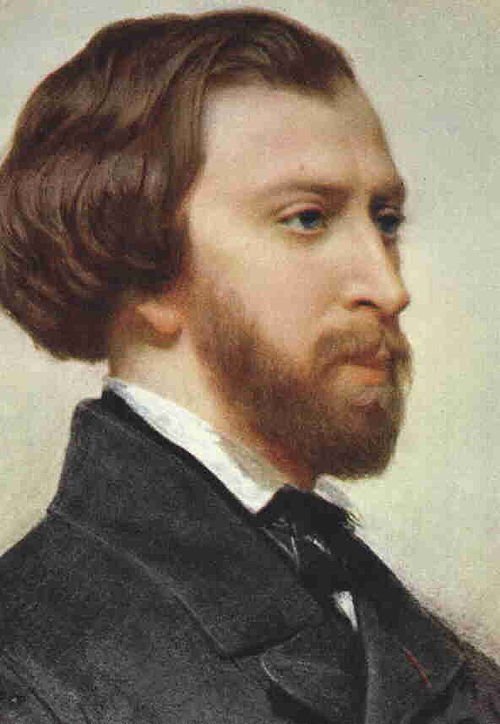
 Who is Alfred De Musset?
Louis-Charles-Alfred De Musset, better known as Alfred de Musset, was one of the most significant French dramatists and poets of the Romantic period. Born on December 11, 1810, in Paris to a wealthy bourgeois family, his life spanned just four decades but left an enduring mark on literature.
De Musset’s father, Victor-Donatien De Musset-Pathay, was a prosperous businessman who instilled in young Alfred a love for the arts and literature. Despite his privileged upbringing, De Musset felt alienated from his family due to their disapproval of his literary pursuits. His formative years were marked by an intense passion for poetry and theatre, which he began writing at a very young age.
In 1830, at the age of nineteen, De Musset published his first significant work, La Confession d’un enfant du siècle, a semi-autobiographical novel that established him as an important voice in Romantic literature. Over the following years, he achieved prominence with plays such as Napoléon ou l’esclave de la liberté (1833) and Lorenzaccio (1834), which showcased his talent for dramatic dialogue and deep psychological insight.
De Musset’s personal life was as tumultuous as the characters he created. His most famous relationship was with George Sand, a fellow writer who became one of his closest confidants and lovers during a period when both were at the height of their literary careers. However, this relationship ended in acrimony in 1837 after a series of romantic entanglements that strained their partnership.
Throughout his life, De Musset was known for his passionate nature and often tumultuous relationships with women including Caroline Jaubert, Rachel Félix, Louise Rosalie Allan-Despreaux, Louise Colet, and Aimée D’alton. Despite his prolific output, his health began to deteriorate in the late 1840s due to syphilis, a disease he likely contracted early on in life.
Alfred de Musset died at the age of forty-six on May 2, 1857, in Passy. His legacy as one of the most influential Romantic poets and playwrights endures through his rich body of work that continues to be studied and admired for its emotional depth and lyrical beauty.
Common Questions
What was Alfred de Musset's family background?
De Musset came from a wealthy bourgeois family in Paris. His father, Victor-Donatien De Musset-Pathay, supported his literary interests but also disapproved of them.
When did Alfred de Musset publish 'La Confession d'un enfant du siècle'?
De Musset published this seminal work when he was nineteen in 1830. The novel helped establish him as a leading figure in French Romantic literature.
What were some of De Musset's notable plays?
Some of his most famous works include Napoléon ou l'esclave de la liberté (1833) and Lorenzaccio (1834), both showcasing his dramatic skills.
Who were some of the women in De Musset's life?
Among them was George Sand, with whom he had a famously passionate yet tumultuous relationship. Others included Caroline Jaubert and Louise Colet.
What health issues did Alfred de Musset face later in his life?
De Musset struggled with syphilis, which likely affected him from an early age. This condition contributed to the decline of his health in the 1840s.
How is De Musset remembered today?
He is celebrated for his contributions to Romantic literature and drama. His work continues to be studied for its emotional depth and lyrical qualities.