 Switzerland
 Who is Jorge Luis Borges?
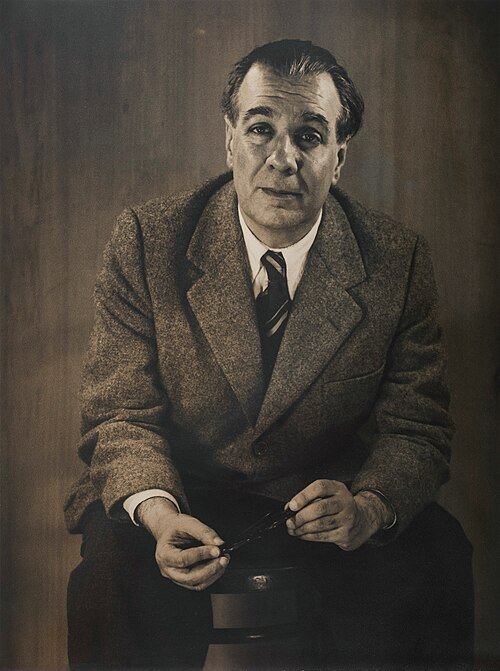
Jorge Francisco Isidoro Luis Borges Acevedo (August 24, 1899 – June 14, 1986), commonly known as Jorge Luis Borges, was an Argentine writer whose work deeply influenced literary philosophy around the globe. Born in Buenos Aires to a cultured family of Spanish and English descent, Borges experienced a childhood filled with books and ideas that would later shape his unique narrative style.
Borges’s father, Jorge Guillermo Borges Haslam, was an attorney and translator who instilled in his son a love for literature. As a child, the young Borges spent much time reading and exploring the city of Buenos Aires, which became a significant backdrop to his stories. His early life saw him learning various languages, including English, French, German, and Italian, alongside Spanish.
In 1923, at the age of twenty-three, Borges published his first book, Prólogos y otros ensayos. This marked the beginning of a prolific literary career that saw him contribute to numerous journals and magazines. His work as a librarian at the National Library of Argentina was equally significant, where he curated collections and delivered lectures on literature. Borges’s unique style, blending elements of surrealism with philosophical musings, earned him critical acclaim and multiple nominations for prestigious awards such as the Nobel Prize in Literature.
Despite facing challenges including blindness later in life, Borges continued to write until his death. His personal life included two marriages: first to Elsa Astete Millán and then to María Kodama. He also had a long-term relationship with the translator and writer Alicia Jurado. Borges’s siblings, including his sister Norah Borges, were also noted artists in their own right.
Borges passed away on June 14, 1986, due to liver cancer. His legacy remains unparalleled in modern literature, influencing countless writers and thinkers worldwide with his explorations of time, reality, and the nature of storytelling itself. Works such as The Aleph and Labyrinths continue to captivate readers, reflecting Borges’s profound impact on both literature and philosophy.
Common Questions
What did Jorge Luis Borges study?
Jorge Luis Borges did not formally attend university but was well-versed in literature, having been educated at home. His early exposure to a wide range of literary works contributed significantly to his intellectual development.
What are some notable books by Jorge Luis Borges?
Borges is renowned for collections such as The Garden of Forking Paths (1941), Fictions (1944), and Labyrinths. These works showcase his distinctive style that blends the fantastical with philosophical inquiry.
How did Jorge Luis Borges become blind?
Borges gradually lost his sight due to a hereditary condition, which worsened over time. Despite this challenge, he continued to write and engage in intellectual pursuits through dictation and collaboration.
What was Jorge Luis Borges' relationship with the National Library of Argentina?
Borges worked at the National Library of Argentina as a librarian and lecturer. His position allowed him access to an extensive collection of books that influenced his writing and thought.