-
01
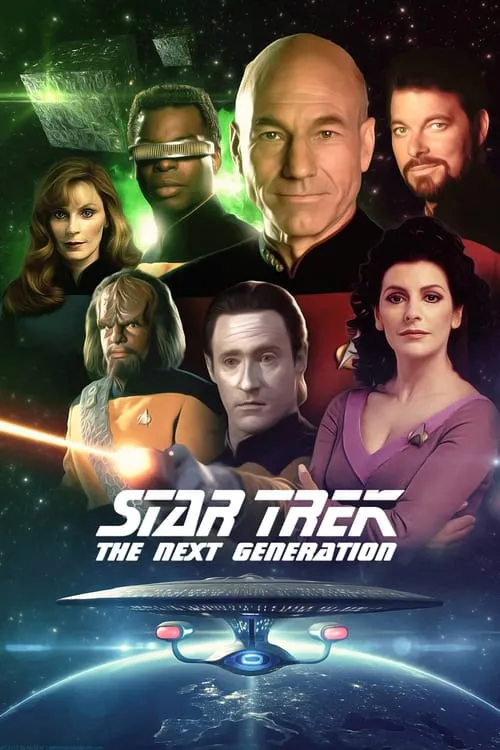
As a guest star on a Star Trek episode, Hawking asked for a tour of the USS Enterprise and upon seeing the warp drive said he was working on that.
-
02
He occupied the same Lucasian professor of mathematics post at Cambridge University that Isaac Newton once held.
-
03
Hawking was a huge fan of Marilyn Monroe; his 60th birthday celebration included a Marilyn Monroe impersonator.
-
04
Despite his extraordinary intellect, he was unaware of his IQ score and expressed a dim view of people who boast about theirs.
-
05
He was a huge fan of Star Trek, Doctor Who, and Red Dwarf, and is the only person to play himself in a Star Trek film or series.
-
06
Because his voice synthesizer had an American accent, many people did not realize he was English. He declined to change it because he had become synonymous with it.
-
07
He claimed to have disproven time travel by throwing a party for time travelers and advertising it the day after; no one attended.
-
08
He was born exactly 300 years after the death of Galileo and died on the anniversary of Albert Einstein‘s birth.
-
09
He admitted to being lazy at Oxford, doing about 1000 hours of work over four years, and the deans gave him a first-class degree to let him go to Cambridge.
-
10
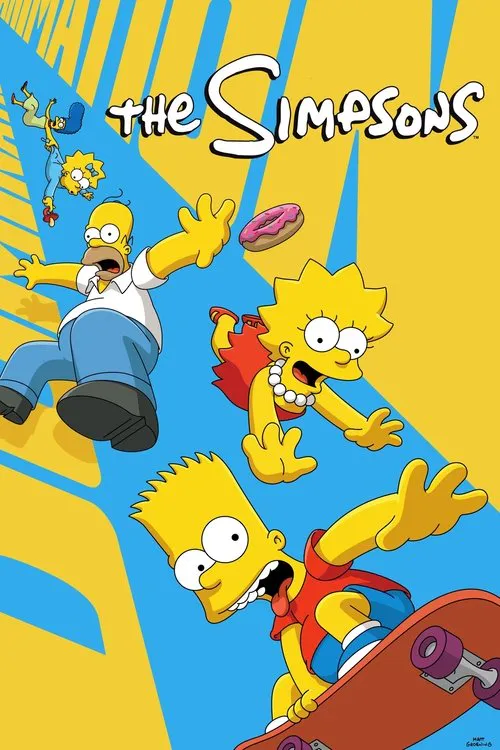
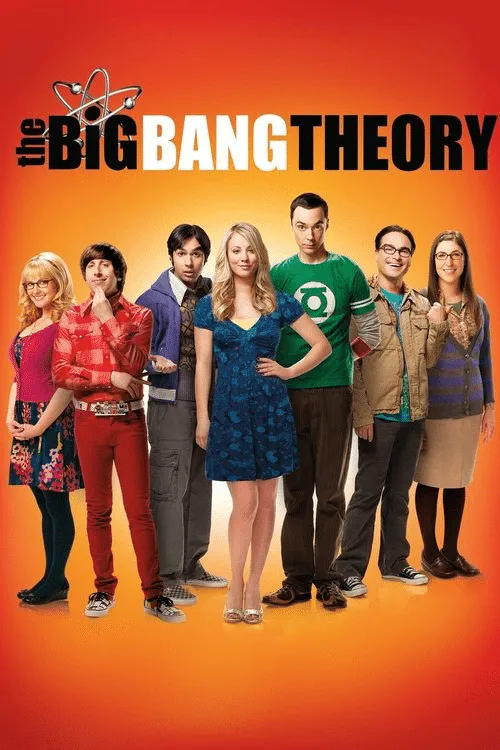
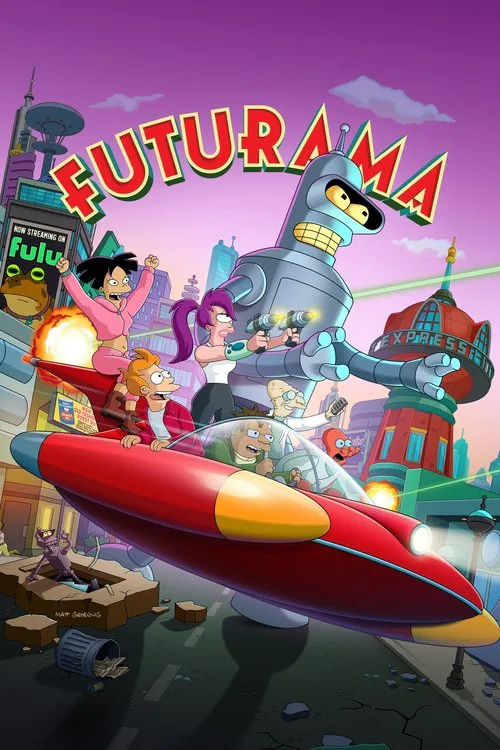
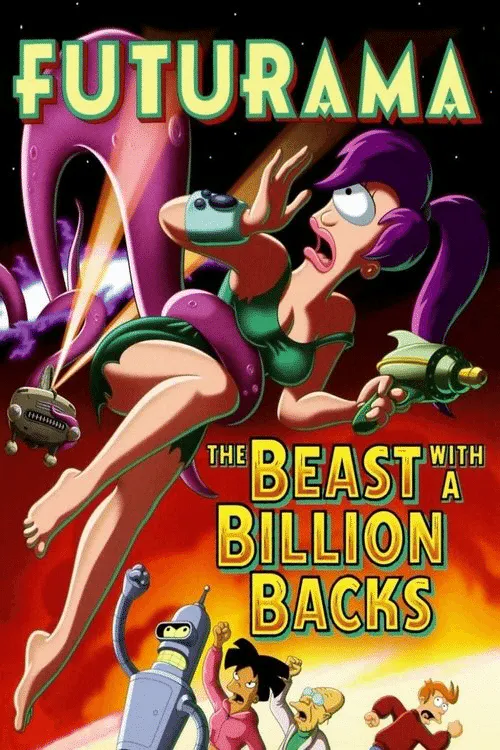
He played himself in Star Trek: The Next Generation, The Simpsons, Futurama, and The Big Bang Theory.
-
11
His electronic voice was used in the Pink Floyd songs Keep Talking from The Division Bell 1994 and Talkin’ Hawkin’ from The Endless River 2014.
-
12
He was awarded many honorary degrees and was a Fellow of The Royal Society and a Member of the US National Academy of Sciences.
-
13
He was diagnosed with ALS in the early 1960s and given less than two years to live, but survived for more than fifty years, continuing to think and inspire.
-
14
He was not a particularly good student until he started studying science in school.
-
15
His birthday is two days after Eddie Redmayne’s, who played him in The Theory of Everything; when Redmayne noted they are both Capricorns, Hawking replied he is an astronomer, not an astrologist.
-
16
He was awarded the CBE in 1982 and the CH in 1989 for services to science.
-
17
Hawking was portrayed by Benedict Cumberbatch in a 2004 TV movie and by Eddie Redmayne in The Theory of Everything, coincidentally when Cumberbatch was nominated for playing Alan Turing.
-
18
He directed that the Bekenstein-Hawking entropy equation be his epitaph.
-
19
He passed away on Albert Einstein’s 139th birthday and was interred near the graves of Isaac Newton and Charles Darwin.
-
20
He had an Erdős-Bacon-Sabbath number of 8, tying for the lowest known on the planet.
-
21
He was awarded the Presidential Medal of Freedom by President Barack Obama on July 30, 2009.
-
22
In 1978 he received an honorary B.A. from Oxford, and PhDs from Cambridge, Notre Dame, and New York University.
-
23
His father was English from Yorkshire and his mother was Scottish from Glasgow.
-
24
He is mentioned in the Yes song Real Love 1994 and in Weird Al Yankovic’s White and Nerdy 2005.
-
25
He passed away on March 14, 2018, known as Pi Day.
-
26
He was passionate about the music of Austrian composer Josef Franz Wagner.
-
27
He was a vocal critic of U.S. President Donald Trump and described himself as an atheist.
-
28
During a TV interview, a cable was accidentally pulled, triggering an alarm; Hawking feigned a collapse as a joke, scaring visitors.
-
29
His ideas have transformed the human understanding of the cosmos.
-
30
The formulas engraved at Westminster Abbey in his honor include THC in the algebraic portion.
-
31
On January 8, 2022, he was honored with a Google Doodle on his 80th birthday.
-
32
He appeared in television commercials for Jaguar automobiles in the United Kingdom in 2016.