 United Kingdom
 Who is Maud Of Wales?
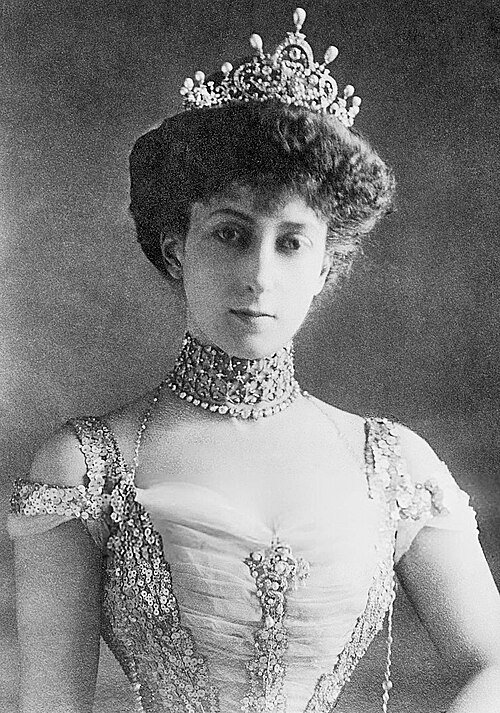
Maud Charlotte Mary Victoria (1869-1938), known throughout her life by various titles including Princess Maud of Wales, Queen Maud of Norway, and eventually Maud Windsor, was a pivotal figure in British and Norwegian royal history. Born on November 26, 1869, to King Edward VII and Alexandra of Denmark, she grew up surrounded by the pomp and circumstance of the British monarchy.
Maud’s early life was marked by privilege and formal education. As a member of one of Europe’s most influential families, her formative years were spent amidst the grandeur of Buckingham Palace and royal residences across Britain. Her godparents included prominent European royalty such as Carl XV of Sweden and Maria Feodorovna.
Despite being born into an era where women’s roles were often limited to that of a consort or mother, Maud’s life took a unique turn when she married Prince Charles of Denmark in 1896. The couple had one child, the future King Olav V of Norway, before the prince ascended to the Norwegian throne as Haakon VII in 1905.
Maud’s transformation from a British princess to Queen of Norway was marked by significant challenges and triumphs. As her husband assumed his new role amidst political upheaval, Maud adapted quickly to life in Scandinavia, becoming an important figure in the development of Norwegian royal traditions.
Her personal life was intertwined with the fabric of royal duty; she devoted herself to raising their son Olav while supporting her husband’s efforts to stabilize and modernize Norway. This period also saw Maud developing a strong bond with her family back in Britain, especially after becoming Queen when her husband ascended the throne.
Maud’s legacy is multifaceted. She was instrumental in establishing the Norwegian royal house on firmer footing during its formative years. Her influence extended beyond Norway’s borders due to her extensive connections within European royalty and her efforts towards philanthropy and public service both at home and abroad.
Queen Maud passed away on November 20, 1938, in Oslo, Norway, from a myocardial infarction. She left behind a legacy of steadfast support for her family and country, as well as contributions to the cultural and social life of Scandinavia.
Common Questions
When was Maud of Wales born?
Maud Charlotte Mary Victoria, Princess Maud of Wales, was born on November 26, 1869.
Who were Maud's parents?
Princess Maud was the daughter of Edward VII and Alexandra of Denmark. She had a brother named George V who later became King of the United Kingdom.
How did Princess Maud become Queen of Norway?
In 1905, her husband Prince Charles (later Haakon VII) was invited to ascend the Norwegian throne after the dissolution of the union between Sweden and Norway. As a result, Maud became Queen of Norway.
What were some of Maud's accomplishments?
Among her achievements, she helped establish royal traditions in Norway and supported her husband King Haakon VII during the country’s transition to independence.
How many children did Maud have?
Queen Maud had one child, Prince Alexander (later Olav V of Norway), born on July 2, 1903.
When and where did Queen Maud die?
Maud died on November 20, 1938, in Oslo, Norway, due to a myocardial infarction.