 United Kingdom
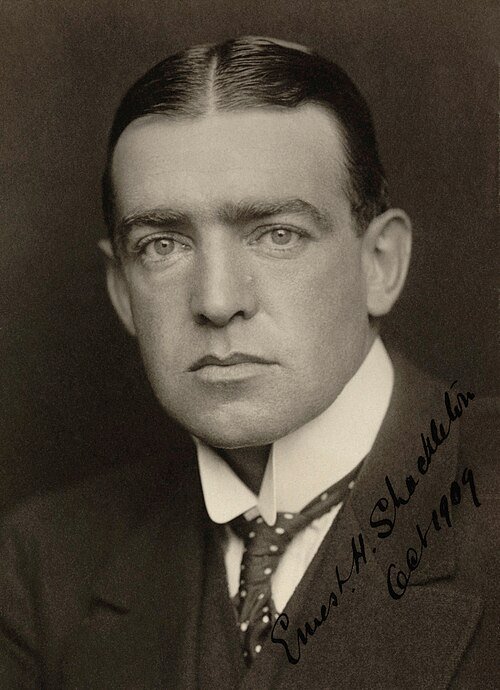
 Who is Ernest Shackleton?
Ernest Henry Shackleton, born on February 15, 1874, in Kilkea, Ireland, was a pivotal figure in the annals of exploration and is best known for his leadership during the harrowing events of the Imperial Trans-Antarctic Expedition. His life spanned from the Victorian era through the early 20th century, leaving an indelible mark on polar exploration.
Shackleton was born into a modest family; his father, Henry Shackleton, worked as a land agent and his mother, Henrietta Letitia Sophia Gavan, supported her husband in their home. Ernest’s childhood was marked by the absence of financial privilege but was enriched with the values instilled by his parents. He attended Dulwich College, where he developed an early interest in adventure and exploration.
Shackleton’s journey to prominence began in earnest when he joined the merchant navy at age 16, eventually becoming a captain before dedicating himself full-time to polar expeditions. His first major endeavor was as part of Captain Robert Falcon Scott’s Discovery Expedition from 1901 to 1904, during which Shackleton achieved fame by reaching a point within 100 miles of the South Pole. In 1907, he led his own Nimrod Expedition and set new records for how far south explorers could travel.
His Imperial Trans-Antarctic Expedition from 1914 to 1917 is perhaps Shackleton’s most famous endeavor. After the ship Endurance became trapped in ice and was eventually crushed, Shackleton led his crew across treacherous terrain to reach Elephant Island before embarking on a perilous journey to South Georgia to seek help. His leadership during this period saved all but one of the expedition’s members, earning him international acclaim.
Shackleton’s personal life included marriage to Emily Dorman in 1904. The couple had three children: Edward Shackleton (who later became Baron Shackleton), Raymond Shackleton, and Cecily Jane Swinford Shackleton. Shackleton maintained a close relationship with his siblings Kathleen and Francis Richard Shackleton.
Ernest Shackleton’s legacy is one of extraordinary leadership and survival against all odds. He passed away on January 5, 1922, in South Georgia while preparing for yet another Antarctic expedition. His expeditions have been studied extensively, contributing to the field of polar exploration and inspiring leaders across various industries with his principles of resilience and teamwork.
Common Questions
What were Ernest Shackleton's early adventures?
Shackleton joined the merchant navy at age 16 and quickly rose through the ranks, eventually becoming a captain. His first major adventure came in 1901 when he joined Robert Falcon Scott’s Discovery Expedition to Antarctica.
What was Shackleton's greatest achievement as an explorer?
Shackleton’s most notable achievement was leading his crew across South Georgia after the ship Endurance became trapped and then crushed by ice during the Imperial Trans-Antarctic Expedition from 1914 to 1917.
How did Shackleton's personal life influence his career?
Shackleton married Emily Dorman in 1904, and they had three children. While there is no direct evidence that family life directly influenced his exploratory endeavors, it provided him a stable base from which he could undertake expeditions.
What was the significance of Shackleton's last expedition?
Shackleton’s final planned expedition aimed to cross Antarctica via the South Pole. However, upon reaching South Georgia, he died on January 5, 1922, before this journey could commence.
How did Shackleton's leadership during the Endurance expedition earn him acclaim?
During the Endurance expedition when his ship was crushed by ice, Shackleton led all crew members to safety through a series of perilous journeys, showcasing remarkable leadership and survival skills that earned him worldwide recognition.
What is Ernest Shackleton's lasting legacy in exploration?
Shackleton’s legacy includes pioneering Antarctic research, demonstrating exceptional leadership during crises, and inspiring countless explorers and leaders with his principles of resilience and teamwork.