 Spain
Spain Who is Pablo Picasso?
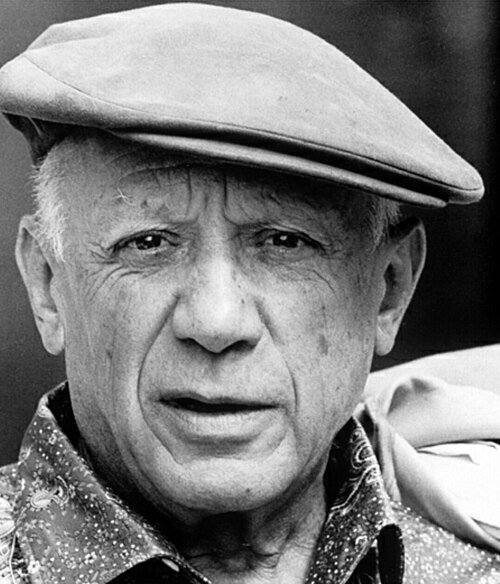
Spanish painter Pablo Ruiz Picasso (October 25, 1881 – April 8, 1973), alongside Georges Braque, pioneered the revolutionary artistic style of Cubism. His legacy as a prolific artist and political activist remains unparalleled in the annals of art history.
Picasso was born on October 25, 1881, in Málaga, Spain, to José Ruiz Blasco, an academic painter, and María Picasso y Sierra. Despite his father’s initial instruction, young Pablo soon surpassed his mentor’s artistic abilities by the age of thirteen.
His career took off in Paris during the early 1900s where he transitioned from the somber tones of the Blue Period (1901-1904) to the more lively palette of the Rose Period (1904-1906). In 1907, Picasso’s masterpiece Les Demoiselles d’Avignon, marked a groundbreaking departure from traditional European painting and laid the foundation for Cubism. By 1912, he had fully embraced this new style with works like Still Life with Chair Caning.
Picasso’s personal life was as dynamic as his artistic career. He married twice—first to Olga Khokhlova in 1918 and then Jacqueline Roque in 1961—and fathered four children: Paulo, Maya, Claude, and Paloma. Alongside these marriages, he had numerous significant relationships with women like Fernande Olivier, Dora Maar, and Françoise Gilot.
In addition to his artistic achievements, Picasso was also a committed political figure. He joined the French Communist Party in 1944 and used his work to comment on social issues and politics. His final years were spent in France where he died of pulmonary edema at the age of ninety-one, leaving behind an immense collection of works that continue to influence artists today.
Common Questions
What did Pablo Picasso paint during his Blue Period?
During his Blue Period (1901-1904), Picasso painted melancholic scenes in shades of blue and blue-green, often depicting beggars and prostitutes.
When was the creation of Les Demoiselles d'Avignon?
Picasso's seminal work Les Demoiselles d'Avignon, which marked the beginning of Cubism, was created in 1907.
How did Picasso's Rose Period differ from his Blue Period?
The Rose Period (1904-1906) followed Picasso's Blue Period and is characterized by warmer colors like pink and orange. It features subjects such as circus performers and harlequins.
How many children did Pablo Picasso have?
Pablo Picasso had four children: Paulo, Maya, Claude, and Paloma.
What was Picasso's political affiliation?
Picasso joined the French Communist Party in 1944 and used his art to advocate for political causes.
How did Cubism influence other artists?
Cubism, pioneered by Picasso and Braque, influenced countless artists around the world. It challenged traditional perspectives and encouraged abstraction.
Who were some of Picasso's romantic partners besides his wives?
Picasso had several significant relationships with women such as Fernande Olivier (1904-1912), Dora Maar (1935-1944), and Françoise Gilot (1943-1953).