 United States
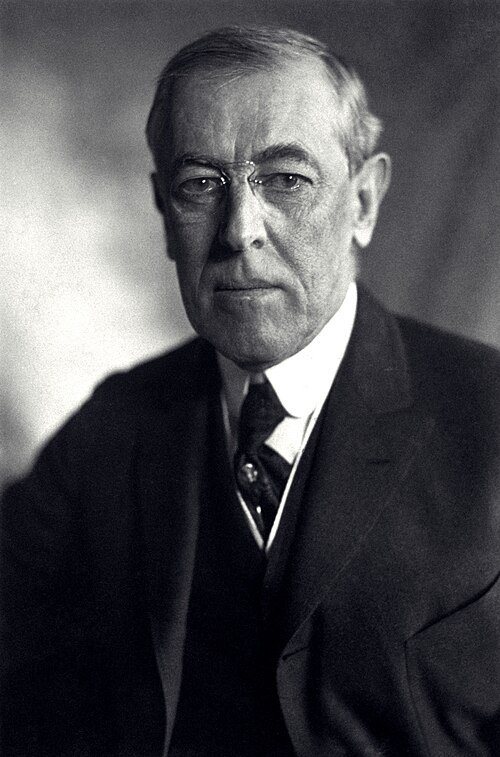
 Who is Woodrow Wilson?
Thomas Woodrow Wilson, or simply Woodrow Wilson, was the 28th President of the United States, serving from March 4, 1913, until his term ended on March 4, 1921. His tenure saw significant domestic and international reforms that reshaped American politics and foreign policy.
Born in Staunton, Virginia, on December 28, 1856, Wilson was the son of Joseph Ruggles Wilson, a Presbyterian minister, and Janet Woodrow. His early years were marked by his father’s influence, which instilled in him a deep sense of public service. He grew up in several southern towns, including Augusta, Georgia, where he attended Davidson College.
Wilson’s academic journey took him through Princeton University and the University of Virginia Law School before he returned to Johns Hopkins University for graduate studies in political science and history. His career began with teaching at Bryn Mawr College and Wesleyan University, but it was his appointment as president of Princeton University from 1902 to 1910 that launched him into the national spotlight.
His rise through politics was swift after he became governor of New Jersey in 1910. His progressive policies and charismatic speeches earned him the Democratic nomination for President, leading to his landslide victory over incumbent Republican William Howard Taft in 1912. Wilson’s presidency saw the passage of significant legislation such as the Federal Reserve Act and the Clayton Antitrust Act.
Wilson’s personal life was marked by two marriages. He married Ellen Axson Wilson, a talented artist, who died shortly before his second term began. He then married Edith Bolling Galt in 1915, a widow who became an influential figure during the remainder of his presidency, managing state affairs after Wilson suffered a stroke in 1919.
Wilson’s legacy includes his efforts to establish the League of Nations and his vision for a more cooperative global community. Despite opposition from the Senate, he campaigned tirelessly for American participation in the League. His health declined rapidly towards the end of his term, and he passed away on February 3, 1924, leaving behind a complex legacy that continues to be debated by historians.
Common Questions
What was Woodrow Wilson's occupation before becoming president?
Before entering politics, Wilson had various academic positions. He taught at several colleges and universities, including Princeton University where he served as the institution's president from 1902 to 1910.
When did Woodrow Wilson become President of the United States?
Woodrow Wilson became the President of the United States on March 4, 1913, following his election victory over incumbent Republican William Howard Taft in 1912.
What were some of Woodrow Wilson's major accomplishments as president?
During his presidency, Wilson achieved significant legislative reforms. He signed the Federal Reserve Act and the Clayton Antitrust Act into law, establishing key institutions to regulate banking and commerce.
How many children did Woodrow Wilson have?
Woodrow Wilson had three daughters: Margaret Woodrow Wilson, Jessie Woodrow Wilson Sayre, and Eleanor Wilson Mcadoo.
What role did Edith Bolling Galt play in Wilson's presidency?
After marrying Edith Bolling Galt during his second term, she managed state affairs following the President's stroke in 1919, effectively becoming a significant influence in government operations.