 Spain
Spain Who is Kenneth Kaunda?
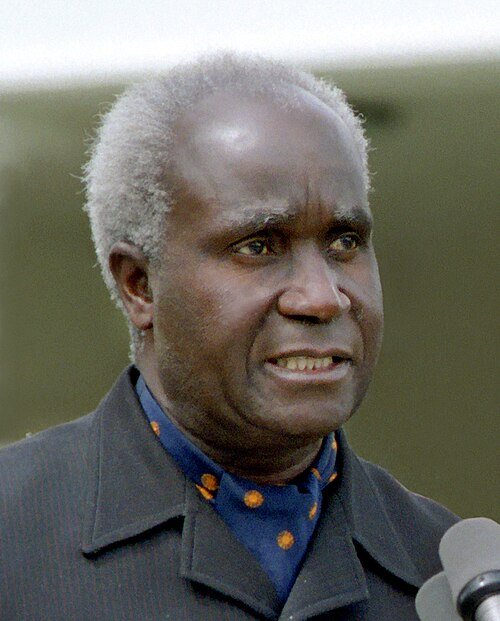
Kenneth David Buchizya Kaunda, affectionately known as Kk, was a pivotal political leader who shaped the trajectory of post-colonial Africa. Born on April 28, 1924, in Lubwa Mission near Chinsali in Northern Rhodesia (now Zambia), Kaunda’s life and career were marked by relentless activism for independence and social justice.
Kaunda was born to David Julizya Kaunda and Helen Nyirenda Kaunda. His father worked as a teacher at the mission station, where his mother served as cook and housekeeper. Raised in a devout Christian household with eight siblings, Kenneth’s formative years were influenced significantly by his religious upbringing. He attended several missionary schools before embarking on his teaching career.
His political journey began in earnest when he joined the African National Congress (ANC) in Northern Rhodesia in 1948. As a teacher and trade unionist, Kaunda emerged as a prominent voice against colonial rule. In 1953, he co-founded the Zambia African National Congress (ZANC), which was later banned by British authorities. Undeterred, Kaunda established the United National Independence Party (UNIP) in 1958 and became its first president.
Upon Northern Rhodesia’s independence in 1964, Kaunda assumed leadership as Zambia’s inaugural President. His presidency spanned nearly three decades, marked by significant efforts to foster national unity and economic development. A key highlight of his tenure was the introduction of a one-party state in 1972, which aimed at consolidating national identity but also drew criticism for curtailing political freedoms.
On the personal front, Kaunda married Betty Banda, who became a supportive partner through his political career and later years. They had several children together, including Tilyenji Kaunda, who followed in his father’s footsteps by engaging in politics. Kenneth’s legacy is deeply intertwined with Zambia’s struggle for independence and its early post-colonial era.
Kenneth Kaunda passed away on June 17, 2021, due to pneumonia at the age of 97. His death marked an end to a remarkable life dedicated to nation-building and social reform. Today, he is remembered not only for his political contributions but also as a man who embodied the hopes and struggles of Zambia’s transition from colonial rule.
Common Questions
What was Kenneth Kaunda's role in Zambian independence?
Kenneth Kaunda played a crucial role in leading the fight for Zambian independence, co-founding the United National Independence Party (UNIP) and serving as Zambia’s first President after gaining independence from Britain in 1964.
How did Kenneth Kaunda's early life influence his political views?
Growing up in a missionary station with strong religious influences, Kaunda developed a deep sense of social justice. His experiences as a teacher and trade unionist laid the foundation for his later advocacy against colonial rule.
What were some key achievements during Kenneth Kaunda's presidency?
Kaunda oversaw Zambia’s transition to independence in 1964 and worked towards national unity and economic development. He introduced a one-party state system in 1972, aiming to consolidate national identity.
How long was Kenneth Kaunda president of Zambia?
Kenneth Kaunda served as the President of Zambia from 1964 until his resignation in 1991, marking nearly three decades at the helm of a newly independent nation.
What is Kenneth Kaunda's legacy?
Kaunda’s legacy includes his leadership during Zambia’s struggle for independence and his efforts to promote national unity. He remains an iconic figure remembered for his commitment to social justice and anti-colonial activism.