 United Kingdom
 Who is Virginia Woolf?
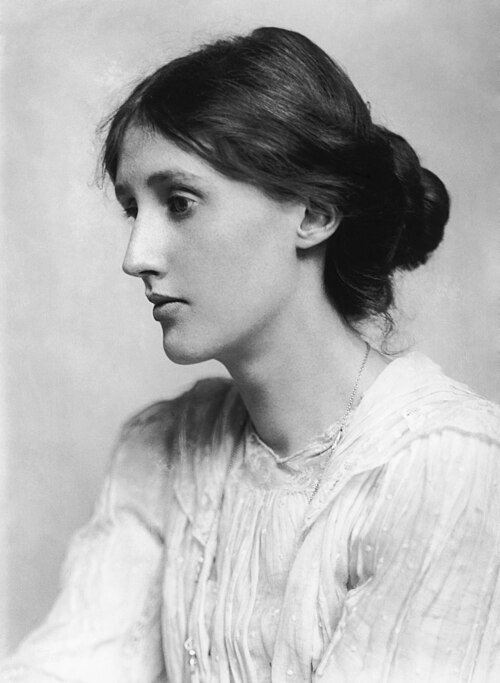
Virginia Woolf (born Adeline Virginia Stephen; January 25, 1882 – March 28, 1941) was an influential English author whose innovative literary techniques and feminist essays challenged conventional storytelling and societal norms. Her work not only expanded the boundaries of modernist literature but also offered profound insights into women’s experiences in early 20th-century England.
Woolf was born to Julia Stephen, a renowned beauty and socialite, and Leslie Stephen, a respected historian and critic. She grew up in a household filled with intellectual conversation and artistic pursuits. Her father’s second marriage brought about the arrival of her siblings: Vanessa Bell (who would become a painter), Thoby Stephen, Adrian Stephen, George Herbert Duckworth, Stella Duckworth, Gerald Duckworth, and Laura Stephen.
Denied formal education due to Victorian-era restrictions on women’s learning, Woolf educated herself through voracious reading and conversations with the intellectuals who frequented her home. She began her literary career in earnest after Thoby’s death in 1906 when she became a central figure among the Bloomsbury Group, a collective of artists and writers that included Leonard Woolf (whom she married in 1912), E.M. Forster, and Lytton Strachey.
Woolf’s breakthrough came with her first novel, The Voyage Out, published in 1915. She followed this with a series of critically acclaimed works, including Jacob’s Room (1922), Mrs Dalloway (1925), and To the Lighthouse (1927). Her essays, such as A Room of One’s Own (1929) and Three Guineas (1938), explored feminist themes and critiqued patriarchal structures.
Despite a marriage to Leonard Woolf, her life was marked by significant romantic relationships with Vita Sackville-West, a poet and novelist. These relationships inspired some of her most celebrated novels, such as Orlando, which is often interpreted as a biographical novel dedicated to Sackville-West.
In addition to writing, Woolf co-founded the Hogarth Press in 1917 with Leonard, publishing works by notable authors like T.S. Eliot and Sigmund Freud. Her contributions to literature did not go unnoticed; she was nominated for the Nobel Prize in Literature multiple times.
Virginia Woolf’s life ended tragically on March 28, 1941. In her suicide note, she explained that a second bout of mental illness had made her feel incapable of continuing and hoped it would prevent her from becoming a burden to those who loved her. Yet, despite the tragic end to her life, Woolf’s literary legacy has endured, influencing generations of writers and thinkers.
Common Questions
What was Virginia Woolf’s childhood like?
Born into an intellectual household in London, Virginia Stephen enjoyed a privileged upbringing filled with books, conversation, and art. However, her education was limited compared to that of her brothers due to the societal norms of the time.
Who were some key figures in Virginia Woolf’s life?
Key figures included her father Leslie Stephen, an intellectual luminary; her sister Vanessa Bell, who became a prominent painter; and Leonard Woolf, whom she married in 1912 and with whom she co-founded the Hogarth Press.
What are some of Virginia Woolf’s most famous works?
Some of her best-known novels include Mrs Dalloway (1925), To the Lighthouse (1927), and Orlando (1928). Her essays, such as A Room of One’s Own, are also celebrated for their feminist insights.
How did Virginia Woolf influence literature?
Woolf's innovative narrative techniques, which included stream-of-consciousness writing and non-linear storytelling, had a profound impact on modernist literature. Her essays also played a crucial role in advancing the feminist discourse of her time.
What was the Bloomsbury Group?
The Bloomsbury Group was an informal collective of English writers, intellectuals, philosophers, and artists active from 1905 to around 1930. Woolf became a central figure after the death of her brother Thoby in 1906.
What were some challenges Virginia Woolf faced?
Woolf struggled with mental illness throughout her life, which often left her hospitalized and unable to write for extended periods. Despite these challenges, she managed to produce a prolific body of work.