-
01
He composed the incidental music for the original 1876 stage production of Peer Gynt at the invitation of the play’s author, Henrik Ibsen. The complete score plays for about ninety minutes, but the music became so popular that Grieg fashioned two fifteen-minute orchestral suites from it, and these suites are now far more frequently performed than either the complete score or Ibsen’s own play. The Peer Gynt Suites became, along with his Piano Concerto in A Minor, Grieg’s most often-performed works. As of 2004, there has still never been a major English-language film or television version of Peer Gynt with Grieg’s music, though it has been used in a 1986 Norwegian TV version and in Charlton Heston’s silent, student-made 1941 film version.
-
02
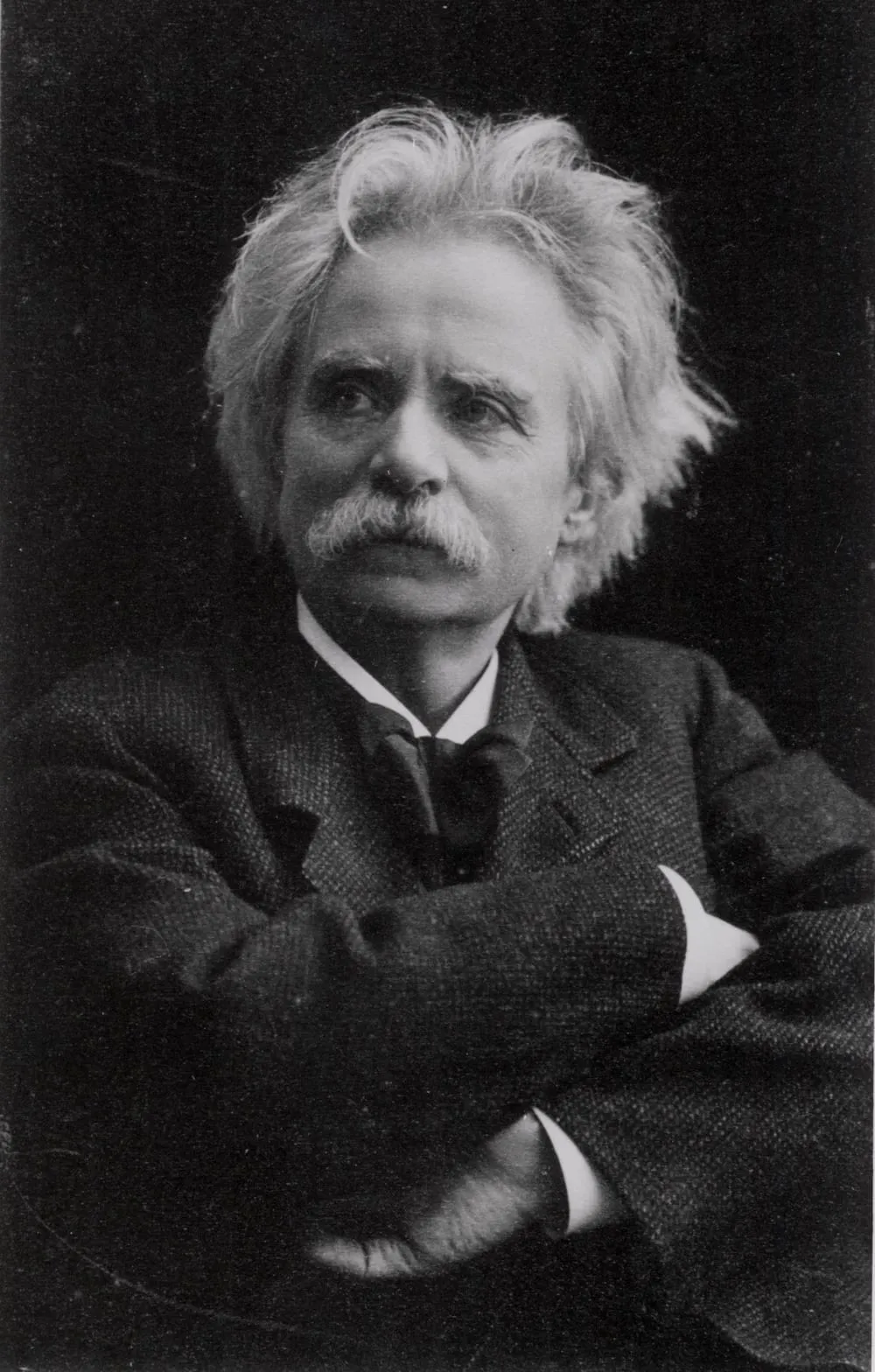
Among the founders of the Norwegian nationalist school of music was Edvard Grieg.
-
03
Edvard Grieg was raised in a musical family. His mother was his first piano teacher and taught him to play when he was age six.
-
04
Franz Liszt, who had not yet met Grieg, wrote in 1868 a testimonial for him to the Norwegian Ministry of Education, which resulted in Grieg’s obtaining a travel grant. The two men met in Rome in 1870. During Grieg’s first visit, they examined Grieg’s Violin Sonata No. 1, which pleased Liszt greatly. On his second visit in April, Grieg brought with him the manuscript of his Piano Concerto, which Liszt proceeded to sightread including the orchestral arrangement. Liszt’s rendition greatly impressed his audience, although Grieg said gently to him that he played the first movement too quickly. Liszt also gave Grieg some advice on orchestration for example, to give the melody of the second theme in the first movement to a solo trumpet, which Grieg himself chose not to accept.
-
05
Edvard Grieg was a Norwegian composer and pianist. His music, including the Piano Concerto and Peer Gynt suites, is part of the standard classical repertoire worldwide.
-
06
Edvard Grieg died at the Municipal Hospital in Bergen, Norway, on 4 September 1907 at age 64 from heart failure. He had suffered a long period of illness. His last words were Well, if it must be so.
-
07
Grieg was awarded two honorary doctorates, first by the University of Cambridge in 1894 and the next from the University of Oxford in 1906.
-
08
In the summer of 1858, Grieg met the eminent Norwegian violinist Ole Bull, who was a family friend; Bull’s brother was married to Grieg’s aunt. Bull recognized the 15-year-old boy’s talent and persuaded his parents to send him to the Leipzig Conservatory, the piano department of which was directed by Ignaz Moscheles.
-
09
The Edvard Grieg Museum at Grieg’s former home, Troldhaugen, is dedicated to his legacy.
-
10
In the summer of 1868, Grieg wrote his Piano Concerto in A minor while on holiday in Denmark. Edmund Neupert gave the concerto its premiere performance on 3 April 1869 at the Casino Theatre in Copenhagen. Grieg himself was unable to be there due to conducting commitments in Christiania now Oslo.
-
11
Grieg is the most celebrated person from the city of Bergen, with numerous statues that depict his image and many cultural entities named after him: the city’s largest concert building Grieg Hall, its most advanced music school Grieg Academy and its professional choir Edvard Grieg Kor.
-
12
On 11 June 1867, Grieg married his first cousin, Nina Hagerup 1845-1935, a lyric soprano.
-
13
In 1862, he finished his studies in Leipzig and had his first concert in his hometown, where his program included Beethoven’s Pathétique sonata.
-
14
Throughout his life, Grieg’s health was impaired by a destroyed left lung and considerable deformity of his thoracic spine. He suffered from numerous respiratory infections, and ultimately developed combined lung and heart failure. Grieg was admitted many times to spas and sanatoria both in Norway and abroad. Several of his doctors became his friends.
-
15
In 1863, Grieg went to Copenhagen, Denmark, and stayed there for three years. He met the Danish composers J. P. E. Hartmann and Niels Gade. He also met his fellow Norwegian composer Rikard Nordraak composer of the Norwegian national anthem, who became a good friend and source of inspiration. Nordraak died in 1866, and Grieg composed a funeral march in his honor.
-
16
The family name, originally spelled Greig, is associated with the Scottish Clann Ghriogair Clan Gregor. After the Battle of Culloden in Scotland in 1746, Grieg’s great-grandfather, Alexander Greig 1739-1803, travelled widely before settling in Norway about 1770 and establishing business interests in Bergen. Grieg’s paternal great-great-grandparents, John 1702-1774 and Anne 1704-1784, are buried in the abandoned churchyard of the ruined Church of St Ethernan in Rathen, Aberdeenshire, Scotland.
-
17
His use of Norwegian folk music in his own compositions brought the music of Norway to fame, as well as helping to develop a national identity, much as Jean Sibelius did in Finland and Bedrich Smetana in Bohemia.
-
18
In the spring of 1860, he survived two life-threatening lung diseases, pleurisy and tuberculosis.
-
19
In 1861, Grieg made his debut as a concert pianist in Karlshamn, Sweden.
-
20
Grieg enrolled in the Leipzig conservatory, concentrating on piano, and enjoyed the many concerts and recitals given in Leipzig. He disliked the discipline of the conservatory course of study. An exception was the organ, which was mandatory for piano students. About his study in the conservatory, he wrote to his biographer, Aimar Grønvold, in 1881: I must admit, unlike Svendsen, that I left Leipzig Conservatory just as stupid as I entered it. Naturally, I did learn something there, but my individuality was still a closed book to me.