-
01
As a young lieutenant during Prohibition, Patton set up a still on his army base with a friend, Lt. Dwight D. Eisenhower, to produce their favorite alcoholic beverages.
-
02
Patton was a first cousin six times removed of George Washington.
-
03
He commanded the US Third Army, which captured or killed over one million Axis soldiers by the end of World War II.
-
04
Dyslexia caused Patton to berate himself as stupid when he failed tests and had to study harder than other cadets.
-
05
One of the wealthiest officers in the army, he often bragged about his nicer living quarters and drove flashy new cars on base as a junior officer.
-
06
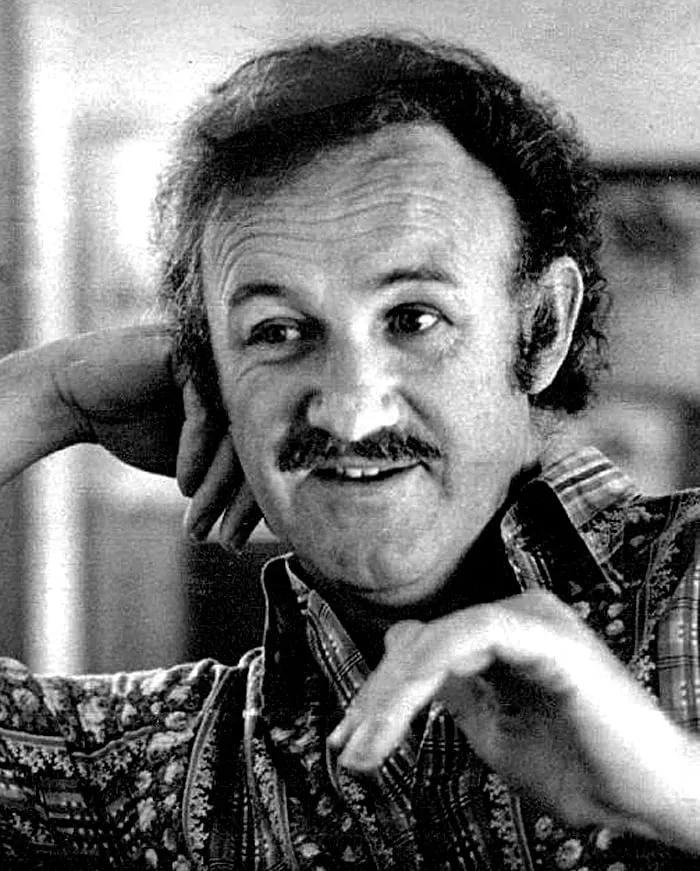
George Kennedy, who portrayed Patton in Brass Target 1978, served under him in World War II.
-
07
His grandfather, George S. Patton, was a colonel in the Confederate Army under General Robert E. Lee.
-
08
Patton designed his own army uniforms and tank uniforms, but the army turned them down.
-
09
He planned his battles using ancient wars in Europe as a guide.
-
10
Patton’s actual speaking voice was fairly high-pitched, unlike George C. Scott’s deep growl in the film Patton.
-
11
A 3-cent US commemorative postage stamp was issued in his honor on his 68th birthday, November 11, 1953.
-
12
Fearing Europe would go Communist, he was highly critical of the denazification program after VE Day.
-
13
Concerns that he was mentally ill led to his telephones being tapped; wiretappers heard him express violently anti-Soviet views and suggest rearming the Wehrmacht to fight the Red Army.
-
14
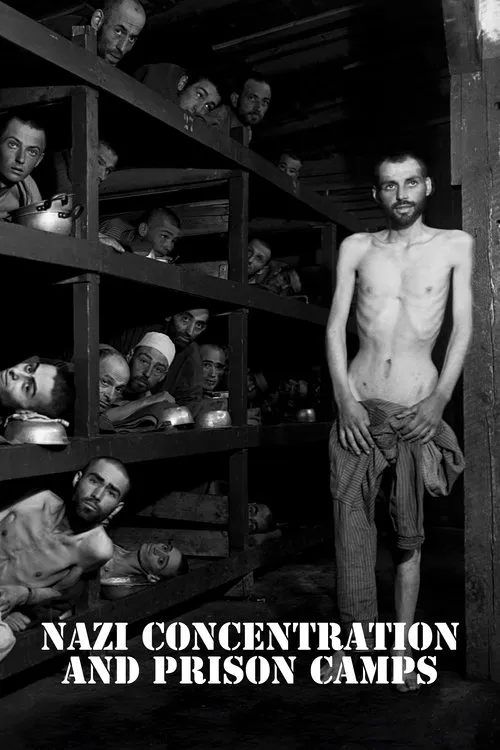
Patton showed contempt for Jewish survivors and expressed admiration for Nazi prisoners, criticizing attempts to bring Nazi leaders to justice.
-
15
He participated in the 1912 Stockholm Olympics in modern pentathlon, placing fifth partly due to judges ruling he missed the target he contended he hit the same point twice.
-
16
Following his death, Patton was buried at the Luxembourg American Cemetery and Memorial alongside Third Army casualties.
-
17
Though he commanded many Jewish soldiers, he refused to permit Jewish chaplains in his headquarters.
-
18
He proposed invading the Soviet Union after World War II to drive the Soviets out of eastern Europe.
-
19
Under his command, Holocaust survivors were kept under military guard with Nazi sympathizers, and he appointed former SS soldiers to administer DP camps.
-
20
In every battle, Patton always had more soldiers, tanks, fuel, supplies, and air support than his opponents.
-
21
His residence as military governor of Bavaria was a palatial house on Lake Tegernsee, once owned by Hitler’s publisher Max Amann.
-
22
Patton was relieved of command of the Third Army by Eisenhower for stating publicly that America had fought the wrong enemy—Germany instead of Russia.
-
23
He had zero sympathy for Holocaust victims, calling them locusts and a subhuman species in his diary, and was also hostile to Arabs.
-
24
As commander of the Third Army, he ordered the killing of German soldiers in the act of surrendering or after being taken prisoner, believing it saved American lives; Eisenhower tacitly allowed it.
-
25
He signed documents as George S. Patton Jr. even though he was George S. Patton III.
-
26
He commanded the US Seventh Army in Sicily, where he slapped a soldier in a field hospital and was relieved of command.
-
27
On September 8, 1945, while inspecting a prison camp for former Nazis, he called their internment sheer madness, prompting an officer to report him to Eisenhower.
-
28
In a Boston speech on June 8, 1945, he said a soldier killed in action was often a fool rather than a hero, enraging families of the fallen.
-
29
His biographer Carlo D’Este suggested his melancholy and extraordinary behavior may have been due to brain damage from a series of head injuries, but his wife refused an autopsy.
-
30
His refusal to denazify Bavaria after the war has been called treasonable.
-
31
Letters from World War I show he already held anti-Semitic views as a young man.
-
32
He visited Buchenwald on April 15, 1945, but only as a side trip; a Jewish soldier reported Patton was more concerned with saving Lipizzaner horses than Jews.
-
33
Despite Patton’s hostile remarks about the Soviet Union, Joseph Stalin held him in high regard as an armored warfare commander.
-
34
The Oscar-winning film Patton omitted the controversial incident where he diverted troops to liberate a POW camp containing his son-in-law without authorization.
-
35
He was the grandfather of Helen Patton, Robert H. Patton, and James Totten.
-
36
Eisenhower ordered him to confiscate houses for Jewish survivors, embittering Patton, who saw journalists’ criticism as Jewish and Communist plots.
-
37
He had hoped to be involved in the invasion of Japan, but General Douglas MacArthur rejected him.
-
38
As military governor in July 1945, he accused the US Treasury Secretary of Semitic revenge against Germany.
-
39
He designed and built his own version of the tank, but the army declined it.
-
40
Patton was a virulent anti-Semite.
-
41
He smoked cigars and a pipe.
-
42
His direct cause of death was pulmonary edema and congestive heart failure.
-
43
He argued the Allies had a moral obligation to support countries being swallowed by Stalin.
-
44
He was the father of Major General George S. Patton IV.
-
45
He was posthumously inducted into the UIPM Modern Pentathlon Hall of Fame in 2017.
-
46
Two of his men were tried for killing dozens of Italian and German prisoners in the Biscari Massacre; they claimed Patton’s orders not to take prisoners, but Patton was exonerated.
-
47
Although he commanded black soldiers like the 761st Tank Battalion, he saw African-Americans as inferior and disparaged their combat performance.
-
48
In the 1990s, it was revealed he covered up the killings of concentration camp guards by American soldiers.
-
49
He was strongly opposed to the Morgenthau Plan to deindustrialize Germany.
-
50
After leaving the army, he planned to speak out against Eisenhower’s handling of the campaign in Europe and other senior officers.