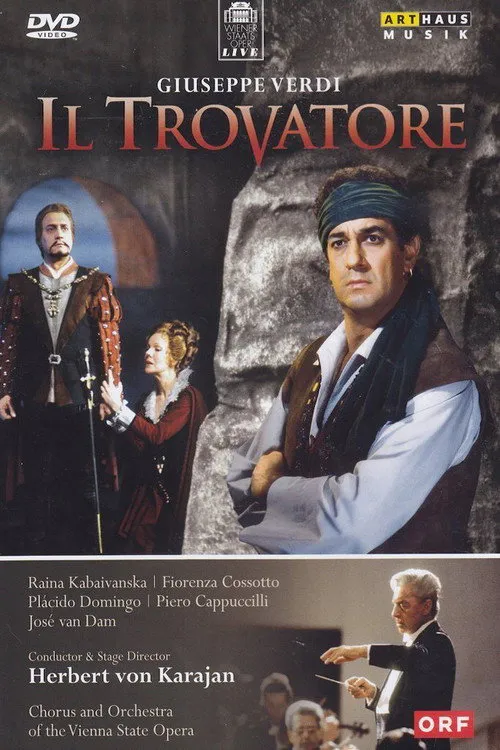
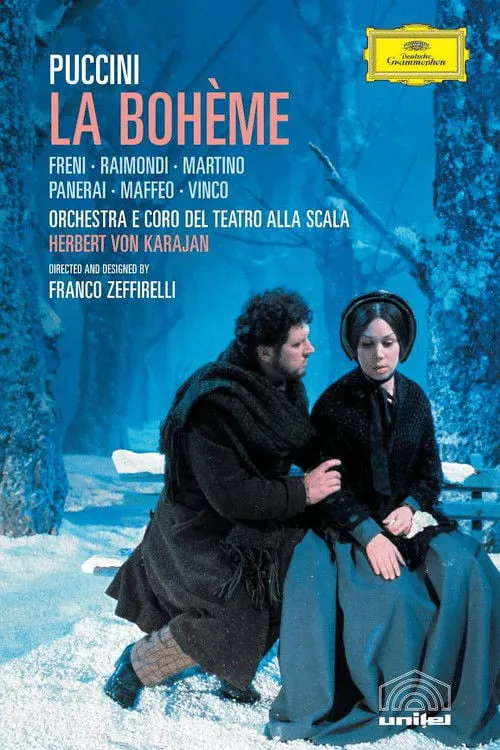
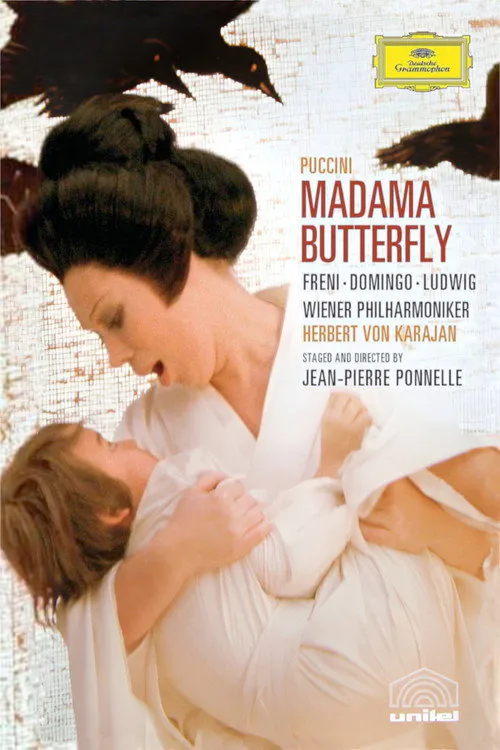
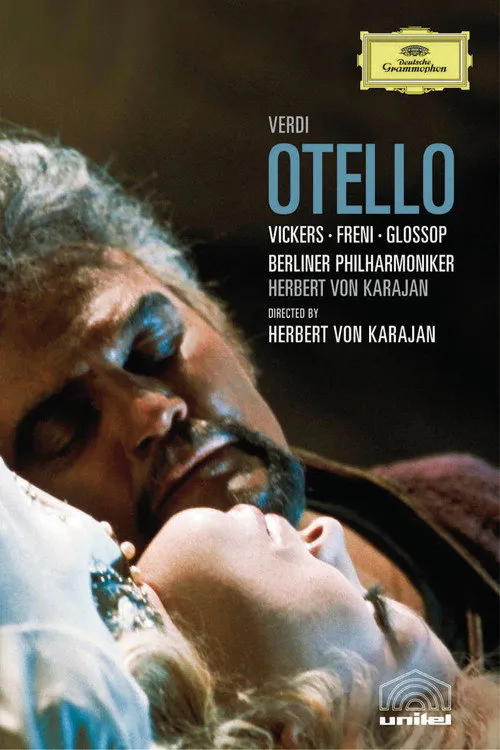
-
01
He served as conductor of the Berlin Philharmonic for thirty-five years, from 1954 until 1989.
-
02
He supported high-fidelity studio recording and encouraged Sony and Philips to develop and market the compact disc in the early 1980s.
-
03
He is the only conductor to have recorded Bach’s Mass in B Minor five times.
-
04
His great-great-grandfather Georgios Karajannis was born in the Ottoman province of Rumelia, today West Macedonia in Greece, and emigrated to Saxony, where his surname became Karajan in 1792.
-
05
His insistence on technical perfection in orchestras drew both admiration and criticism. His Nazi Party membership affected opinions of him. From 1955 to 1989, he was a powerful musical influence in Germany.
-
06
He was father of Isabel Karajan b. 1960 and Arabel Karajan b. 1964, with Eliette.
-
07
He was the younger brother of Wolfgang von Karajan born in 1906.
-
08
He was the son of Ernest Theodor Emanuel 1868-1951 and Martha Kosmac 1881-1954.
-
09
He studied at the Mozarteum in Salzburg between 1916 and 1926.
-
10
By one estimate, he was the top-selling classical music recording artist of all time, having sold an estimated 200 million records.
-
11
Two Karajan interpretations appeared in the film 2001: A Space Odyssey: his Berlin Philharmonic recording of The Blue Danube and his Vienna Philharmonic recording of Also sprach Zarathustra.
-
12
Karajan was an active sportsman from his teenage years, skiing, swimming, and practicing daily yoga.
-
13
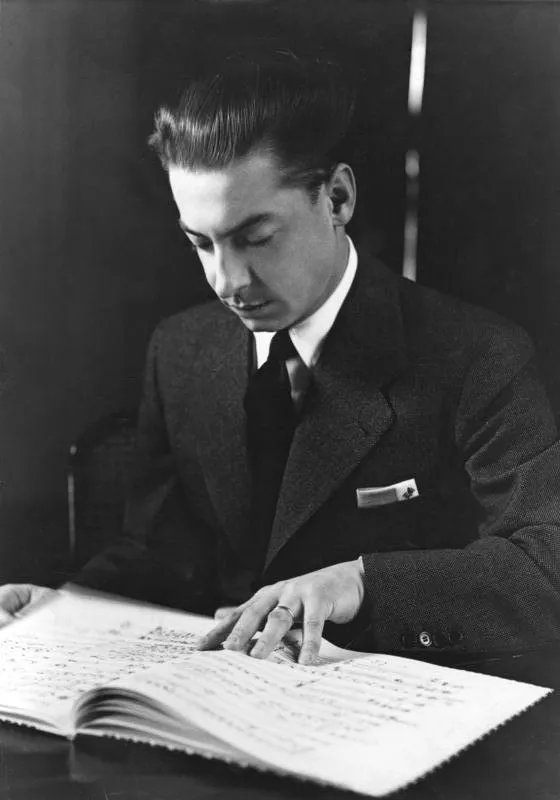
A distinctive feature of Karajan’s conducting style was his habit of conducting with his eyes closed, which is unusual because eye contact is typically considered crucial for communication with the orchestra.
-
14
On 29 June 1985, he conducted Wolfgang Amadeus Mozart’s Coronation Mass during a Mass celebrated by John Paul II in St. Peter’s Basilica, on the Feast of Sts. Peter and Paul, and received Holy Communion from the hand of the Pope with his wife and daughters. By the end of his life he had reconciled with the Catholic Church, and requested a Catholic burial.
-
15
Historians debate his Nazi Party membership, but many agree that his connections with NSDAP officers advanced his career.
-
16
Karajan was originally scheduled to conduct the Maria Callas-Richard Tucker recording of Verdi’s Aida, but Tucker refused because of Karajan’s Nazi affiliations. Tullio Serafin replaced him.
-
17
On 28 October 1947, Karajan gave his first public concert after the war. With the Vienna Philharmonic and the Gesellschaft der Musikfreunde, he performed Johannes Brahms’s A German Requiem for a gramophone production in Vienna.
-
18
He was principal conductor of the Berlin Philharmonic for 34 years.
-
19
During the Nazi era, he debuted at the Salzburg Festival, with the Vienna Philharmonic, the Berlin Philharmonic, and during the Second World War he conducted at the Berlin State Opera.
-
20
In 1946, Karajan gave his first postwar concert in Vienna with the Vienna Philharmonic, but was banned from further conducting by the Soviet occupation authorities because of his Nazi party membership. That summer he participated anonymously in the Salzburg Festival.
-
21
From 1957 to 1964, Karajan was artistic director of the Vienna State Opera. He was closely involved with the Vienna Philharmonic and the Salzburg Festival, where he initiated the Easter Festival, which remained tied to the Berlin Philharmonic’s music director after his tenure.
-
22
He won several regattas aboard his racing yachts christened Helisara.
-
23
Karajan was the recipient of multiple honours and awards. He became a Grand Officer of the Order of Merit of the Italian Republic on 17 May 1960, and in 1961 received the Austrian Medal for Science and Art. He also received the Grand Merit Cross of the Order of Merit of the Federal Republic of Germany.
-
24
He piloted his Learjet and was an avid sailor and car enthusiast, especially fond of Porsches. He ordered a specially configured Type 930 with Martini & Rossi livery and his name on the back.
-
25
Karajan has remained a visible part of everyday life in the cities he once called home, thanks in part to monuments erected in his honour. In Salzburg, the Karajan Foundation of Vienna commissioned Czech artist Anna Chromý to create a life-sized statue of him, which now stands outside his birthplace. In 1983, a bronze bust of Karajan was unveiled in the foyer of Berlin’s new State Theatre.
-
26
From 2003 to 2015, the Festspielhaus Baden-Baden awarded the annual Herbert von Karajan Music Prize in recognition of excellence in musical achievements. In 2003 Anne-Sophie Mutter, who had made her debut with Karajan in 1977, became the award’s first recipient. In 2015 the award was replaced by the Herbert von Karajan Prize, presented at the Salzburg Easter Festival.
-
27
Karajan was more often behind the camera than in the teaching studio, preferring to record rehearsals over giving masterclasses. He maintained a long friendship with Ozawa, who became his most outstanding student.
-
28
James Galway, who served as principal flutist of the Berlin Philharmonic from 1969 to 1975, recalled that von Karajan achieved most of what he wanted through charm.
-
29
His biographer Roger Vaughan noted in 1986 that the Berlin Philharmonic’s sound under Karajan was marked by beauty and perfection: soft pianissimos, smooth crescendos, and clean breaks.
-
30
In his later years, Karajan suffered from heart and back problems, needing surgery on the latter. He resigned as principal conductor of the Berlin Philharmonic on 24 April 1989. His last concert was Bruckner’s 7th Symphony with the Vienna Philharmonic.
-
31
During its 1955 tour of the United States, Karajan’s past membership in the Nazi Party led to the Berlin Philharmonic’s concerts being banned in Detroit, and Philadelphia Orchestra music director Eugene Ormandy refused to shake Karajan’s hand. Upon arriving in New York City for a concert at Carnegie Hall, Karajan and the Berlin Philharmonic were confronted by protests and picketers.
-
32
He received 40 Grammy nominations across nearly 30 years.
-
33
In 1956, Karajan was appointed principal conductor for life of the Berlin Philharmonic as Furtwängler’s successor.
-
34
In 1951 and 1952, Karajan conducted at the Bayreuth Festspielhaus.
-
35
Karajan’s denazification tribunal, held in Vienna on 15 March 1946, cleared him of illegal activity during the Nazi period. The Austrian denazification examining board discharged Karajan on 18 March 1946, and he resumed conducting shortly thereafter. Years later, former German Chancellor Helmut Schmidt said of Karajan’s Nazi party membership card that Karajan was obviously not a Nazi, but a Mitläufer a person believed to be tied to or passively sympathising with certain social movements.
-
36
Karajan read the works of Father Hugo Enomiya-Lassalle on Zen Buddhism and became a practitioner of it. He believed in reincarnation and said he would like to be reborn as an eagle so he could soar over his beloved Alps.