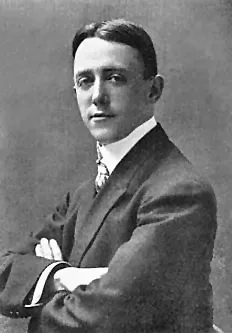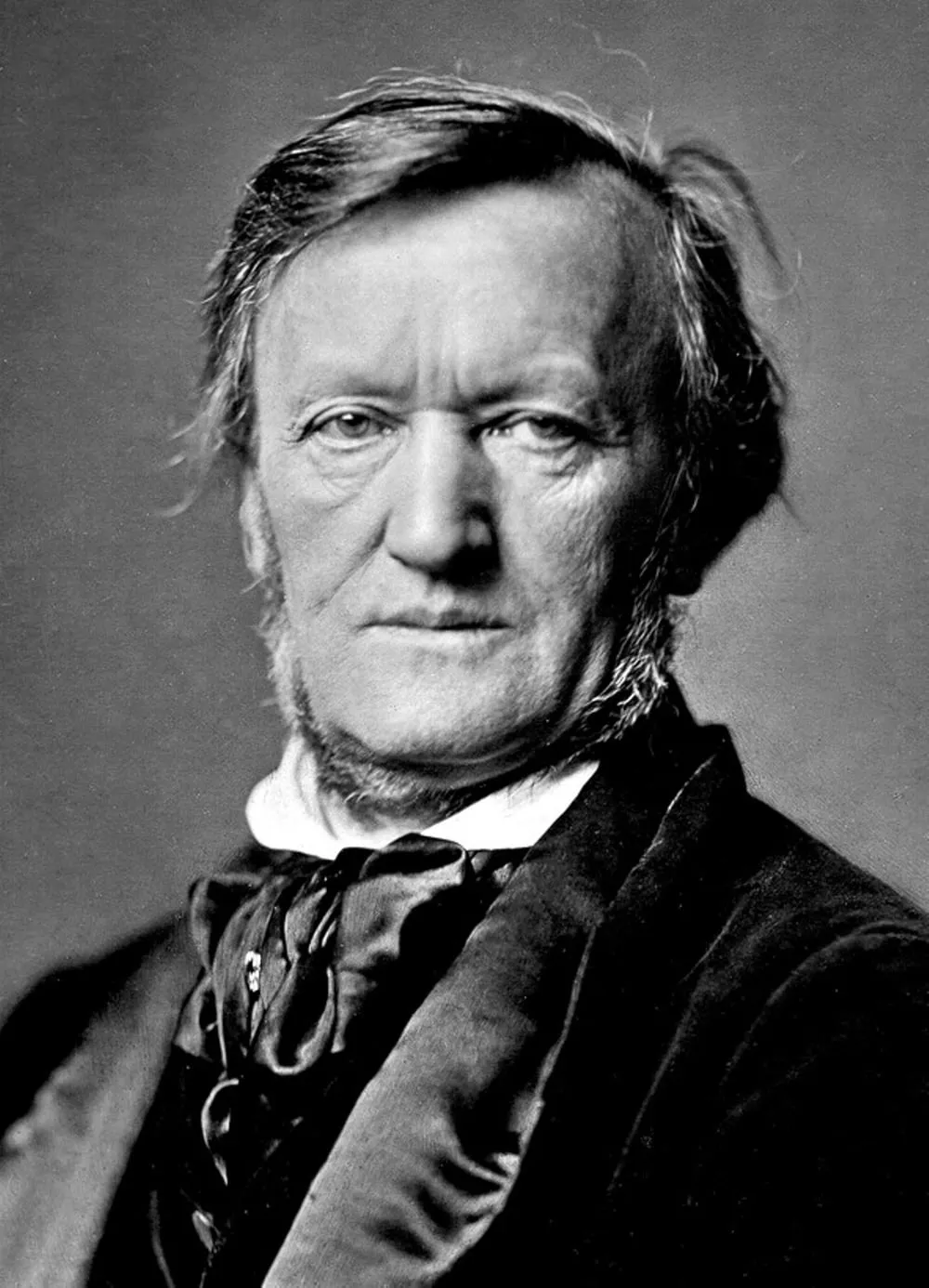
Richard Wagner.

Wilhelm Richard Wagner

Richard Wagner — Composer
Born Leipzig, Germany
Died Venice, Italy
Citizenship Germany

7 min read

Reading time

1,348

Words

Published

1

Film credit

100

Books

1

Award

TL;DR

Richard Wagner, born in 1813 in Leipzig, created the four-opera cycle Der Ring des Nibelungen. His concept of Gesamtkunstwerk unified opera, ballet, and visual arts. Operas like Tristan und Isolde and Die Walküre remain staples of the repertoire. He died in Venice in 1883.

Identity & family.

KIN · 11

Names, aliases, and relatives of Richard Wagner — birth name, kin, and personal ties.

Birth Name Wilhelm Richard Wagner
Nicknames The Old Sorcerer
Aliases Komponisten, R. Vagner, Ricardo Wagner, Wagner, the composer
PARENTS
Johanna Rosina Wagner Geyer Carl Friedrich Wagner
SPOUSES
Cosima Wagner Christine Wilhelmine Planer
CHILDREN
Siegfried Wagner Isolde Wagner
SIBLINGS
Rosalie Wagner Ottilie Brockhaus Louise Wagner Cäcilie Avenarius Albert Wagner

At a glance.

STATS

Richard Wagner by the numbers — life, work, and family.

69 Years lived
1 Film credit
100 Books
1 Award
2 Marriages
2 Children

Who was Richard Wagner?

BIOGRAPHY

Richard Wagner — early life, career, personal life, and legacy.

Early life

May 22, 1813 marked the birth of Richard Wagner in Leipzig, the ninth child of Carl Friedrich Wagner and Johanna Rosina. His father died when he was six months old, and his mother married actor Ludwig Geyer, who raised young Richard. At age 15, he transcribed Beethoven’s 9th Symphony for piano and composed his own works. He studied at the University of Leipzig and took composition lessons with the cantor of St. Thomas.
Career

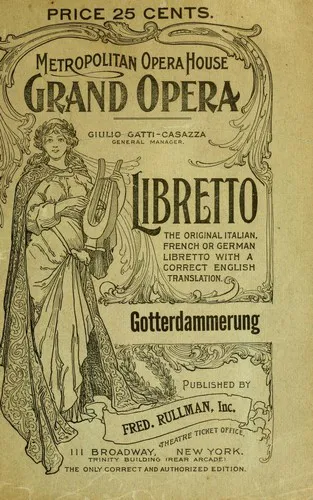
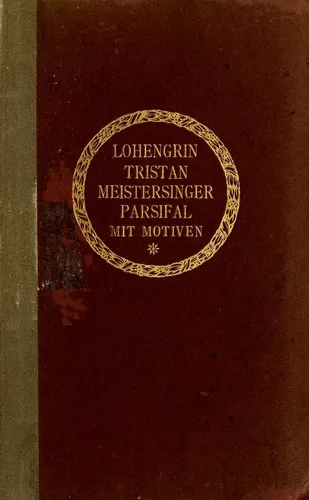
Wagner’s early opera Rienzi achieved acclaim at the Dresden Court Theatre in 1842, leading to his appointment as Royal Saxon Court Conductor. He completed Der fliegende Holländer and Tannhäuser next. After the 1848 revolution, Wagner fled to Switzerland and wrote essays outlining his concept of Gesamtkunstwerk. Between 1853 and 1854 he composed Das Rheingold and Die Walküre, followed by Tristan und Isolde 1857–1859. King Ludwig II of Bavaria patronized Wagner; Tristan premiered in Munich in 1865. Wagner moved to Bayreuth in 1872, and the Festspielhaus opened in 1876 with the premiere of the complete Ring cycle.

Personal life

Wagner married singer Christine Wilhelmine Planer in 1836; they separated due to her extramarital affairs and mounting debts. In 1865, he began an affair with Cosima von Bülow, the daughter of Franz Liszt and wife of conductor Hans von Bülow. Their daughter Isolde was born in 1865. Wagner married Cosima in August 1870, and they had three children: Isolde, Eva, and Siegfried. The family lived at Villa Wahnfried in Bayreuth from 1874.

Legacy

Wagner’s Festspielhaus in Bayreuth, designed specifically for his operas, opened in 1876 and continues to host annual festivals. His use of leitmotifs and the concept of Gesamtkunstwerk influenced later composers. The Wagner Museum in Lucerne, Switzerland, preserves his family’s artifacts and documents their assistance to Jewish musicians fleeing the Nazi regime in the 1930s. Wagner’s four-opera cycle Der Ring des Nibelungen remains his most famous work.

Filmography.

FILMS · 1

Browse the complete filmography of Richard Wagner — every film, TV show, and documentary credit, ranked by popularity.

  1. Movie Poster for Lohengrin

    Lohengrin

Awards & honors.

AWARDS · 1

Every award, honor, and recognition received by Richard Wagner — Grammys, hall-of-fame inductions, civic honors, lifetime achievements.

  • Bavarian Maximilian Order for Science and Art

Bibliography.

BOOKS · 100

Richard Wagner's bibliography — every authored, edited, and co-written book, ranked by edition count.

  1. Cover for Der Ritt Der Walkuren

    Der Ritt Der Walkuren

    by Richard Wagner et al.

  2. Cover for Richard Wagner üBer Tristan Und Isolde

    Richard Wagner üBer Tristan Und Isolde

    by Richard Wagner et al.

  3. Cover for Overture to Tannhauser

    Overture to Tannhauser

    by Richard Wagner et al.

  4. Cover for Meistersinger Von Nürnberg

    Meistersinger Von Nürnberg

    by Richard Wagner et al.

  5. Cover for Lohengrin

    Lohengrin

    by Richard Wagner

  6. Cover for Letters of Richard Wagner

    Letters of Richard Wagner

    by Richard Wagner et al.

  7. Cover for Literary Works

    Literary Works

    by Richard Wagner

  8. Cover for The Flying Dutchman Overture

    The Flying Dutchman Overture

    by Richard Wagner

  9. Cover for Art Life and Theories of Richard Wagner

    Art Life and Theories of Richard Wagner

    by Richard Wagner et al.

  10. Cover for Operas

    Operas

    by Richard Wagner

  11. Cover for Beethoven

    Beethoven

    by Richard Wagner

  12. Cover for ÜBer Das Dirigieren

    ÜBer Das Dirigieren

    by Richard Wagner

  13. Cover for Correspondence of Wagner and Liszt

    Correspondence of Wagner and Liszt

    by Richard Wagner

  14. Cover for The Valkyrics

    The Valkyrics

    by E. F. Benson et al.

Notable quotes.

QUOTES · 3

A wall of memorable lines from Richard Wagner — lyrics, interviews, and off-the-cuff remarks captured over a lifetime.

  • Attack and Defence, Want and War, Victory and Defeat, Lordship and Thralldom, All Sealed with the Seal of Blood: This from Henceforth Is the History of Man.

  • I Believe in God. and Wolfgang Amadeus Mozart and Ludwig Van Beethoven as His Only Sons.

  • Certain Things in Wolfgang Amadeus Mozart Will and Can Never Be Excelled.

Did you know?

FACTS · 9

Little-known facts about Richard Wagner — origins, oddities, and behind-the-scenes details from a public life.

  1. An opera house was designed by Wagner in Bayreuth, still in use today, specifically for his operas. The orchestra pit is covered so singers are not overpowered by the orchestra.

  2. Wagner was a favorite composer of Adolf Hitler, who claimed to have seen Rienzi at least 40 times.

  3. Wagner created a style of music that bears his name.

  4. His wife Cosima was the daughter of composer Franz Liszt and ex-wife of composer Hans von Bülow. They had three children: Isolde 1865, Eva 1867, and Siegfried 1869, all born before their parents married.

  5. Wagner once planned an opera titled Die Sieger based on Buddhist themes.

  6. He wrote his own librettos along with music.

  7. His official father Karl Friedrich Wagner died when he was six months old. His mother quickly married Ludwig Geyer, who may have been his biological father. He was known as Richard Geyer for the first 14 years.

  8. Born at 4:00 am LMT.

  9. Great-grandfather of Gottfried Wagner.

You wanted to know.

FAQ · 40

Quick answers to the questions readers ask most about Richard Wagner.

Audited & updated by

Emma Richardson

Senior Editorial Director & Managing Editor

Emma has 8 years of editorial experience and a very clear idea of what a good biography looks like. At Famousy, she runs the editorial operation and decides what meets the bar and what doesn't. She's the kind of editor who remembers the profiles she pushed back on more clearly than the ones she approved. That's not a complaint. That's exactly why the site reads the way it does.

Report an issue

If something on this page looks off, we genuinely want to know about it. Send us a quick email with the celebrity's name, the detail that seems incorrect, and any sources you're referencing. We review every report and update the page as soon as we can.

Report an issue