-
01
Cooper developed the habit of paying for everything by check, knowing people would keep it for his signature and never cash it, a trick also used by Pablo Picasso.
-
02
Cooper and Ernest Hemingway were close friends for 20 years. Hemingway shot himself a month after Cooper’s death.
-
03
In 1925, Cooper befriended Walter Brennan, then a struggling actor. They later starred together in The Westerner 1940, where Brennan’s performance as Judge Roy Bean stole the film.
-
04
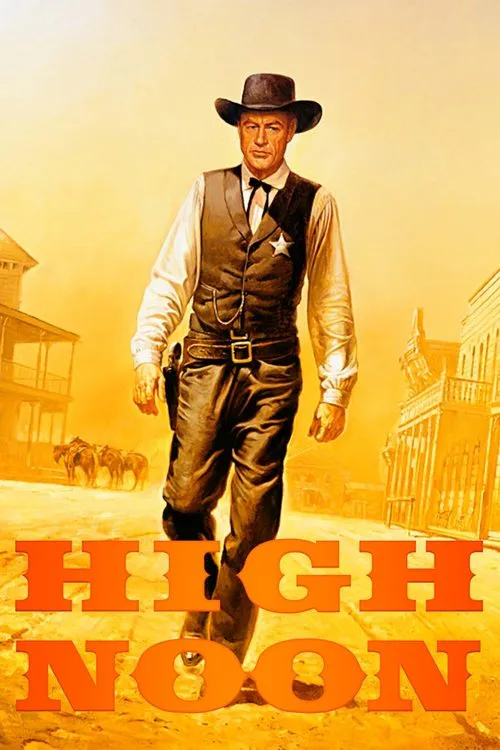
After 25 years in show business, the Motion Picture Herald dropped Cooper from its list of top 10 Box Office performers in 1951. The next year, at 51, he made a comeback with High Noon 1952.
-
05
After James Stewart revealed that Cooper was dying of cancer, messages poured in from Pope John XXIII, Richard Nixon, Henry Fonda, Pablo Picasso, Queen Elizabeth II, Grace Kelly, John Wayne, Ernest Hemingway, Dwight D. Eisenhower, Bob Hope, Audrey Hepburn, and others. Newly inaugurated President John F. Kennedy called and spoke to Cooper for seven minutes.
-
06
In May 1931, after finishing I Take This Woman 1931, exhaustion, physical illness, and the conflict between his possessive mother and jealous mistress led to a nervous breakdown. He had been working 14 to 16 hours a day, losing 30 pounds to a dangerously low 148 lbs.
-
07
He often cited James Stewart as his closest friend.
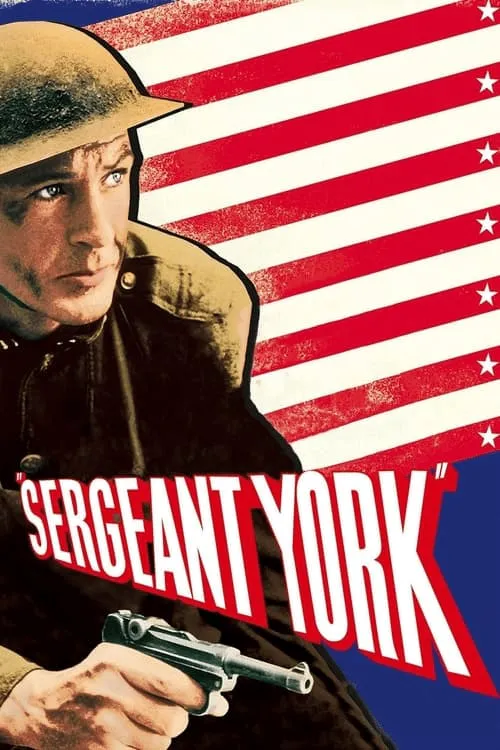
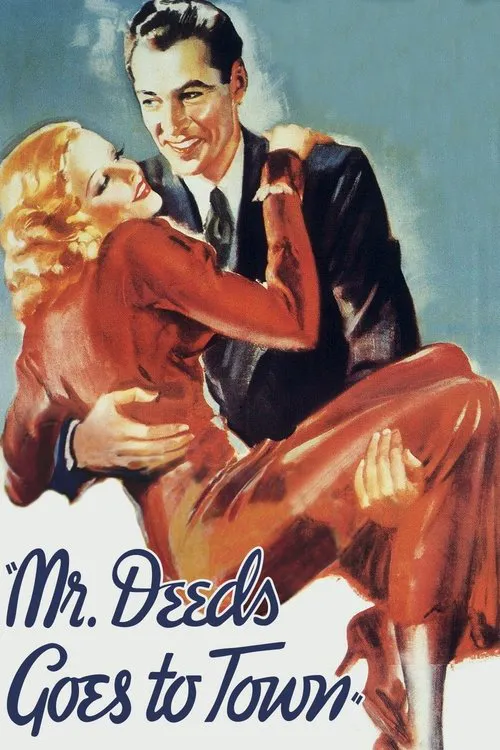
-
08
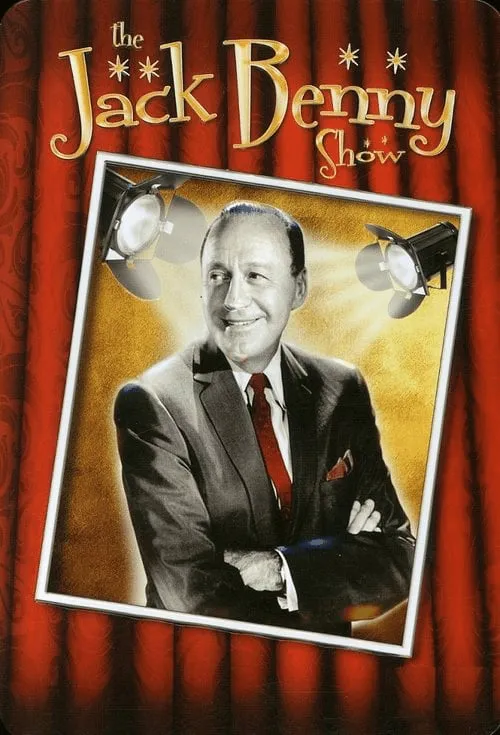
Pallbearers at the funeral were James Stewart, Henry Hathaway, Jack Benny, William Goetz, Jerry Wald, and Charles Feldman. Among the top names attending were Norma Shearer, Dean Martin, Marlene Dietrich, John Wayne, Frank Sinatra, Burt Lancaster, and Judy Garland.
-
09
The revised 1946 lyric to Irving Berlin’s song Puttin’ On the Ritz mentions Cooper as the height of tall, natural American elegance. Design for Living 1933 best showcases this persona.
-
10
A teenage car accident caused a limp he carried his whole life.
-
11
His appetite was prodigious; he once said his starvation diet included a dozen eggs, a couple of loaves of bread, a platter of bacon, and pork chops in between.
-
12
Both of his parents were immigrants from England.
-
13
He appeared in 107 movies, 82 of which he starred in. Only 16 were filmed in color, and he starred in 14 silent movies.
-
14
During filming of Morocco 1930, director Josef von Sternberg treated him dismissively. Cooper picked up the 5’4 director by the collar and said, If you expect to work in this country, you’d better get on to the language we use here.
-
15
He was a close friend and admirer of Pablo Picasso.
-
16
Originally a painter and artist, Cooper intended to earn money as an extra to fund an art course. His college exhibited his drawings and watercolors, and he served as art editor for the yearbook.
-
17
His father, an English immigrant, became a wealthy lawyer and rancher and was a judge on the Montana Supreme Court.
-
18
He liked sports and kept in shape with hiking, riding, tennis, golf, archery, skiing, trout fishing, spear fishing, swimming, scuba diving, and driving fast cars. He also liked boxing.
-
19
In the early 1930s, his doctor told him he had been working too hard. Cooper went to Europe and stayed longer than planned. When he returned, the studio had created the name Cary Grant, reversing Cooper’s initials.
-
20
In May 1974, his body was removed from Holy Cross Cemetery and reburied under a three-ton boulder from a Montauk quarry in Sacred Heart Cemetery in Southampton, New York. His wife explained, Gary loved Southampton.
-
21
Along with Sidney Poitier, he is the most represented actor on the American Film Institute’s 100 Most Inspiring Movies of All Time, with five films: Mr. Deeds Goes to Town 1936, Sergeant York 1941, Meet John Doe 1941, High Noon 1952, and The Pride of the Yankees 1942.
-
22
He never intended to become an actor and only began after meeting two friends from Montana in Los Angeles. He worked as an extra for five dollars a day and a rider for twice that amount, intending to save for an art course.
-
23
A professor at Grinnell College, upon seeing him in a play, recorded that he shows no promise in theater.
-
24
He was not a fan of baseball and had never played or seen a game before being cast as Lou Gehrig in Pride Of The Yankees 1942.
-
25
He was not present to receive his Academy Award in February 1953 for High Noon 1952. He asked John Wayne to accept it on his behalf.
-
26
In spring 1960 he had two operations for prostate cancer and a cancerous part of his colon. The doctors were sure they had gotten all of it. He made The Naked Edge 1961 in England but experienced pain. In February 1961 the cancer had metastasized to his lungs and bones. He said, If it is God’s will, that’s all right, too.
-
27
His screen image was wholesome, but he was an infamous womanizer with affairs reported with numerous leading ladies, many of them married.
-
28
He separated from his wife Rocky in May 1951 mainly over his affair with Patricia Neal. They did not live together again until July 1954.
-
29
In the late 1950s his eating habits caught up with him; he put on 15 lbs, pushing his weight to 190 lbs, still slender on his 6’3 frame.
-
30
Born Frank Cooper, he changed his first name to Gary at the suggestion of his agent Nan Collins, whose hometown was Gary, Indiana.
-
31
He turned down both Stagecoach 1939 and Gone with the Wind 1939.
-
32
Despite failing health, director Henry Hathaway arranged to use him in segments of How the West Was Won 1962. After Cooper’s death, James Stewart accepted the role.
-
33
On 16 April 1958 he entered Manhattan Eye, Ear and Throat Hospital for a full face-lift and other cosmetic surgery. The procedure was not successful and his face looked quite different.
-
34
He did not want to make Friendly Persuasion 1956, fearing the audience would not accept him as a devout Quaker, and he did not want to play a father figure. On set he arranged for his daughter to date Anthony Perkins.
-
35
His lovers included Clara Bow, Evelyn Brent, Carole Lombard, Lupe Velez, Ingrid Bergman, Grace Kelly, Marlene Dietrich, and Patricia Neal. Sir Cecil Beaton also claimed an affair.
-
36
Originally, Cooper was set to play the lead in Mr. Smith Goes to Washington 1939, but Harry Cohn refused to loan him out; James Stewart got the part.
-
37
In 1940 he actively campaigned for Republican Wendell Willkie against Franklin D. Roosevelt. Cooper believed Roosevelt was already too powerful. He advocated most New Deal reforms and thought the GOP should retain them.
-
38
He often played the love interest of a significantly younger woman, as in High Noon 1952 where he was 51 and Grace Kelly was 22.
-
39
He was a close friend of Bing Crosby, who named his eldest son after Cooper.
-
40
Writer Ayn Rand worked as an extra in Hollywood and became a fan of Cooper. She was thrilled he starred in The Fountainhead 1949. Cooper later admitted he didn’t understand her courtroom speech.
-
41
In 1943 Cooper was a founding member of the Motion Picture Alliance for the Preservation of American Ideals. Other early leaders included Robert Taylor, Adolphe Menjou, Sam Wood, Norman Taurog, Clarence Brown, and Walt Disney.
-
42
Premiere Magazine voted him the 42nd Greatest Movie Star of all time.
-
43
He mentored Kirk Douglas as an actor.
-
44
After the critical and commercial disaster You’re in the Navy Now 1951, word got out that Cooper was finished. He disappeared from the top ten box office stars list. But High Noon 1952 proved to be an enormous comeback.
-
45
In 1944 he formed his own production company, International Pictures, with Samuel Goldwyn, Leo Spitz, William Goetz, and Nunnally Johnson. They produced nine movies, two starring Cooper, then sold to Universal in 1946.
-
46
During the 1944 presidential election, the phrase I’ve been for Roosevelt before but not this time was attributed to Cooper, forming full-page ads for the Republican National Committee. Cooper actively campaigned for Thomas E. Dewey.
-
47
His reputation as a conservative is overstated. He appeared as a friendly witness before HUAC in 1947 but avoided naming names. He later starred in High Noon 1952, an allegory for blacklisting, and defended blacklisted screenwriter Carl Foreman. Patricia Neal said Cooper was conservative but not right-wing.
-
48
He worked as a Yellowstone Park guide for several seasons before becoming an actor.
-
49
He appeared in eight movies with Walter Brennan: Watch Your Wife 1926, The Wedding Night 1935, The Cowboy and the Lady 1938, The Westerner 1940, Meet John Doe 1941, Sergeant York 1941, The Pride of the Yankees 1942, and Task Force 1949.
-
50
He blew the harmonica and strummed the guitar; played backgammon and bridge; grew corn and avocados on his Encino ranch and loved to work with his tractor.