-
01
After playing cards with his wife, Keaton died quietly at home in his sleep.
-
02
While remodeling his home in 1952, James Mason discovered several reels of Keaton’s lost films and recognized their historical significance, taking responsibility for their preservation.
-
03
Keaton married into the powerful Talmadge dynasty, leading to rumors that he married for respect, though he is now a film legend while the Talmadges are less known.
-
04
He fractured his neck while filming Sherlock Jr. 1924 but did not learn of it until many years later during a routine X-ray.
-
05
Keaton became hearing-impaired in 1918 after serving in Germany during World War I.
-
06
He performed all his own stunts and also acted as a stunt double for other actors as needed.
-
07
He often surrounded himself with tall, heavyset actors in his films to make his character seem at a physical disadvantage.
-
08
A heavy smoker, Keaton was diagnosed with lung cancer in January 1966 but was never told the diagnosis; he thought he had bronchitis.
-
09
Keaton welcomed sound films, knowing his character didn’t need dialogue but looking forward to sound effects.
-
10
He mentored comedienne Lucille Ball.
-
11
In a scene from Sherlock Jr. 1924, he fractured his neck while hanging from a water tube at a train station.
-
12
He said he learned everything about filmmaking and comedy from Roscoe Fatty Arbuckle.
-
13
A baseball fanatic, Keaton held games between takes and incorporated baseball into his actor hiring applications.
-
14
Keaton was eager to go into sound films because he had a fine baritone voice and years of stage experience.
-
15
He became an alcoholic when his career collapsed around 1930, only kicking the habit after marrying Eleanor Norris in 1940.
-
16
He loved to play baseball and sometimes played between takes on set.
-
17
Spending most of his childhood in vaudeville, he had few peers, but enjoyed summer getaways to an Actor’s Colony in Muskegon, Michigan.
-
18
At age three, he got his right index finger caught in a clothes wringer, resulting in amputation at the first knuckle, visible in The Garage 1919.
-
19
His performance in The General 1926 is ranked #34 on Premiere magazine’s 100 Greatest Performances of All Time 2006.
-
20
Keaton, Charles Chaplin, and Stan Laurel all referred to their screen characters as The Little Fellow.
-
21
He met Roscoe Fatty Arbuckle for the first time on Broadway in New York City.
-
22
He is believed to be the first person to use Buster as a name, popularizing its usage.
-
23
He launched Edward Brophy’s comedy career by giving him a role in The Cameraman 1928.
-
24
He wrote left-handed but played the ukulele right-handed, and threw right-handed and batted left-handed in baseball.
-
25
Unlike Chaplin and Lloyd, Keaton sold his studio to MGM, leading to financial and personal problems.
-
26
He was voted the 7th-Greatest Director of all time by Entertainment Weekly, the highest-rated comedy director.
-
27
He was named the 21st-Greatest Actor on the American Film Institute’s 50 Greatest Screen Legends list.
-
28
Dick Van Dyke delivered the eulogy at Keaton’s funeral in 1966.
-
29
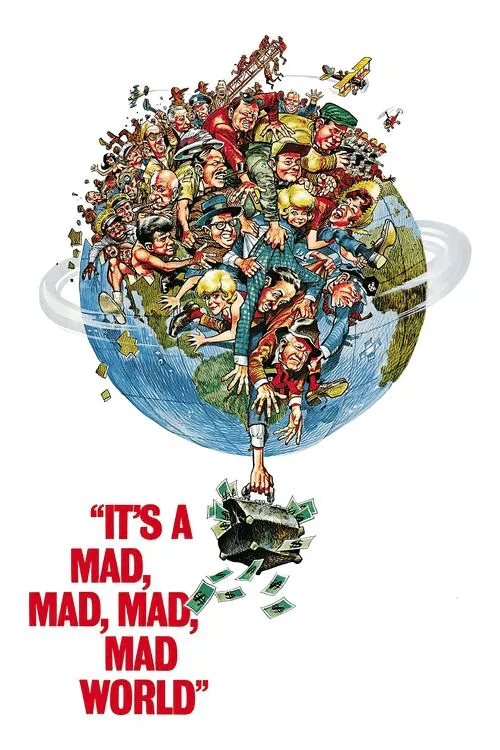
Four of his films appear on AFI’s 100 Funniest Movies list: The General 1926 at #18, It’s a Mad, Mad, Mad, Mad World 1963 at #40, Sherlock Jr. 1924 at #62, and The Navigator 1924 at #81.
-
30
He was already ill with lung cancer during his last film, A Funny Thing Happened on the Way to the Forum 1966, and used a stunt double for the first time.
-
31
The Navigator 1924 was his most successful movie by gross revenue.
-
32
He wanted to become an engineer as a child.
-
33
He died the same day as co-star Hedda Hopper.
-
34
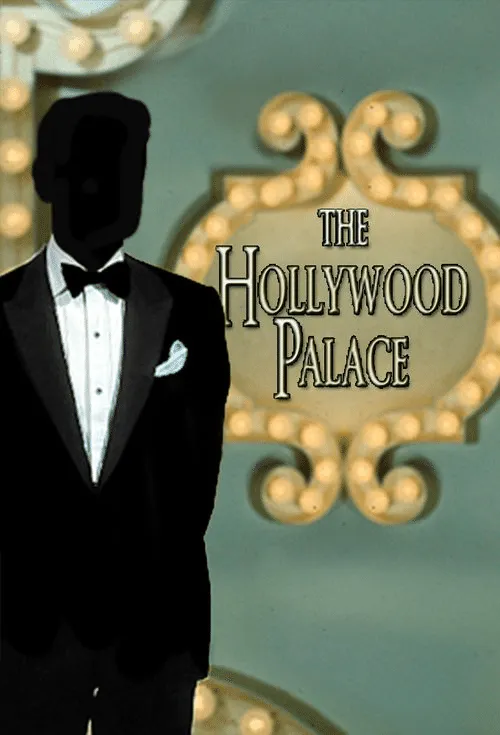
Most biographers overlook his appearance on The Hollywood Palace 1964 with Gloria Swanson.
-
35
The origin of his nickname Buster is attributed to Harry Houdini, though other versions exist.
-
36
He contributed gags to the Red Skelton film A Southern Yankee 1948, famously solving a scene with a dog.
-
37
He appeared in some 16 commercials including Colgate, Alka-Seltzer, and Budweiser.
-
38
On August 19, 2019, he was honored with a day of his film work during Turner Classic Movies Summer Under the Stars.
-
39
In later years, he became better acquainted with Stan Laurel and attended Laurel’s funeral.
-
40
He was awarded two stars on the Hollywood Walk of Fame: for Motion Pictures and for Television.
-
41
He was voted the 35th Greatest Movie Star of all time by Entertainment Weekly.
-
42
He and his in-laws generally didn’t get along, as they were condescending to him for being a comedian.
-
43
He and his parents formed an acrobatic group called The Three Keatons in his early youth.
-
44
He broke his ankle while filming The Electric House 1922 and was still recovering during The Play House 1921.
-
45
Eight of his films have been selected for the National Film Registry, including One Week 1920, Cops 1922, Sherlock Jr. 1924, The Navigator 1924, The General 1926, Steamboat Bill, Jr. 1928, The Cameraman 1928, and Sunset Boulevard 1950.
-
46
He was pictured on a 29¢ US commemorative postage stamp in 1994 as part of a set honoring silent screen stars.
-
47
His favorite film was Hard Luck 1921, which was once lost but a copy has been found.
-
48
His mother was of British/German ancestry, and his father was of Scottish/Irish ancestry.
-
49
After working at MGM for five years, he was fired by Louis B. Mayer for drunken behavior.
-
50
Following his death, he was interred at Forest Lawn Memorial Park in Los Angeles, California.