-
01
He is called the father of modern drama. His grandson Tancred Ibsen became a film director.
-
02
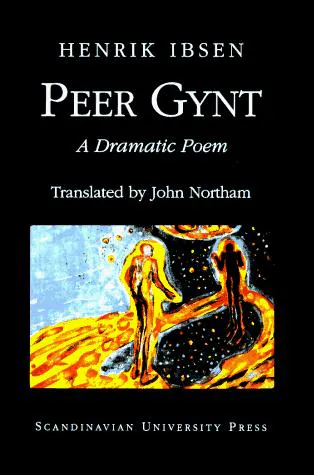
He is called the father of modern drama because his influential plays dealt with shocking issues like venereal disease, a wife abandoning her family, and suicide. He also wrote verse dramas like Peer Gynt, for which Edvard Grieg’s music is now performed more often than the play.
-
03
Dubbed one of the four greats in Norwegian literature, together with Bjørnstjerne Bjørnson, Alexander Kielland, and Jonas Lie.
-
04
In 1846 he had an illegitimate child by Else Sophie Jensdatter, a servant.
-
05
On December 23, 1859 his son Sigurd was born.
-
06
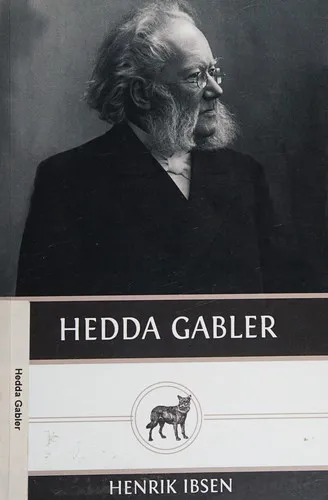
His play Hedda Gabler at the Writers Theatre in Chicago, Illinois was nominated for a 2014 Joseph Jefferson Equity Award for Large Play Production.
-
07
Ibsen is the most frequently performed dramatist in the world after Shakespeare.
-
08
In 1995, the asteroid 5696 Ibsen was named in his memory.
-
09
Ibsen was a Norwegian playwright and theatre director.
-
10
He is called the father of realism and one of the most influential playwrights of his time.
-
11
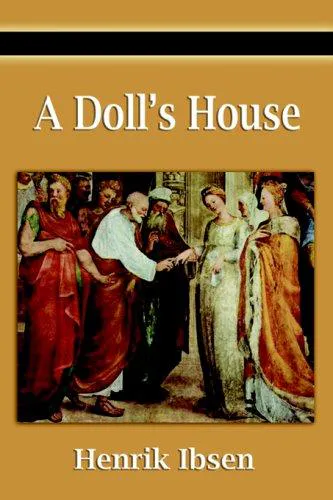
His three-act play A Doll’s House was the world’s most performed play in 2006.
-
12
He received the Grand Cross of the Danish Order of the Dannebrog and the Grand Cross of the Swedish Order of the Polar Star, and was Knight, First Class of the Order of Vasa.
-
13
Ibsen himself regarded Emperor and Galilean as his masterpiece.
-
14
He had a critical eye and conducted a free inquiry into conditions of life and morality. Many critics consider The Wild Duck and Rosmersholm vying for the top place among his works.
-
15
Ibsen is ranked as one of the most distinguished playwrights in the European tradition and is regarded as the foremost playwright of the nineteenth century.
-
16
Ibsen was decorated Knight in 1873, Commander in 1892, and with the Grand Cross of the Order of St. Olav in 1893.
-
17
The 100th anniversary of Ibsen’s death in 2006 was commemorated with an Ibsen year in Norway and other countries.
-
18
Ibsen wrote his plays in Danish, the common written language of Denmark and Norway during his lifetime, and they were published by the Danish publisher Gyldendal.
-
19
In 2012, Håkon Anton Fagerås made a marble statue of Ibsen for the Ibsen Museum in Oslo.
-
20
On 23 May 1906, Ibsen died at his home at Arbins gade 1 in Kristiania after a series of strokes. His last words were On the contrary when a nurse said he was a little better.
-
21
He was nominated for the Nobel Prize in Literature in 1902, 1903, and 1904.
-
22
In 2011, Håkon Anton Fagerås made two bronze busts of Ibsen: one for Parco Ibsen in Sorrento, Italy and one in Skien kommune.
-
23
Ibsen’s later work examined realities behind facades, revealing disquieting truths to contemporaries.
-
24
Although most of his plays are set in Norway, Ibsen lived for 27 years in Italy and Germany, rarely visiting Norway during his most productive years.
-
25
He was the father of Prime Minister Sigurd Ibsen and his dramas strongly influenced contemporary culture.
-
26
He influenced playwrights and novelists such as George Bernard Shaw, Oscar Wilde, Arthur Miller, Marguerite Yourcenar, James Joyce, Eugene O’Neill, and Miroslav Krleza.
-
27
After Peer Gynt, Ibsen abandoned verse and wrote in realistic prose. Several later dramas scandalized audiences by challenging family morals.
-
28
Ibsen’s early poetic play Peer Gynt has strong surreal elements.
-
29
Ibsen’s dramas were informed by his own background in the merchant elite of Skien, and he often modeled or named characters after family members.
-
30
The name Ibsen is originally a patronymic meaning son of Ib. It became a frozen family name in the 17th century.
-
31
His wife, though frequently ill and suffering from gout, outlived him by eight years.