Early life
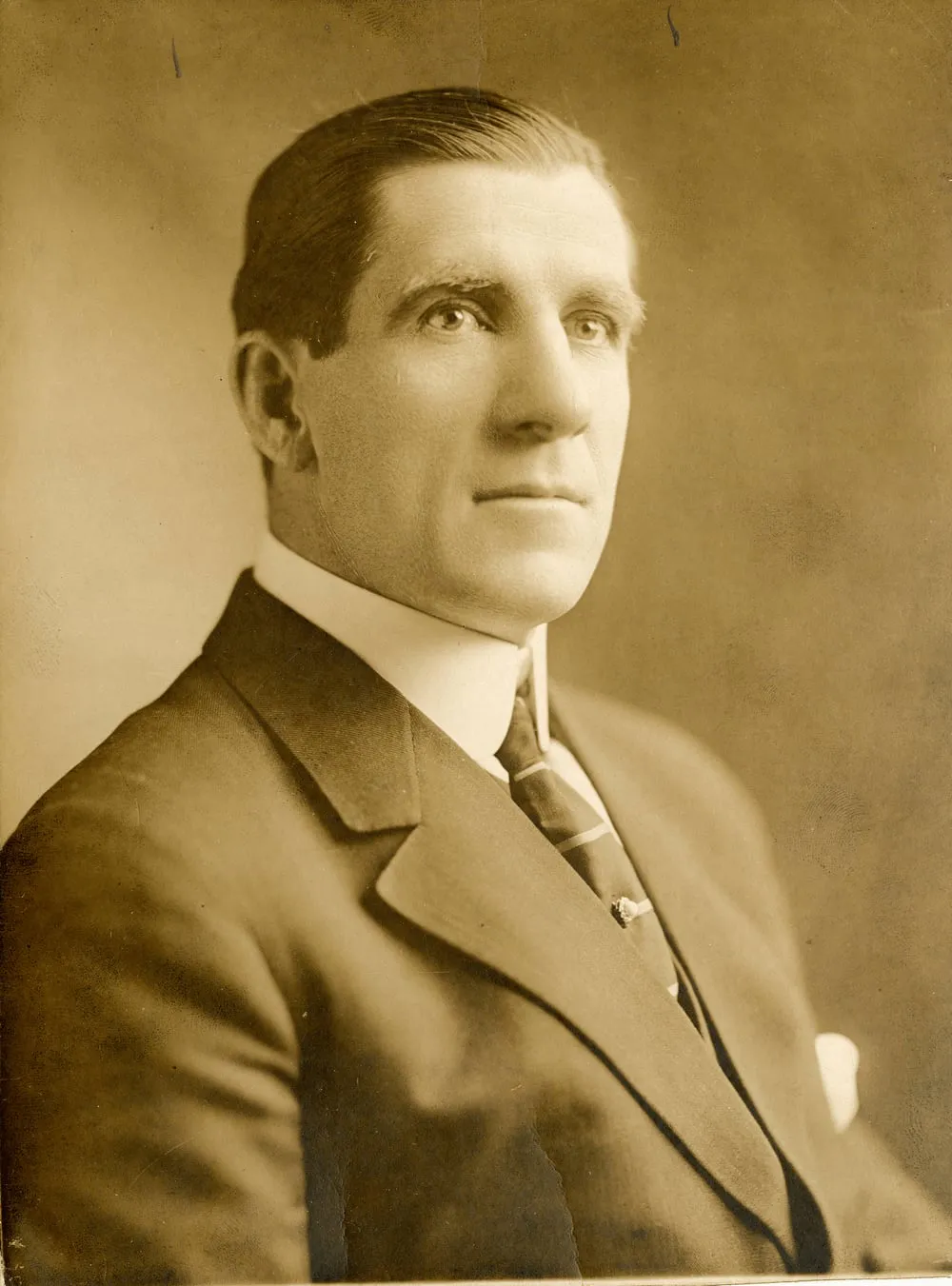
Born in San Francisco on September 1, 1866, James John Corbett attended Sacred Heart Cathedral Preparatory. His father was of Irish ancestry and his mother of Scottish ancestry. Before boxing, he worked as a bank clerk in San Francisco.
James John Corbett
9 min read
Reading time
1,727
Words
Published
James J. Corbett, known as Gentleman Jim, shocked the boxing world in 1892 by defeating the 30-pound heavier John L. Sullivan to become world heavyweight champion. He pioneered scientific boxing, using speed and strategy over brute force. Corbett also acted on Broadway and in early films, and his life was portrayed by Errol Flynn in the 1942 biopic Gentleman Jim.
Names, aliases, and relatives of James J. Corbett — birth name, kin, and personal ties.
James J. Corbett by the numbers — life, work, and family.
James J. Corbett — early life, career, personal life, and legacy.
Born in San Francisco on September 1, 1866, James John Corbett attended Sacred Heart Cathedral Preparatory. His father was of Irish ancestry and his mother of Scottish ancestry. Before boxing, he worked as a bank clerk in San Francisco.
Corbett’s breakout came on September 7, 1892, when he defeated John L. Sullivan in New Orleans, winning the world heavyweight championship in one of the biggest upsets in sports history. He had earlier fought Peter Jackson to a 61-round draw in 1891, a bout that showcased his scientific style. Corbett lost the title to Bob Fitzsimmons in 1897, a fight that became the first feature-length film. Alongside boxing, he acted in plays like Gentleman Jack and appeared in early films such as Corbett and Courtney Before the Kinetograph 1894 and The Corbett-Fitzsimmons Fight 1897.
Corbett married Olive Lake in 1886; they divorced in 1895. He then married actress Jessie Taylor, known as Vera Stanwood, in 1895. Corbett dated actress Maxine Elliott, who also had a relationship with his friend John Montgomery Ward. His brother Joe Corbett pitched for the Baltimore Orioles. In 1898, Corbett’s parents died in a murder-suicide after his defeat to Fitzsimmons bankrupted his father.
Credit for inventing the left hook goes to James J. Corbett, who also pioneered scientific boxing. He entered the International Boxing Hall of Fame in 1990 and the World Boxing Hall of Fame in 1980. In 1998, The Ring magazine ranked him the 34th greatest heavyweight of all time. The 1942 film Gentleman Jim, starring Errol Flynn, adapted Corbett’s autobiography The Roar of the Crowd.
Little-known facts about James J. Corbett — origins, oddities, and behind-the-scenes details from a public life.
Corbett claimed he invented the left hook punch.
He is generally considered the first scientific fighter because he used his speed and knowledge of an opponent’s strengths and weaknesses to develop a strategy rather than relying on brawn and volume of punches.
Corbett was world heavyweight boxing champion from 1892 to 1897 and was inducted into the International Boxing Hall of Fame in 1990.
He was inducted into the World Boxing Hall of Fame in 1980.
Errol Flynn portrayed Corbett in the 1942 film Gentleman Jim.
On May 21, 1891, Corbett fought Peter Jackson, an Australian who could not get a fight against John L. Sullivan because he was black; the match went 61 rounds and was declared a no-contest.
Corbett fought his brother Tom a total of eight times from July to August 1898, badly damaging Tom’s nose in their August 10 bout.
His bout with Steve O’Donnell was stopped when Corbett was told of his parents’ deaths. Patrick Corbett had bet his net worth on Jim’s March 17, 1897 title defense against Bob Fitzsimmons. Jim’s defeat ruined the elder Corbett, who police concluded shot his wife and himself in a fit of dementia on August 16, 1898.
Corbett wrote his autobiography, The Roar of the Crowd, in 1925.
His father was of Irish ancestry and his mother of Scottish ancestry.
The Ring magazine named Corbett the 34th greatest heavyweight of all time in 1998.
After divorcing Olive Lake in 1895, Corbett married actress Jessie Taylor, better known as Vera Stanwood.
Corbett planned to fight Bob Fitzsimmons in Dallas on Halloween Day 1895, but authorities intervened.
On November 11, 1895, Corbett announced his retirement in Maspeth, New York, and gave his title to Peter Maher after Maher defeated Steve O’Donnell via knockout.
At the Chicago World’s Fair in 1893, Corbett boxed exhibitions.
Corbett started a tour in August 1891 and appeared in the play After Dark, where he sparred with Jim Daly for three rounds.
Two days before facing John L. Sullivan for the world heavyweight championship, Corbett took part in three exhibition fights in a train car traveling from Gainesville to Atlanta.
After winning the heavyweight title, Corbett began a tour with John Donaldson, traveling around the eastern United States and sparring for several months as part of the play Gentleman Jack.
Corbett and John Donaldson went on a sparring tour performing Gentleman Jack in April 1894, appearing in London, Paris, and provinces in England, Ireland, and Scotland.
On September 7, 1894, exactly two years after capturing the heavyweight championship, Corbett knocked out Peter Courtney in an exhibition match filmed by Edison’s Kinetoscope; rounds lasted between 90 seconds and 2 minutes due to film reloading constraints.
In November 1895, Corbett began appearing in his third play, A Naval Cadet.
When Fitzsimmons defeated Corbett in 1897, the bout became the first feature film as well as the longest motion picture ever made at the time, lasting more than 100 minutes; it also marks the first time a title fight and title change were captured on film.
When James J. Jeffries faced Jack Johnson, Corbett served as his cornerman; Corbett and Johnson regularly exchanged words while Johnson was thrashing Jeffries.
Nat Fleischer, founder of The Ring magazine and a boxing historian, ranked Corbett the fifth greatest heavyweight of all time in 1968.
Quick answers to the questions readers ask most about James J. Corbett.
Celebrities similar to James J. Corbett — same craft, ranked by reach.

🌍 Hong Kong
🇬🇧 United Kingdom
🇺🇸 United States

🇺🇸 United States
🇺🇸 United States
🇺🇸 United States
🇨🇦 Canada

🇬🇧 United Kingdom
🇺🇸 United States
🇺🇸 United States
🇺🇸 United States

🇮🇪 Ireland