-
01
The public furor over the death of Holmes in The Final Problem was tremendous, and The Strand magazine was besieged by mobs demanding the return of Sherlock Holmes. Doyle was tired of writing about Holmes and wanted to focus on historical fiction, so The Strand bribed him with the equivalent of $1 million for each Sherlock Holmes short story, more than any writer had ever been paid up to that time.
-
02
His most famous creation, the fictional detective Sherlock Holmes, is the most portrayed fictional character in movies.
-
03
He only used Sherlock Holmes’ nemesis, Prof. Moriarty, in one short story.
-
04
The day he finished the final Holmes story, The Final Problem, his diary entry was succinct: Killed Holmes.
-
05
He was on the same cricket team as Peter Pan author J.M. Barrie.
-
06
He very nearly refused a knighthood from Queen Victoria for a book he had written on the Boer War because he was convinced that he was being honored for his Sherlock Holmes stories.
-
07
In addition to writing detective stories, he proved to be a capable amateur detective himself. One of his cases in which he proved a convicted person to be innocent led to the British system for appealing criminal cases.
-
08
He was an ophthalmologist and started writing Sherlock Holmes because his practice was not doing well.
-
09
He was a spiritualist who was ridiculed for bringing a message to Harry Houdini from Houdini’s mother. The message was in English, a language she never knew.
-
10
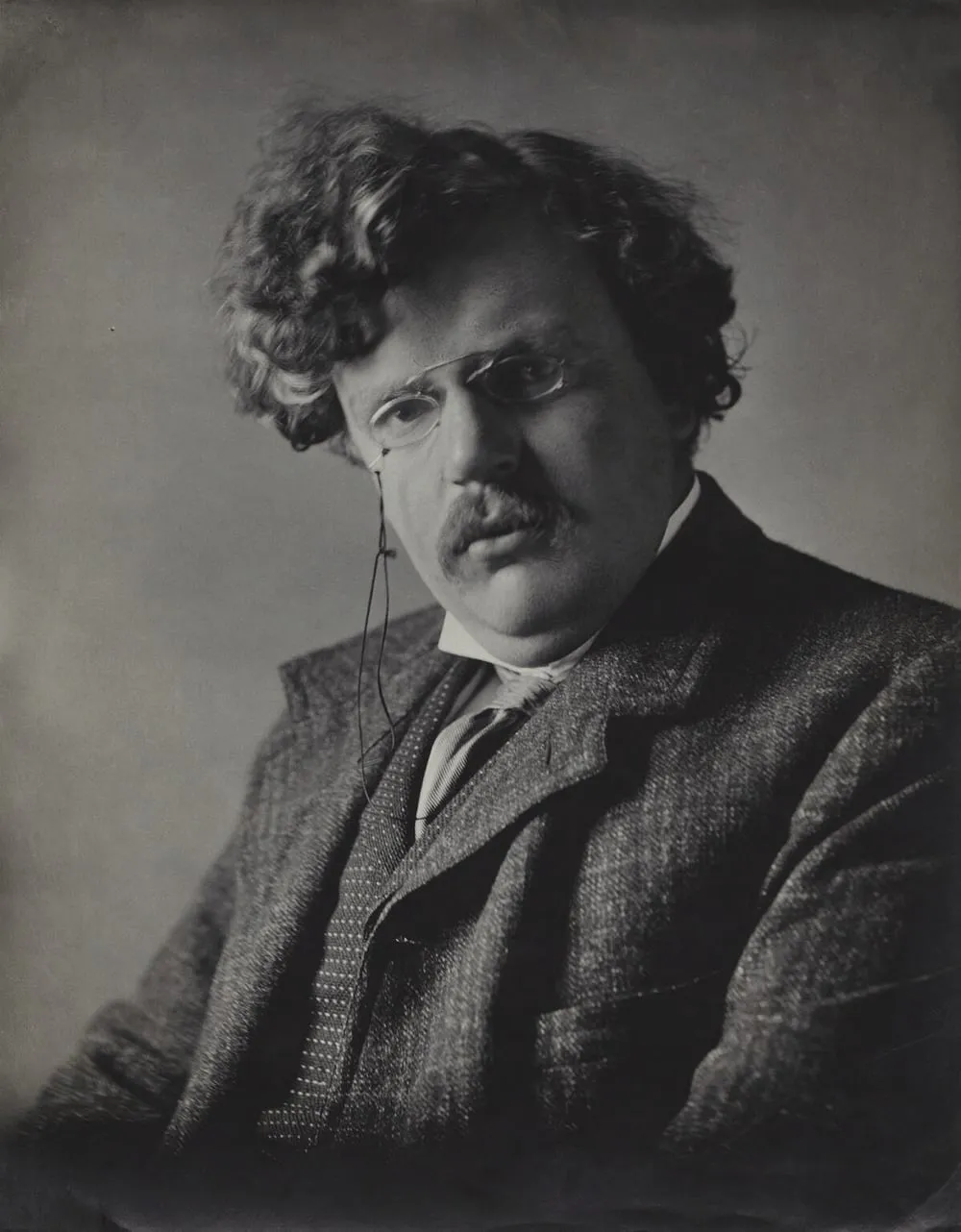
After his death an unfinished Sherlock Holmes story was found among his papers. It dealt with a murderer who used stilts to commit his crime. G.K. Chesterton later used the idea successfully, although he conceived it independently of Doyle.
-
11
He became a fervent anti-war activist after his son Kingsley, a British soldier, died of wounds received in the Battle of the Somme in World War I.
-
12
Although widely remembered as the creator of Sherlock Holmes, he also wrote several notable historical fiction novels. He actually preferred writing these kinds of books over mysteries.
-
13
He published a newspaper article in which he expressed a belief that Harry Houdini accomplished his illusions by disintegrating. Houdini responded in anger that he did not disintegrate anything.
-
14
After the deaths of several of his loved ones, he became a devout believer in spiritualism and made his rationalist character, Prof. Challenger, follow the same route. His friend Harry Houdini unsuccessfully tried to show him spiritualism was phony by debunking spirit mediums, but to no avail. Doyle instead started to believe that Houdini himself had psychic powers, which he used to disrupt others and perform some of his most hard-to-figure-out magic tricks.
-
15
He had a reputation among his friends as a practical joker and is considered by historians as the most likely person responsible for the infamous Piltdown Man fossil hoax.
-
16
He said that the character of Sherlock Holmes was inspired by Dr. Joseph Bell, for whom Doyle had worked as a clerk at the Edinburgh Royal Infirmary. Like Holmes, Bell was noted for drawing major conclusions from the smallest observations. Sir Henry Littlejohn, lecturer on Forensic Medicine and Public Health at the Royal College of Surgeons, is also cited as a source for Holmes.
-
17
He was of Irish descent on both his parents’ sides.
-
18
For many years a story circulated that he was a track-and-field official at the 1908 Summer Olympic Games in London and helped drag Italian marathoner Dorando Pietri across the finish line, causing disqualification. That proved not to be true, but he did write a special report on the 1908 Olympic Marathon race.
-
19
He was an accomplished sportsman who played cricket for the Marylebone Cricket Club in London, and also was a founder and first goal keeper for his local football team, Portsmouth F.C., while living in Portsmouth. He played as either goalkeeper or right-back between 1884-90, initially under the pseudonym A.C. Smith.
-
20
He based the character of Prof. James Moriarty, Sherlock Holmes’ most famous nemesis, on real-life crime boss Adam Worth, a man once dubbed the Napoleon of Crime.
-
21
He attended Stonyhurst College, a renowned Jesuit institution in Lancashire, England.
-
22
When Alan Arnold wrote the novelization for Young Sherlock Holmes 1985, he wrote a lengthy tribute to Doyle’s creations.
-
23
He was created a Knight Bachelor in the 1902 King’s Honours List for his services on the publication of the book The War in South Africa: The Cause and its Conduct. In July of that year he had been appointed Deputy Lieutenant of Surrey.
-
24
Born at 4:55 a.m. or 5:08 a.m. LMT.
-
25
He sold the first Sherlock Holmes novel, A Study in Scarlet, to the publishing house Ward, Lock & Co. for only 25 pounds sterling.
-
26
He attempted to dissuade publishers from demanding more Sherlock Holmes stories by asking for larger sums of money as his fee. To his surprise, many publishers were willing to pay handsomely.
-
27
In the early 20th century, he allied himself to Roger Casement, an Irish diplomat who investigated human rights abuses. Doyle aided Casement’s efforts to publicize abuses in the Congo Free State. Casement was later executed for supporting the Easter Rising, and Doyle tried to save Casement’s life by claiming insanity.
-
28
He was the father of Adrian Conan Doyle and Jean Conan Doyle.
-
29
Twice sought election to the British Parliament, first in 1900 and again in 1906, as a candidate for the Liberal Unionist Party. He failed both times.
-
30
In his autobiography, he explained that he wanted Sherlock Holmes to be different than previous literary detectives. He wanted Holmes to solve cases based on his own skills, not merely to exploit the folly of the criminals.
-
31
He was brother-in-law of E.W. Hornung.
-
32
Biography/bibliography in Contemporary Authors, New Revision Series, Vol. 131, pages 104-123.
-
33
He lived in Birmingham UK from 1878-81.
-
34
Started writing Sherlock Holmes stories in 1886, and they began being published by 1887. By November 1891 he was fed up with Holmes and thinking of killing off the character. He wrote to his mother about his thoughts, and she wrote back that this would be a mistake. He did kill Holmes in 1893, but demand never ceased. He wrote a new Holmes novel in 1901 and resurrected the character in 1903, continuing until 1927.