-
01
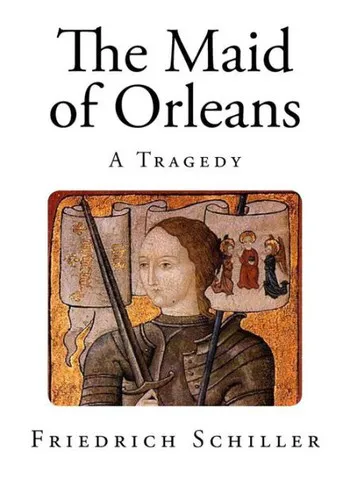
His plays are frequently used as librettos for operas, including Gioachino Rossini’s William Tell Overture, Giuseppe Verdi’s Don Carlos, and Pyotr Ilyich Tchaikovsky’s The Maid of Orleans.
-
02
Most Germans consider Schiller Germany’s most important classical playwright; critics note his innovative use of dramatic structure and creation of the melodrama and bourgeois tragedy.
-
03
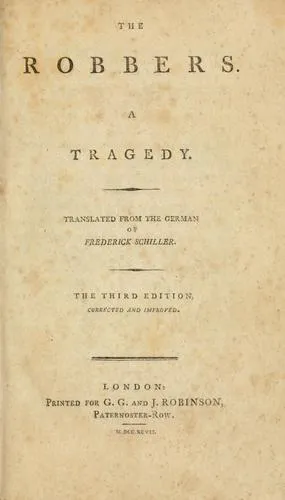
While at the Karlsschule, Schiller read Rousseau and Goethe, and wrote his first play The Robbers, which dramatizes the conflict between two aristocratic brothers and critiques social corruption, making him an overnight sensation.
-
04
In 1780, he became a regimental doctor in Stuttgart but disliked the job; after attending the first performance of The Robbers without permission, he was arrested and forbidden to publish, leading him to flee Stuttgart in 1782.
-
05
Because his parents wanted him to become a priest, a village priest instructed him in Latin and Greek; Schiller later named the cleric in his first play after him.
-
06
His father was away during the Seven Years’ War when Friedrich was born; he was named after King Frederick the Great and called Fritz by nearly everyone.
-
07
On 22 February 1790, Schiller married Charlotte von Lengefeld; they had two sons and two daughters, and the last living descendant died in 1947.
-
08
Friedrich Schiller was born on 10 November 1759 in Marbach, Württemberg, as the only son of military doctor Johann Kaspar Schiller and Elisabetha Dorothea Schiller, with five daughters including the eldest Christophine.
-
09
In 1766, the family moved to Ludwigsburg after his father’s pay was delayed; there Schiller caught the attention of Duke Karl Eugen and entered the Karlsschule in 1773, where he studied medicine.
-
10
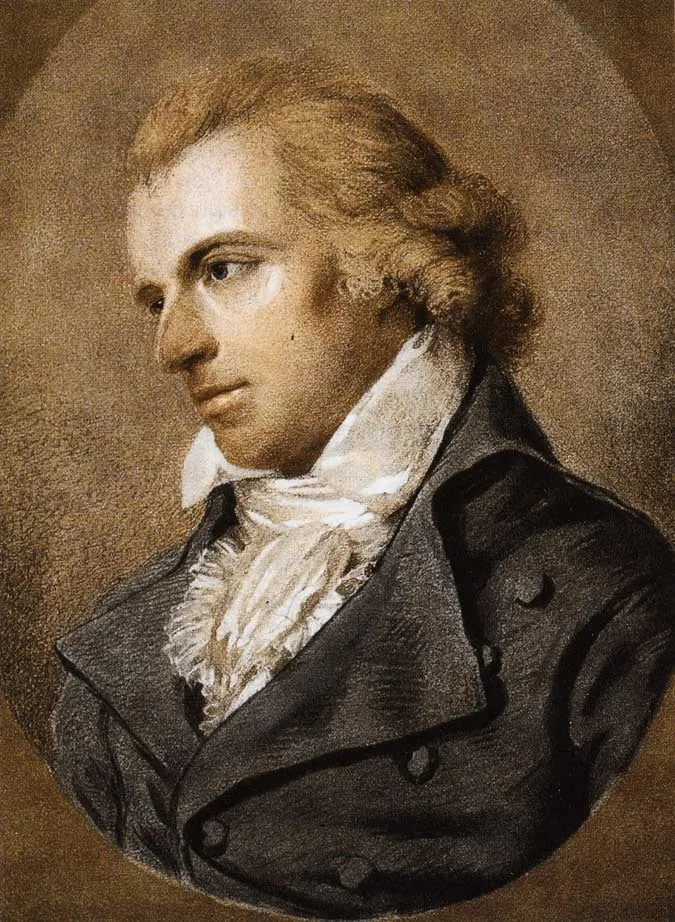
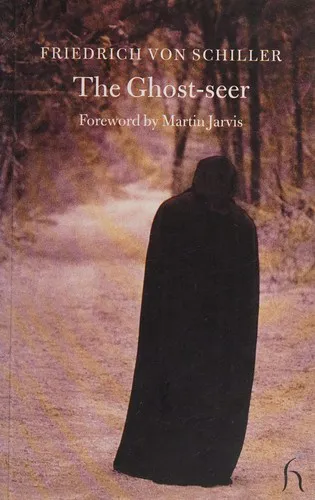
In Lorch, Schiller received his primary education, but the lessons were poor and he regularly cut class with his older sister.
-
11
The Italian composer Giuseppe Verdi admired Schiller greatly and adapted several plays into operas: I masnadieri The Robbers, Giovanna d’Arco The Maid of Orleans, Luisa Miller Intrigue and Love, and Don Carlos.
-
12
Caroline von Wolzogen wrote the first authoritative biography of Schiller in 1830, titled Schillers Leben Schiller’s Life.
-
13
Ludwig van Beethoven remarked that a great poem is harder to set to music than a merely good one, adding that Goethe is easier in that respect than Schiller.
-
14
Schiller grew up in a religious Protestant family and spent much of his youth studying the Bible, which influenced his writing for the theatre.
-
15
Schiller wrote many philosophical papers on ethics and aesthetics, synthesizing Immanuel Kant with German idealist thought and exploring the link between morality and aesthetics.
-
16
On 10 November 2019, Google celebrated his 260th birthday with a Google Doodle.
-
17
Goethe convinced him to return to playwriting; together they founded the Weimar Theater and their collaboration led to a renaissance in German drama. For his achievements, Schiller was ennobled in 1802.
-
18
In September 2008, Arte TV viewers voted Schiller the second most important playwright in Europe after William Shakespeare.
-
19
During the last seventeen years of his life, Schiller developed a productive friendship with Goethe, discussing aesthetics and collaborating on the satirical poems Xenien.
-
20
The 20th-century composer Giselher Klebe adapted The Robbers for his first opera, premiering in 1957.
-
21
A coffin purportedly containing Schiller’s skeleton was placed in the Weimarer Fürstengruft in 1827, but DNA tests in 2008 revealed the skull was not his, so his tomb is now vacant.
-
22
Schiller Park in Columbus, Ohio, named after Schiller, features a statue from 1891; during WWI it was renamed Washington Park but later changed back.
-
23
The German-American community of New York City donated a bronze sculpture of Schiller to Central Park in 1859, its first installed sculpture.
-
24
Herman Matzen designed a Friedrich Schiller statue on Belle Isle in Detroit, commissioned in 1908.
-
25
Stuttgart erected a statue in his memory in 1839 on Schillerplatz, and Berlin unveiled a Schiller monument on its Gendarmenmarkt in 1871.
-
26
His image appeared on the German Democratic Republic 10 Mark banknotes of the 1964 emission.
-
27
In 1923, German composer Frieda Schmitt-Lermann wrote music for a theatre production based on Schiller’s text; German-Russian composer Zinaida Petrovna Ziberova set Schiller’s William Tell to music in 1935.
-
28
His father Kaspar Schiller was rarely home during the war but visited occasionally; after the war ended in 1763, he became a recruiting officer and the family moved to Lorch.
-
29
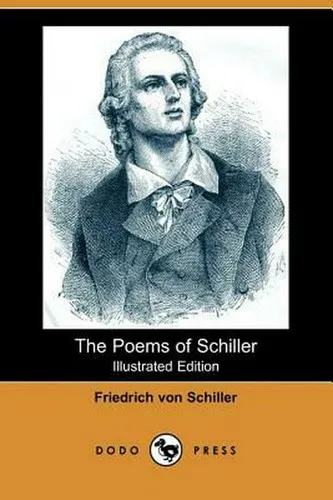
Schiller was a German playwright, poet, and philosopher.
-
30
Elise Schmezer used Schiller’s text for her lied Das Geheimnis, and Tchaikovsky partly based his 1881 opera The Maid of Orleans on Schiller’s work.