-
01
In April 1945, just before Allied armies reached Milan, Mussolini and his mistress Clara Petacci were caught by Italian Communist partisans. It is unclear whether his objective was to cross the Swiss border or go to the Valtellina. Both were summarily executed and their corpses hung upside down at a petrol station in Loreto Square, Milan.
-
02
In the early years of his rule he was sympathetic to the Zionist movement, meeting cordially with Chaim Weizmann. After reading Mein Kampf, he knew Hitler despised Italians. In 1938, under German pressure, he enacted minor anti-Jewish laws that largely went unenforced. Only after the German invasion in 1943 did deportations begin.
-
03
He joined Adolf Hitler in declaring war on the United States on December 11, 1941.
-
04
His party had many Jewish members, including Aldo Finzi, Renzo Ravenna, Margherita Sarfatti, Ettore Ovazza, and Guido Jung. Mussolini refused to deport Jews to Nazi death camps, saving thousands of lives.
-
05
He had been a heavy smoker until about age 40, after which he became a militant anti-smoker.
-
06
He annexed Albania in April 1939.
-
07
Many German commanders resented propping up Mussolini during World War II; a German prewar study suggested Italy remain neutral.
-
08
He sought to delay a major war until at least the end of 1942, and the Pact of Steel required both parties not to go to war without each other’s support until 1943.
-
09
From the March on Rome in 1922 to the Ethiopian War in 1935, Mussolini was highly esteemed globally, especially in the United States. American attitudes cooled during Italy’s subjugation of Ethiopia from 1935 to 1936.
-
10
He laid the first stone of Rome’s Cinecittà Studio on January 29, 1936.
-
11
When World War II began in September 1939, he was humiliatingly obliged to remain neutral due to military unpreparedness. He entered the war on June 10, 1940, sending forces to invade France and Greece.
-
12
He sent an Italian force to join the invasion of the Soviet Union in July 1941, though not requested by Hitler.
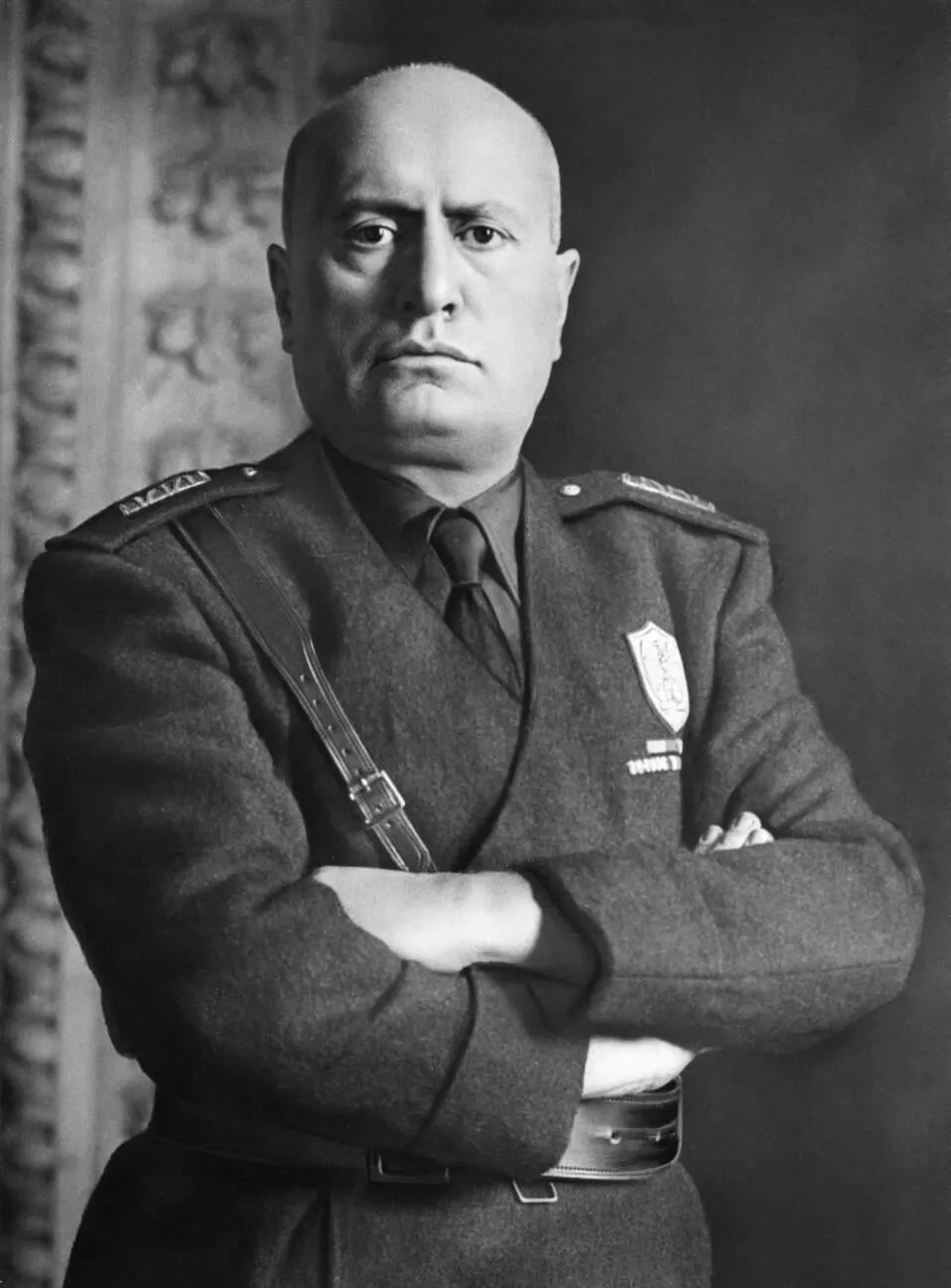
-
13
He entered World War II primarily to hit back at France. Soviet propaganda thereafter portrayed Nazism and fascism as identical ideologies.
-
14
Encouraged by Hitler, he provided military support to Francisco Franco in the Spanish Civil War.
-
15
He formed the Rome-Berlin Axis in 1936, joined the Anti-Comintern Pact in 1937, and signed the Pact of Steel in 1939.
-
16
Originally he was not close to Hitler; he publicly ridiculed Hitler’s view of a Germanic people and threatened war in 1934 if Germany invaded Austria.
-
17
Italian harbors imported materials for the German war effort from 1939 to 1940. The UK and France considered a preemptive strike on Italian forces in Libya to force Italy into the war early.
-
18
In December 1943 he told a journalist he regretted adopting the Manifesto of Race in 1938.
-
19
The Italian entry into World War II immediately began the North African Campaign, the Battle of the Mediterranean, and the Siege of Malta.
-
20
On June 11, 1940, he sent the Regia Aeronautica to attack French bases in Tunisia, North Africa, and on Corsica, as well as British installations on Malta.
-
21
During the Munich Conference he pretended to be impartial, but worked behind the scenes to concede the Sudetenland to Germany.
-
22
Although he opposed the unification of Austria with Germany in 1934, he later publicly supported the Anschluss in March 1938.
-
23
After Italy entered the war, German pressure led to the internment of Jewish refugees in Campagna. However, he was not consulted about deportations from Rome in autumn 1943.
-
24
During the 1930s he was praised by Franklin D. Roosevelt and Winston Churchill, the latter calling him the greatest living legislator.
-
25
He did not want to lead the Italian Social Republic, telling Hitler he was ill and wanted to retire. Hitler threatened to destroy Italian cities if he refused.
-
26
He met Adolf Hitler for the first time on June 14, 1934, during Hitler’s first state visit to Italy.
-
27
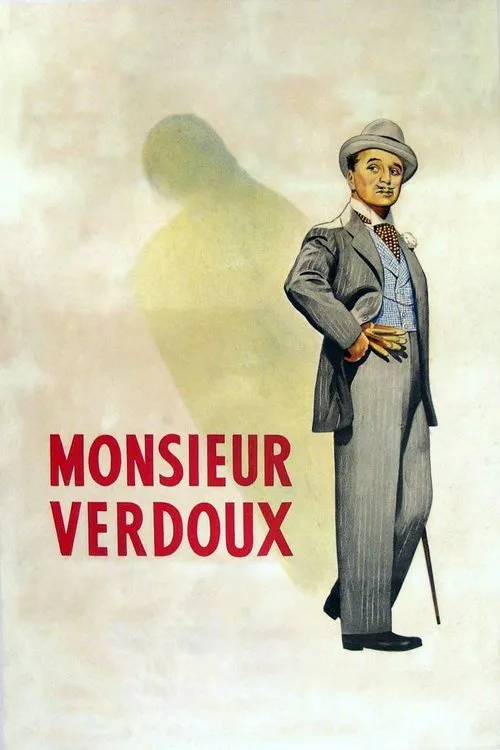
The dictator Napaloni in the 1940 film The Great Dictator is based on Mussolini, and Nehemiah Persoff’s Little Bonaparte in the 1959 film Some Like It Hot does an impression of him, as does Vittorio Caprioli in the 1960 film Zazie in the Metro.
-
28
Even after the Manifesto of Race in July 1938, Mussolini made contradictory public statements about race.
-
29
He was critical of Hitler’s belief in eugenics and Aryan supremacy, describing it as a pity that Germans were descendants of those who were illiterate when Rome had Caesar, Virgil, and Augustus.
-
30
He was frequently ill and depressed in the first half of 1943, losing support even among loyalists. When the Allies would not negotiate, his followers decided the regime needed new leadership.
-
31
He reluctantly agreed to lead the Italian Social Republic to limit German atrocities against civilians.
-
32
His grave continues to be visited by thousands of admirers and neo-fascists every year in the 21st century.
-
33
After Italy invaded Ethiopia, Mussolini abolished slavery, freeing nearly half a million slaves in April 1936.
-
34
He was imperfectly fluent in English, French, and German, speaking them with a heavy accent.
-
35
Under German pressure, he had his son-in-law Galeazzo Ciano executed in January 1944, a decision he greatly regretted.
-
36
He was fascist dictator of Italy from 1922 to 1943, governing constitutionally as Prime Minister until dropping democratic pretense in 1925.
-
37
On October 31, 1922, at age 39, he became the youngest Prime Minister in Italian history until Matteo Renzi in 2014.
-
38
He is the grandfather of Alessandra Mussolini.
-
39
His fascist state provided a model for Hitler’s later economic and political policies in Germany.
-
40
He qualified as an elementary schoolmaster in 1901, following his mother’s profession.
-
41
He coined the term fascism from the fasci carried by magistrates in ancient Rome, reflecting intellectual debt to socialism.
-
42
He sent the Italian Air Corps to Belgium in September 1940 to participate in the Blitz against the UK from October 1940 to April 1941.
-
43
While Hitler had no interest in overseas colonies, Mussolini intended to build an Italian empire in North Africa and the Mediterranean.
-
44
In 1937 Muslim leaders in Libya presented him with the Sword of Islam, and Fascist propaganda pronounced him Protector of Islam.
-
45
He had to be bailed out by the Germans in France in June 1940, in North Africa in February 1941, and in the Balkans in April 1941. Hitler later blamed the delay of Operation Barbarossa on Mussolini, though the late thaw was the actual cause.
-
46
Considerable support in Italy for entering the war in June 1940 waned by summer 1942 as the tide turned against the Axis.
-
47
Unlike Hitler in modern Germany, Mussolini is still widely celebrated in Italy, with many fascist monuments remaining.
-
48
The still-neutral Mussolini offered to broker a negotiated end to the war on May 26, 1940, but the British government rejected the offer on May 29.
-
49
When Hitler learned that Mussolini had formally declared war rather than launch a surprise attack on the British fleet, he said, This must be the last declaration of war in history!. Germany and Italy declared war on the United States on December 11, 1941.
-
50
When Hitler ascended to power, Mussolini publicly praised him while privately criticizing the Nazis as boring and unrefined.