-
01
The publication of Les Misérables led to the shortest correspondence at that point: Hugo telegraphed a single ? and his publisher replied with !.
-
02
In 1884, Hugo visited the construction site of the Statue of Liberty and said The idea, it is everything.
-
03
Philosopher Friedrich Nietzsche included Hugo in his list of impossible people, describing him as a lighthouse in a sea of absurdity.
-
04
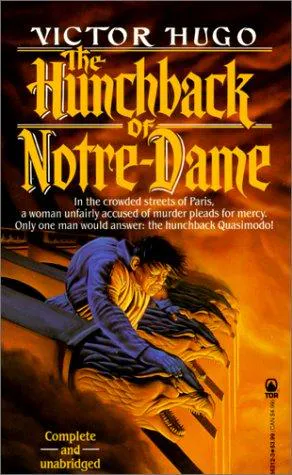
Les Misérables is the source for 48 operas; The Hunchback of Notre Dame is the source for 16 operas.
-
05
Hugo’s brother Eugène went mad when Hugo married Adèle Fourcher, whom Eugène secretly loved. He died at Charenton Asylum on 20 February 1837.
-
06
Hugo’s remains were interred at the Pantheon in Paris, France.
-
07
Mortified to be descended from commoners, Hugo adopted more illustrious ancestors and designed a crest with the words Ego Hugo.
-
08
The appearance of Gwynplaine, the hero of The Man Who Laughs, especially portrayed by Conrad Veidt, inspired the Joker’s appearance.
-
09
Les Misérables became popular among Confederate soldiers in the American Civil War, who called themselves ‘Lee’s Miserables’. Hugo strongly condemned slavery and wrote a public letter against the execution of John Brown.
-
10
Hugo had a mistress, Juliette Gauvain Juliette Drouet, for 50 years, and many other affairs. He escaped adultery sentencing in 1845 by royal pardon.
-
11
Hugo was a personal favorite of Ayn Rand, who was inspired to become a writer after reading his books.
-
12
Hugo was appointed Pair de France in 1845.
-
13
In 1848, Hugo announced his candidacy for president of the French Republic but received very few votes.
-
14
Hugo won a seat in the National Assembly in 1871 but soon resigned out of frustration.
-
15
Hugo’s daughter Adèle’s unrequited love for an English soldier was the basis of the film The Story of Adele H 1975.
-
16
Les Misérables has been adapted into a hit stage musical and two hit television series. Roy Higgins modeled Richard Kimble in The Fugitive on Jean Valjean, and Gerard on Javert.
-
17
Hugo was at the bedside of Honoré de Balzac when he died.
-
18
Hugo was a staunch and vocal opponent of capital punishment.