-
01
Budd Schulberg, screenwriter who won an Oscar for On the Waterfront, told Fox News at Seven in October 2003 that he had seen Kazan in September, just before his death at age 94. He claimed that Kazan was still complaining that Darryl F. Zanuck of 20th Century-Fox had passed on making Waterfront.
-
02
His selection for an Honorary Oscar angered many in the filmmaking community because he was among the first to cooperate with the House Un-American Activities Committee in 1952, which led to blacklisting that ruined many careers. Loud protests accompanied his selection; some attendees like Nick Nolte and Ed Harris stayed seated and refused to applaud, while others such as Warren Beatty, Meryl Streep, Helen Hunt, Karl Malden, Kurt Russell, and Kathy Baker stood and applauded. Robert De Niro and Martin Scorsese presented the honorary Oscar.
-
03
Francis Ford Coppola first offered Kazan the role of Hyman Roth in The Godfather Part II 1974, which ultimately went to Lee Strasberg.
-
04
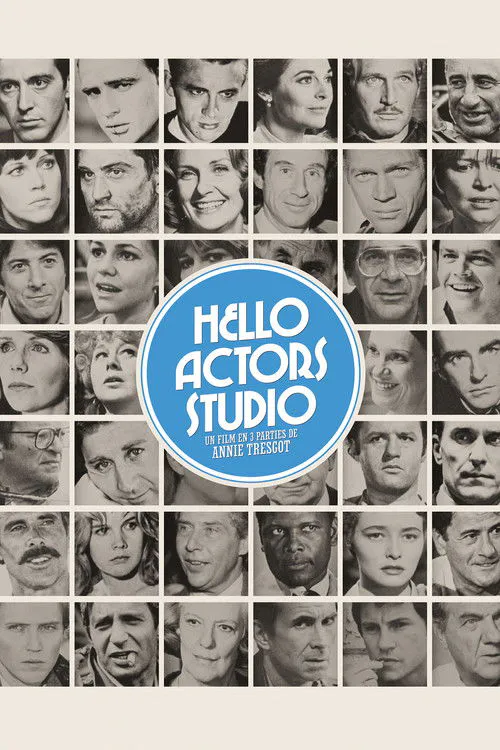
Along with Cheryl Crawford and Robert Lewis, Kazan founded the Actors’ Studio in 1947.
-
05
Kazan directed 21 different actors in Oscar-nominated performances: James Dunn, Celeste Holm, Gregory Peck, Dorothy McGuire, Anne Revere, Jeanne Crain, Ethel Barrymore, Ethel Waters, Karl Malden, Vivien Leigh, Kim Hunter, Marlon Brando, Anthony Quinn, Eva Marie Saint, Lee J. Cobb, Rod Steiger, Jo Van Fleet, James Dean, Carroll Baker, Mildred Dunnock, and Natalie Wood. Dunn, Holm, Malden, Leigh, Hunter, Quinn, Brando, Saint, and Van Fleet all won Oscars for their performances in Kazan films.
-
06
In 1999, Gregory Peck supported the decision to give Kazan an honorary Oscar for lifetime achievement, stating he believed a man’s work should be separate from his life.
-
07
Kazan received a Star on the Hollywood Walk of Fame at 6800 Hollywood Boulevard on February 8, 1960.
-
08
Known for directing Method actors, Kazan was the only director to have worked with three of the earliest and most famous ones: James Dean, Marlon Brando, and Montgomery Clift. He also directed Robert De Niro in The Last Tycoon 1976.
-
09
Sidney Lumet remarked about Kazan: What moves me most about his work is his pioneering spirit. Emotions, passions were put up on the screen. That Mediterranean release is responsible for a lot of what we’re doing today.
-
10
Despite having two cinematic successes with Tennessee Williams works A Streetcar Named Desire and Baby Doll, Kazan did not direct the movie version of Cat on a Hot Tin Roof 1958, although he had won a Tony Award nomination for staging Williams’s Pulitzer Prize-winning play on Broadway. During the play’s production, Kazan had trouble with Williams and demanded that Williams rewrite the second act to bring Big Daddy back on stage. Williams complied but had Big Daddy tell what Kazan felt was the equivalent of a dirty joke, possibly out of pique.
-
11
Kazan directed four performers to Best Supporting Actress Oscars: Celeste Holm, Kim Hunter, Eva Marie Saint, and Jo Van Fleet.
-
12
In 1956, Kazan received his third Tony Award nomination for Best Director, for directing the play Cat on a Hot Tin Roof.
-
13
With his wife Molly Kazan, he had four children: Judy, Chris, Nicholas, and Katharine. With Barbara Loden, he had two children: Leonard and Marco. He is the grandfather of actress Zoe Kazan.
-
14
In 1960, Kazan was nominated for his seventh Tony Award, his last nomination, for the play Sweet Bird of Youth.
-
15
Kazan attended the acting class of Michael Chekhov in Hollywood.
-
16
He is one of four directors who have directed Academy Award-winning performances in all four acting categories. The others are William Wyler, Hal Ashby, and Martin Scorsese.
-
17
Kazan used to play handball with actor Harry Morgan.
-
18
He has directed eight films selected for the National Film Registry by the Library of Congress as culturally, historically, or aesthetically significant: A Tree Grows in Brooklyn, Gentleman’s Agreement, A Streetcar Named Desire, On the Waterfront, East of Eden, A Face in the Crowd, Wild River, and America America.
-
19
Kazan won three Tony Awards for Best Director: for Arthur Miller’s All My Sons 1947, for Miller’s Death of a Salesman 1949, and for Archibald Macleish’s J.B. 1959. He was also nominated four other times: for Tennessee Williams’s Cat on a Hot Tin Roof 1956; for Best Director and co-producer of the Best Play nominee, William Inge’s The Dark at the Top of the Stairs 1958; and for Best Director Dramatic for Tennessee Williams’s Sweet Bird of Youth 1960.
-
20
Kazan attended Yale University in New Haven, Connecticut before moving to New York City.
-
21
He was the 1958 recipient of the Connor Award given by the brothers of the Phi Alpha Tau fraternity at Emerson College in Boston, and was an honorary brother of that fraternity.
-
22
Kazan was a Kennedy Center Honoree in 1983.
-
23
Biography in: John Wakeman, editor. World Film Directors, Volume Two, 1945-1985. Pages 503-510. New York: The H.W. Wilson Company 1988.
-
24
In 1958, Kazan received his fourth Tony Award nomination for Best Director, and was also nominated that same year in the category of Best Play along with co-producer Arnold Saint Subber for The Dark at the Top of the Stairs.
-
25
In 1958, Kazan won his third Tony Award for Best Director for the play J.B.
-
26
Kazan attended and graduated from Williams College in Williamstown, Massachusetts in 1931.
-
27
According to Kazan, his first name was pronounced l-EE-ah.
-
28
Kazan had no writing credit on his films until America, America appeared in 1963. He was sole author of the screenplay, which was published to great acclaim and significant sales, starting his late-life career as a novelist. Despite his renown as a stage director, he directed no plays after the mid-1960s and only a handful of films, the last in 1976. He once told a British journalist he would rather be the worst novelist in the world than the best director, but his literary achievements were generally considered far inferior to his best directing work.
-
29
Kazan was the father-in-law of screenwriter Robin Swicord.
-
30
Of the three directors who directed James Dean in a starring role, Kazan is the only one who did not direct a Jesus Christ biblical epic. Nicholas Ray directed King of Kings 1961 and George Stevens directed The Greatest Story Ever Told 1965.
-
31
His parents were Cappadocian Greeks, an ethnic Greek community native to the historical region of Cappadocia in central-eastern Anatolia since antiquity, originally from the city of Kaisáreia, which after 1924 is called Kayseri in Kayseri Province, Turkey.
-
32
Kazan directed four films nominated for the Best Picture Oscar: Gentleman’s Agreement, A Streetcar Named Desire, On the Waterfront, and America America. Gentleman’s Agreement and On the Waterfront won the category.
-
33
Biography in: The Scribner Encyclopedia of American Lives. Volume 7, 2003-2005, pages 291-294. Farmington Hills, MI: Thomson Gale 2007.
-
34
He authored five best-selling novels, the last being The Visitor in 1972.
-
35
Among top directors, Billy Wilder had the most Oscar nominations with 8, Fred Zinneman 7, Frank Capra 6, David Lean 6, Clarence Brown 5, John Ford 5, King Vidor 5, George Stevens 5, Alfred Hitchcock 5, and George Cukor 5.