-
01
Room 101 in Nineteen Eighty-Four, a nightmarish place where an individual’s worst fear comes true, was named after a conference room at the BBC that Orwell found boring.
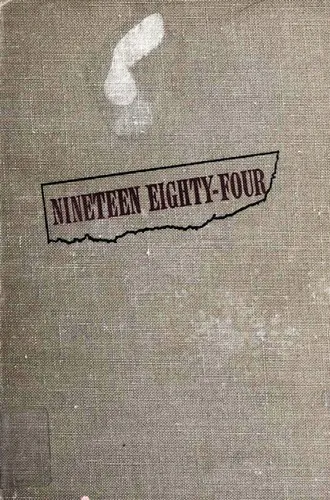
-
02
Buried in Sutton Courtenay churchyard near Abingdon, Oxfordshire, because no London church had space; his grave reads only Eric Arthur Blair with no mention of his pen name.
-
03
Chose the title Nineteen Eighty-Four by inverting the last two digits of the year he completed the manuscript 1948.
-
04
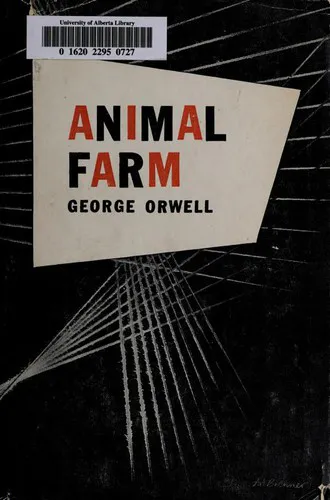
Recorded propaganda broadcasts for Britain during World War II, aimed at Southeast Asia and the Pacific, sparring against pro-Japanese propagandist Subhas Chandra Bose.
-
05
Orwell and his wife Eileen adopted a son, Richard Horatio.
-
06
As an example of his socialist views, he spent time living on the streets among tramps in London and Kent, detailed in his diaries.
-
07
Two TV series, Big Brother and Room 101, are humorous takes on his novel Nineteen Eighty-Four.
-
08
Died only a few months after the publication of Nineteen Eighty-Four.
-
09
Reportedly was satisfied with his novel Nineteen Eighty-Four.
-
10
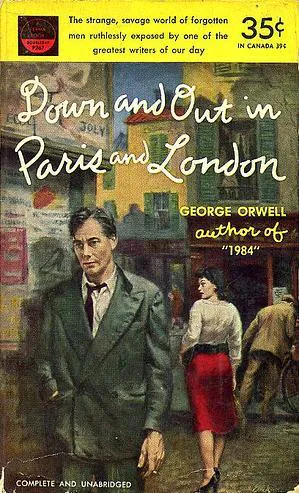
Works such as Animal Farm and Down and Out in Paris and London were initially rejected by major publishers.
-
11
Wrote Animal Farm after fighting in the Spanish Civil War alongside Trotskyites, barely escaping Spain; it is a metaphor for Stalinist Russia.
-
12
Wrote Nineteen Eighty-Four on the Hebridean Isle of Jura.
-
13
Provided the British government with a list of suspected Communist sympathizers, including Charlie Chaplin, Michael Redgrave, and J.B. Priestley.
-
14
No recording of his voice exists; the BBC’s early archiving policy led to the loss of his broadcasts.
-
15
By the time he worked on Nineteen Eighty-Four, he was gravely ill with tuberculosis.
-
16
Lived in relative seclusion on a Scottish island in his final years.
-
17
Had a brief career as a teacher in the 1930s, abandoned after a bout of flu.
-
18
Known to smoke heavily while writing.
-
19
Animal Farm was viewed as a satirical attack on the Soviet government.
-
20
His written output includes approximately 3,000 pages of news articles and novels.
-
21
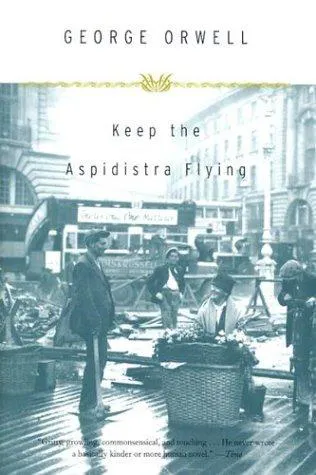
Worked at a bookshop in Hampstead from late 1934 to early 1936, which inspired Keep the Aspidistra Flying.
-
22
Shot in the neck during the Spanish Civil War; recovered after weeks in hospital.
-
23
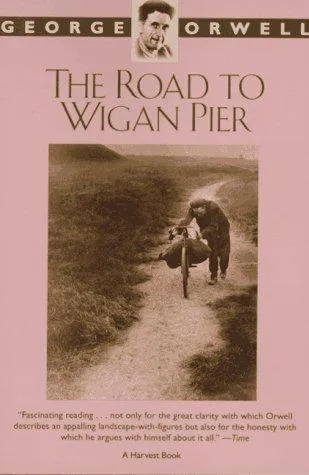
After the success of The Road to Wigan Pier, he was finally able to support himself as a writer.
-
24
His first wife Eileen died suddenly during surgery following a reaction to anesthetic.
-
25
During WWII, he churned out a story or article every other day.
-
26
Married for a second time in 1949 from his hospital bed in London.
-
27
Worked for the BBC from 1941 but resigned after two years, detesting the job.
-
28
Served in the British Imperial Police in Burma until 1927; experiences inspired Burmese Days.
-
29
Witnessed a public hanging in Burma that nauseated him.
-
30
Chose the pen name George Orwell to ensure his parents wouldn’t discover he was a writer.
-
31
Ignored doctors’ advice about his bad chest and coughing fits, especially when it interfered with writing.
-
32
Retrieved the manuscript of Animal Farm from his bombed London home in 1944.
-
33
Of Clan Blair.
-
34
Dislikes included modern furniture, radio, central heating, big towns, and noise pollution.
-
35
A boarding school survivor.
-
36
Peter Davison, editor of the 20-volume The Complete Works, was born in 1926 and died in 2022.
-
37
Worked part time as a bookseller to supplement his income.
-
38
As a child, rarely saw his father due to his job abroad.
-
39
Dreaded the rigid discipline of boarding school.
-
40
During WWII, disappointed at being rejected for active service, he joined the Home Guard.
-
41
Enjoyed authors Charles Dickens, James Joyce, William Shakespeare, D.H. Lawrence, and T.S. Eliot.
-
42
Subject of a 5-part BBC TV documentary from the series Arena 1975.
-
43
Second cousin of John Le Mesurier; their shared maternal grandmother was elder sister of Le Mesurier’s paternal grandfather.
-
44
Played by Ronald Pickup in the TV film The Crystal Spirit: Orwell on Jura.
-
45
May have been the first to use the term cold war in his essay You and the Atom Bomb, published on October 19, 1945.