-
01
In England, Davies discovered that forgotten silent actress Florence Turner was destitute. She paid for Turner and her mother’s return to the United States, put them up in a hotel, and offered Turner a job with her production company.
-
02
She was known for her kindness to casts and crews of her films, sometimes paying hospital bills anonymously if she heard they were sick.
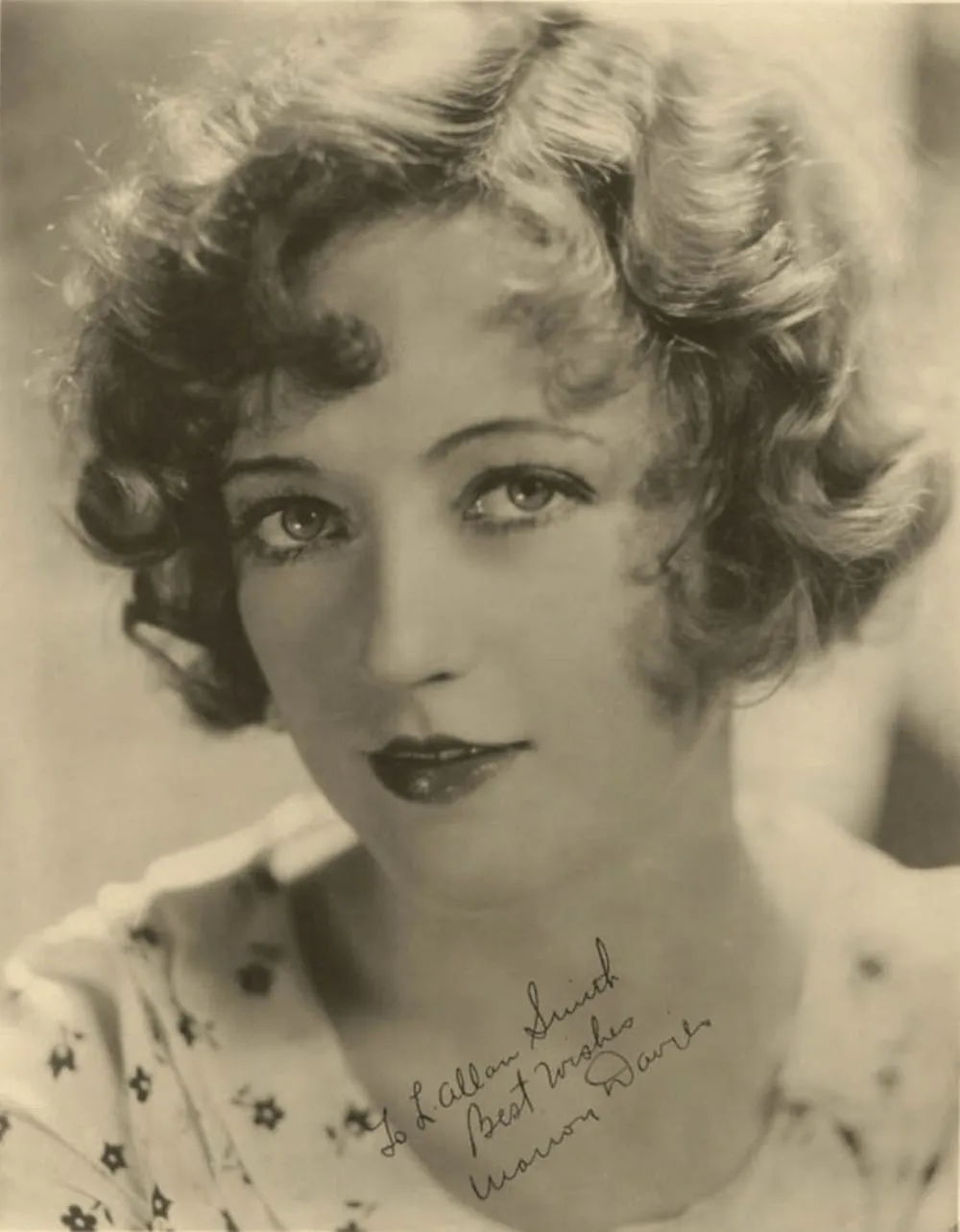
-
03
After her death in 1993, the family of Patricia Lake revealed that she was actually the child of Marion and William Randolph Hearst. Van Cleve had been raised by Davies’ sister Rose and had always been introduced as her niece and Lake as her nephew.
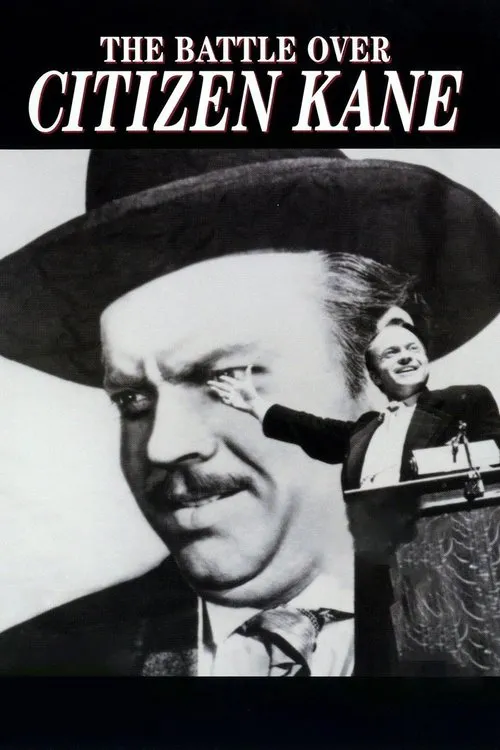
-
04
She did dead-on impersonations of celebrities at parties. At least three impersonations appeared in The Patsy 1928.
-
05
Aunt-in-law of actor Arthur Lake, best known for portraying Dagwood Bumstead in a series of Blondie movies in the 1940s and 1950s.
-
06
In 1930, Cecil Beaton announced that he was going to photograph the six most beautiful women in the movies. He chose Greta Garbo, Norma Shearer, Alice White, Dolores Del Río, Lillian Gish, and Marion Davies.
-
07
She was William Randolph Hearst’s mistress for over 30 years. Their arrangement was an open secret in Hollywood: she lived with him in California while his wife Millicent resided in New York. His wife refused to grant a divorce, so Davies remained his mistress. She retired from the screen in the late 1930s to care for his declining health. As Hearst lay dying at 88 in 1951, his lawyer sedated Davies. When she awoke, Hearst had died, and his associates had removed his body and all his belongings from the house. His family held a formal funeral in San Francisco; Davies did not attend.
-
08
William Randolph Hearst ensured that her silent film leading men were either gay or middle-aged.
-
09
Despite popular belief, the character Susan Alexander Kane in Citizen Kane 1941 was not primarily based on Marion Davies. Orson Welles told filmmaker Peter Bogdanovich that this wasn’t the case. The character was inspired by Harold Fowler McCormick’s promotion of his second wife’s opera career. Welles called Davies an extraordinary woman, nothing like the character.
-
10
Her tomb at Hollywood Forever Cemetery is often overlooked though it is an imposing structure. It is a miniature Greek temple on the east side of the lake very close to the grave of Tyrone Power. Her family name of Douras appears over the doorway.
-
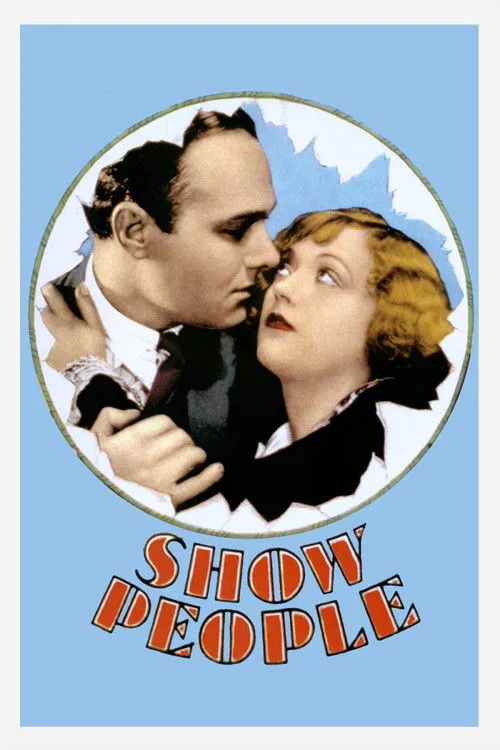
11
Variety’s box-office charts for the top 20 markets show that of Davies’s 33 films released from 1922 to 1937, 8 held the #1 ranking and 8 reached #2.
-
12
When Hearst died in 1951, Davies began recording notes for a planned autobiography. She never published them, but the tapes were transcribed and released as The Times We Had in 1975.
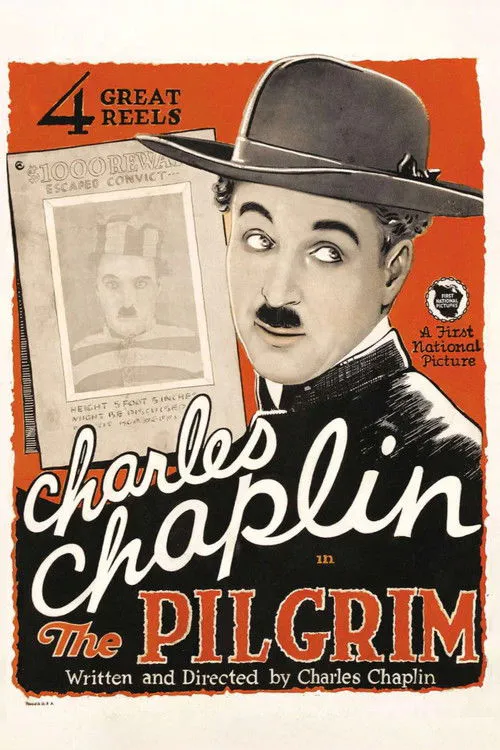
-
13
Louella Parsons, the gossip columnist anointed by Hearst, repeated the phrase Marion never looked lovelier for 37 years. Many readers considered it a pandering cliché.
-
14
A practical joker, she once got President Calvin Coolidge drunk by feeding him wine and telling him it was fruit juice.
-
15
She earned $10,000 per week during her 10-year reign at MGM 1924-34 and at Warners 1934-37. She also earned $10,000 per week as president of Cosmopolitan Productions from 1919 to 1939, equating to over $300,000 per week today.
-
16
She also served as production manager at Cosmopolitan Pictures, appointed by William Randolph Hearst, who wanted to keep her close.
-
17
Many actresses have portrayed her: Virginia Madsen in The Hearst and Davies Affair 1985, Heather McNair in Chaplin 1992, Melanie Griffith in RKO 281 1999, Gretchen Mol in Cradle Will Rock 1999, Kirsten Dunst in The Cat’s Meow 2001, Amanda Seyfried in Mank 2020, and Chloe Fineman in Babylon 2022.
-
18
In November 1959, she funded the clinic at UCLA, which is still called the Marion Davies Children’s Clinic.
-
19
When Charles A. Lindbergh visited Hollywood in 1927, he wanted to meet his favorite star: Marion Davies. Lindbergh visited Davies on the set of The Fair Co-Ed 1927.
-
20
After her death, she was interred at Hollywood Memorial Cemetery now Hollywood Forever Cemetery in Los Angeles, California.
-
21
Marion Davies made imprints of her hands and feet in cement at Grauman’s Chinese Theater on May 13, 1929. She was the 13th star to do so. Her message read: To Sid Grauman the genius of the theatre from your pal Marion Davies.
-
22
A friend of Joseph P. Kennedy, Davies was invited to and attended the inauguration of John F. Kennedy on January 20, 1961. Photographs show her seated close to the President during his speech. This was her last public appearance; she died eight months later.
-
23
Her starring talkie debut in Marianne 1929 came after an aborted attempt to film The Five O’Clock Girl 1928 and a never-started adaptation of the Broadway musical Rosalie. Marianne 1929 was also shot as a silent film with a different supporting cast.
-
24
She starred in 48 films over a 20-year period.
-
25
Theater owners crowned her and Rudolph Valentino Queen and King of the Screen at the Motion Picture Carnival in May 1924.
-
26
In films from 1917 to 1937, she never appeared as an extra, a bit player, or a supporting player.
-
27
She attended President John F. Kennedy’s inauguration on January 20, 1961, as a friend of Joseph P. Kennedy and a supporter of the Kennedy family.
-
28
She trained for months for a fencing scene in When Knighthood Was in Flower 1922.
-
29
William Randolph Hearst reportedly tried to push MGM production boss Irving Thalberg to cast Davies in the title role in Marie Antoinette 1938, but Thalberg gave the part to his wife, Norma Shearer. Hearst had previously attempted to get Davies cast as Elizabeth Barrett Browning in The Barretts of Wimpole Street 1934, a role that also went to Shearer.
-
30
She was nicknamed Queen of the Screen, starring in nearly four dozen feature films 30 silents and 16 talkies between 1917 and 1937. She also appeared as herself in a handful of short subject films.
-
31
As of 2017, only one of Davies’ movies has been voted into the National Film Registry. Show People 1928 was inducted in 2003. With the 2017 restoration of When Knighthood Was in Flower 1922, it becomes a strong candidate for inclusion. Other Davies films that could be inducted are The Patsy 1928, Little Old New York 1923, Enchantment 1921, and The Bride’s Play 1922.
-
32
When Charles A. Lindbergh visited Hollywood in 1927, Marion Davies hosted a private reception for the aviator. At the official MGM reception for Lindbergh, he was flanked by superstars Marion Davies and Mary Pickford.
-
33
She was a friend of George Bernard Shaw, who wanted her to play Eliza in Pygmalion 1938 opposite Leslie Howard. This would have reunited them since Five and Ten 1931.
-
34
She received a star on the Hollywood Walk of Fame at 6326 Hollywood Boulevard on February 8, 1960.
-
35
Davies was offered the Ina Claire role in Claudia 1943, but William Randolph Hearst objected to her playing a supporting role and a character who died in a movie.
-
36
She appeared with all-time greats including Clark Gable, Marie Dressler, Gary Cooper, William Powell, Norma Shearer, William Haines, Harrison Ford, Billie Dove, Robert Montgomery, Leslie Howard, Bing Crosby, Mary Astor, Ray Milland, Charles Chaplin, Forrest Stanley, Johnny Mack Brown, Joel McCrea, Conrad Nagel, Dick Powell, Marie Prevost, Claude Rains, Pat O’Brien, Jean Parker, Irene Rich, Lawrence Gray, and Jimmy Durante.
-
37
William Randolph Hearst launched an Oscar campaign for Davies to receive a Best Actress nomination for Peg o’ My Heart 1933, but she was not nominated.
-
38
Marion Davies was listed in the Quigley Top Ten Money-Making Stars poll four times: 1921 ranked #7, 1923 #5, 1924 #2, and 1925 #3.
-
39
During the 1960 Democratic Convention held in Los Angeles, California, Davies turned her house over to Joseph P. Kennedy.
-
40
She was profiled in the book Funny Ladies by Stephen M. Silverman.
-
41
She appeared in 10 Broadway shows between 1914 and 1920, including the Ziegfeld Follies of 1916.
-
42
She was the longtime, and sometimes long distance, mistress of newspaper magnate William Randolph Hearst. Their life together was dubiously mirrored in the films Citizen Kane 1941, RKO 281 1999, Mank 2020 and more factually in The Cat’s Meow 2001.
-
43
Marion Davies was a top MGM star for 10 years, from 1924 to 1934.
-
44
In 1928, The Five O’Clock Girl 1928 started production. It was meant to be the talkie debut for star Marion Davies, but production was shuttered after a few weeks. Production stills exist, although no film elements are known to survive. Technical difficulties with the primitive sound equipment were blamed.
-
45
A book about Marion Davies’ silent films, The Silent Films of Marion Davies, by Edward Lorusso was published in 2017.
-
46
Marion Davies and Rudolph Valentino were named Queen and King of the Screen by theater owners for being the #1 box office stars of 1923. They were crowned at a March 1924 ball at the Astor Hotel in New York City. Davies had the mega-hits When Knighthood Was in Flower 1922 and Little Old New York 1923 playing in theaters in 1923.
-
47
She was the younger sister of actresses Reine Davies and Rosemary Davies.
-
48
Victor Herbert composed the Marion Davies March in her honor for the film premiere of When Knighthood Was in Flower 1922, the biggest hit film of the year.
-
49
Marion Davies was never a Ziegfeld Girl. The phrase describes unbilled chorus girls and show girls in the various Ziegfeld Follies. Davies was a featured player in Ziegfeld’s 1916 Follies, which also featured Fanny Brice, W.C. Fields, Ina Claire, Ann Pennington, Bert Williams, and Lilyan Tashman.
-
50
Marion Davies staged and directed the dance sequences in the now lost film Buried Treasure 1921.