-
01
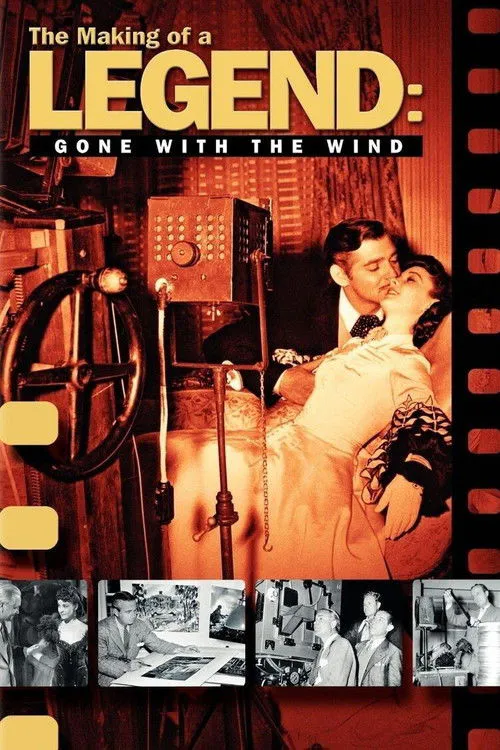
In 1936, he paid author Margaret Mitchell $50,000 for the movie rights to her novel Gone With the Wind. Later, after the film became a blockbuster, he realized he had underpaid her and gave an additional $50,000.
-
02
On May 11, 1976, Selznick’s 22-year-old daughter Mary Jennifer by his second wife Jennifer Jones died by suicide by jumping from the tallest building in Westwood, Los Angeles. It was two days after Mother’s Day and one day after what would have been her father’s 74th birthday. Jones later became a therapist.
-
03
Selznick sent long, detailed, and often maddening memos during film production. A publicist once received a Western Union telegram from Selznick over 30 feet long that ended with, I have just received a phone call that clears up this matter. Therefore you can disregard this wire. These memos are compiled in the book Memo From David Selznick edited by Rudy Behlmer, spanning 2,000 file boxes from 1916 to 1965.
-
04
When Selznick announced he was starting his own production company, Irving Thalberg called to ask if he had financing. Selznick replied, Not a nickel. Thalberg and his wife Norma Shearer invested $250,000, making Thalberg the first financier of Selznick Enterprises.
-
05
He strongly disliked the baby doll eyebrow look popularized by Max Factor in the 1930s and insisted that his contract players Vivien Leigh and Ingrid Bergman sport a more natural appearance.
-
06
He is the only producer to win back-to-back Academy Awards for Best Picture for Gone with the Wind 1939 and Rebecca 1940.
-
07
Selznick personally coined the job description of executive producer.
-
08
Despite being taller and bulkier than director George Cukor, Selznick bore a striking resemblance to him. They collaborated on Gone with the Wind 1939, from which Cukor was fired, but they remained friends for life.
-
09
To fulfill his picture obligation to United Artists, Selznick brought Alfred Hitchcock from Europe to produce and direct UA projects while Selznick focused on Gone with the Wind 1939.
-
10
In 1935, Greta Garbo signed a contract with MGM allowing only Thalberg and Selznick to supervise her pictures. After the success of Anna Karenina 1935, Selznick left MGM despite Garbo’s pleas. She acted in only four more films after that.
-
11
He was responsible for bringing Ingrid Bergman from Sweden by signing her to a long-term contract with Selznick Pictures.
-
12
The O in his name does not stand for anything; he added it because he felt it gave flair.
-
13
He left MGM after marrying Irene Mayer Selznick and moved to RKO. He returned after the death of Irving Thalberg, leading to the observation that the son-in-law also rises.
-
14
He signed Gene Kelly to his first Hollywood contract after seeing him in Pal Joey on Broadway, then sold the contract to MGM before finding a suitable role.
-
15
The Kirk Douglas role in The Bad and the Beautiful 1952 is widely thought to be patterned after Selznick.
-
16
He sold his interest in Gone with the Wind 1939 to former Selznick International chairman John Hay Whitney for only $200,000, considered the worst deal he ever made.
-
17
By the late 1940s, Selznick International made few films and became a talent agency, loaning out its contract stars for income.
-
18
He was responsible for casting four actresses in star-making roles: Katharine Hepburn in A Bill of Divorcement 1932, Vivien Leigh in Gone with the Wind 1939, Joan Fontaine in Rebecca 1940, and Jennifer Jones in The Song of Bernadette 1943.
-
19
After World War II broke out, Selznick sold three projects in development to 20th Century-Fox: Claudia 1943, Jane Eyre 1943, and The Keys of the Kingdom 1944. His only wartime feature was Since You Went Away 1944.
-
20
When Selznick announced plans to adapt Tolstoy’s War and Peace, both Mike Todd and Dino De Laurentiis announced competing versions. Paramount distributed the De Laurentiis version in 1956, and Selznick’s never materialized.
-
21
After WWII, Selznick negotiated partnership deals with producers Mark Hellinger, M.J. Siegel, and Dore Schary for three pictures each. Hellinger and Siegel died unexpectedly; Schary left to become production chief at RKO.
-
22
He produced his first film, Will He Conquer Dempsey? 1923, about the Dempsey-Firpo fight, paying Luis Firpo $1,000 of the $2,000 budget.
-
23
He and first wife Irene purchased a Beverly Hills estate at 1050 Summit Drive in 1934, designed by Roland Coate. After their 1949 divorce, the house hosted Katharine Hepburn, Sammy Davis Jr., and others. It sold for $2.1 million in 1991 and was listed for $19.9 million in 2017.
-
24
He produced four films selected for the National Film Registry: King Kong 1933, The Prisoner of Zenda 1937, Gone with the Wind 1939, and Rebecca 1940.
-
25
He was interred at Forest Lawn Memorial Park in Glendale, California, after his death.
-
26
Judy Garland persuaded MGM’s Arthur Freed to buy out Selznick’s contract with Gene Kelly in 1942, which jumpstarted Kelly’s film career.
-
27
The character Jonathan Shields in The Bad and the Beautiful 1952 is considered a blend of Selznick, Orson Welles, and Val Lewton. Selznick asked a lawyer to view the film for libel; no lawsuit was filed.
-
28
He was posthumously awarded a star on the Hollywood Walk of Fame at 7000 Hollywood Boulevard on October 26, 2004.
-
29
He was profiled in J.A. Aberdeen’s Hollywood Renegades: The Society of Independent Motion Picture Producers.
-
30
He was the son of producer Lewis J. Selznick and brother of agent Myron Selznick.
-
31
He considered casting stage actress Maud Adams in The Young in Heart; after her screen test she declined, and the role went to Minnie Dupree.
-
32
He produced two consecutive Oscar Best Picture winners and six other nominees: Viva Villa! 1934, David Copperfield 1935, A Tale of Two Cities 1935, A Star Is Born 1937, Since You Went Away 1944, and Spellbound 1945.
-
33
He appears in Roddy McDowall’s home movies from a May 30, 1965 party, doing a crossword puzzle; he died of a heart attack three weeks later.
-
34
He realized after two days of filming that Charles Laughton was miscast as Micawber in the 1935 film David Copperfield, so filming halted for recasting.
-
35
He was the cousin of Patricia Selznick and Brian Selznick, and uncle of Joyce Selznick.
-
36
He founded the Selznick Company in 1923, a film production company.
-
37
The logo of Selznick International Pictures featured its Southern Colonial administration building in Culver City, which Selznick leased from RKO from 1935 to the late 1940s.