-
01
His mother introduced him to Latin, French, and German. While at school mostly at Oxford he was taught or taught himself Greek, Middle English, Old English also called Anglo Saxon, Old Norse also called Old Icelandic, Gothic, Modern and medieval Welsh, Finnish, Spanish, and Italian. Other languages of which he had a working knowledge include Serbian, Russian, Swedish, Danish, Norwegian, Dutch, and Lombardic. In addition to these languages, he invented 14 different languages and assorted alphabets for his Middle-earth dwellers.
-
02
The only actor from Peter Jackson’s film adaptations of Lord of the Rings to have actually met J.R.R. Tolkien is Christopher Lee. Lee was very fond of Tolkien’s books and Tolkien himself even said that Lee would have been a good choice for the role of the wizard Saruman.
-
03
He was extremely annoyed when The Lord of the Rings was published in the mid-50s as three different stories, because he had never intended the tale to become a trilogy.
-
04
He said in an interview that the character Faramir was the Lord of the Ring character who was the most like himself.
-
05
While writing the Lord of the Rings, he originally intended for Aragorn to marry Éowyn, but later decided to have her marry Faramir and created the Arwen character for Aragorn.
-
06
In The Lord of the Rings, the wizard Gandalf is revealed to have an Elvish name, Mithrandir. This is an indirect reference to the story’s Christian underpinnings. The name Mithrandir is derived from Mithras, a Pagan god with several parallels to stories of the life of Jesus: he was born on December 25 as the offspring of the Sun, had a Last Supper with his twelve followers, died, was buried under a rock, and reborn. Gandalf, like Mithras and Jesus, dies and is reborn. Mithras sacrificed a cosmic bull, symbolizing darkness, while Gandalf falls fighting the Balrog. According to the book, the Fellowship that Gandalf leads sets out on December 25.
-
07
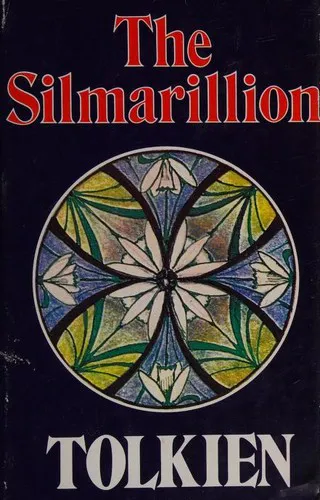
Tolkien and his wife, Edith, are buried together in a single grave in the Catholic section of Wolvercote cemetery in the northern suburbs of Oxford. The grave is well signposted from the entrance. The legend on the headstone reads: Edith Mary Tolkien, Lúthien, 1889-1971 and John Ronald Reuel Tolkien, Beren, 1892-1973. The character names are those of lovers in his novel, The Silmarillion.
-
08
He was one of the translators for The Jerusalem Bible.
-
09
In 1999, 250,000 Amazon.com customers voted his The Lord of the Rings first published 1954 as the book of the millenium.
-
10
His reaction to several proposed film productions of his books was that he considered his works to be unstageable; he simply didn’t feel that they could be successfully translated to a dramatic form. Although he had sold the film rights long before he died, he had no real expectation that The Lord of the Rings could be successfully filmed.
-
11
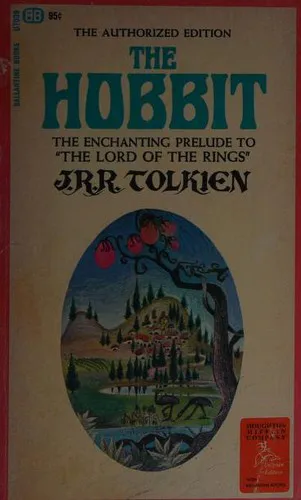
Shortly after the original publication of The Hobbit in 1937, his publisher, Allen & Unwin, tried to license several foreign language versions, including a German version. Before any German publishers would publish it, the Reich government wrote him a letter asking whether or not he was Aryan. He responded by saying that I can only assume that you are asking if I am Jewish. I regret to respond that I have no ancestors among that gifted people. He added that although he did have German ancestry, the time is not far distant when a German name will no longer be a source of pride. On account of this backhanded reply, The Hobbit was not published in Germany until after 1945.
-
12
The Inklings Tolkien, C.S. Lewis, Charles Williams & Owen Barfield met on Tuesdays for lunch at the Eagle and Child pub in Oxford where they would read out pages from their books.
-
13
Colleagues urged him to submit his elvish alphabet for consideration to win a prize established by George Bernard Shaw for the creation of a phonetically consistent alphabet for English. He declined to do so, another example of his reluctance to exploit his creation.
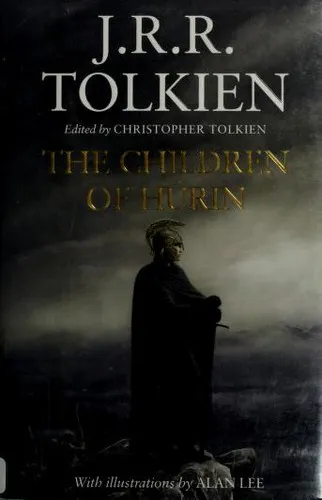
-
14
Derived his two main Elvish languages from a fictional root language. High Elvish or Quenya was derived from the root using the principles of Finnish phonology and grammar, while Low Elvish or Sindarin was derived using the principles of Welsh phonology and grammar.
-
15
His father died when he was 4, and his mother when he was 12. He and his brothers were then raised by a Catholic priest.
-
16
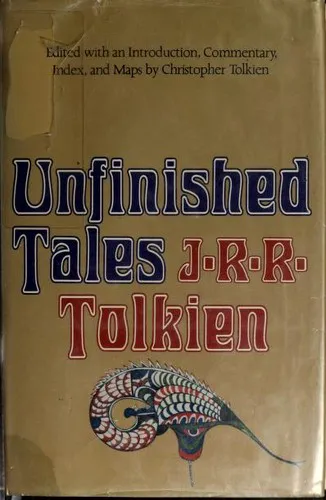
He based many of the locations in the Lord of The Rings on areas around Birmingham during his childhood. For instance, the structure of Isengard was based on the University of Birmingham, the two towers were based on Edgbaston Waterworks tower and Perrott’s Folly, and the Shire was inspired by Sarehole, a small hamlet just outside of Birmingham.
-
17
A friend and fellow Oxford don with C.S. Lewis. They were both members of the Inklings.
-
18
The character of Gollum from his epic Lord of the Rings trilogy is ranked #10 on Premiere Magazine’s 100 Greatest Movie Characters of All Time.
-
19
Once met Ava Gardner and neither knew why the other was famous.
-
20
He was in the British Army during World War I. He enlisted as a second lieutenant in the Lancashire Fusiliers later in the same year. He was in France during the Somme Offensive, July 1916. He wrote about going out into no man’s land and finding the corpse’s of earlier dead.
-
21
The Lord of the Ring-saga’s world and its cast of characters have roots in real-world history and geography, from the world wars that dominated his lifetime to the ancient language and legends of Finland. The Finnish national epic Kalevala inspired him and he taught himself the Finnish language so he could read it.
-
22
Studied Old Norse and Old English at Oxford.
-
23
Made up languages as a young child.
-
24
By 2004 his The Lord of the Rings trilogy 1954-1955 had sold more than 100 million copies and is the best selling fiction book of all time. It is the 3rd best selling book of all time after The Bible c. 1451-1455 more than 6 billion copies and Quotations from the Works of Mao Tse-Tung 1966 900 million copies.
-
25
He based the description of Mordor, home to the evil lord Sauron, on the Black Country, a section of Birmingham which was heavily polluted by iron foundries, coal mines and steel mills due to the Industrial Revolution. The air in it was so dense with smog and dust it was difficult to breathe.
-
26
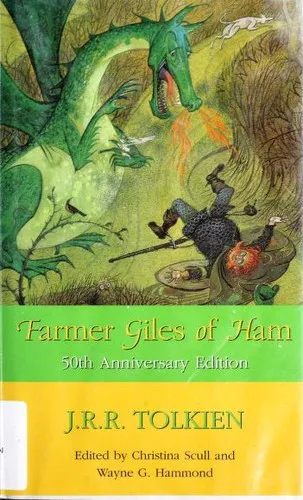
Many of his papers, including original manuscripts and illustrations for The Hobbit 1937, Farmer Giles of Ham 1949, and The Lord of the Rings 1954-1955, were sold to the Raynor Memorial Libraries of Marquette University in Milwaukee, Wisconsin USA. The library approached him, he selected Marquette because he wanted his papers to be kept by a Catholic institution which would be willing to provide for proper care and preservation of the materials. The library periodically puts selected items from the collection on public display. His other papers are at the Bodleian Library of Oxford University.
-
27
Served in the Lancashire Fusilliers in the First World War and fought in the Battle of the Somme. He was discharged in 1917 suffering from trench fever.
-
28
He was a philologist – someone who studies the history of languages.
-
29
Once said that the words cellar door were the most beautiful phrase he had heard. Though he is not identified as the person who said this, and director Richard Kelly mistakenly gives credit to Edgar Allan Poe in his DVD commentary, his fondness for the phrase is referenced by Drew Barrymore in the film Donny Darko 2001.
-
30
Widely considered as the founder of modern fantasy; the man who changed children’s faerie tales into epic adventures without losing the appeal.
-
31
Prior to their reunion inside the city of Minas Tirith, his characters Aragorn and Eowyn only have one conversation during the course of The Lord of the Rings, and it takes place shortly before Aragorn takes the Paths of the Dead in The Return of the King. Peter Jackson’s film adaptation adds several more scenes between them, beginning in The Two Towers. Although all of these interactions were invented for the movie, all but three of them use dialogue from their one scene together in the book.
-
32
The original publication of The Lord of the Rings was delayed for two reasons. He tried to get out of his obligation to his publisher, Allen & Unwin, because another publisher had agreed to his wish to use different colors of ink for different parts of the book. In particular, he wanted the writing on the Ring to be printed in red ink. That deal fell apart, and he went back to Allen & Unwin. The second reason was that he wanted The Silmarillion; which told the history of the Elves and of Aragorn’s race, the Numenoreans; to be published alongside Rings. No publisher would agree to this, so The Silmarillion was not published until after his death.
-
33
He started writing The Lord of the Rings with no idea where the story would eventually go. This led to it not being structured at all like a proper novel, with many characters left underdeveloped, many ideas repeated, and character groups being essentially forgotten for very long periods.
-
34
Father of Christopher Tolkien, Michael Tolkien, Priscilla Tolkien, and John Tolkien.
-
35
He was a very poor driver to the point that his wife refused to get into a car with him. He eventually stopped driving entirely and relied on his bicycle.
-
36
During the flower-power sixties Leonard Nimoy recorded The Ballad of Bilbo Baggins.
-
37
The German Heavy Metal band Blind Guardian base a lot of their songs on his work, such as Nightfall in Middle-Earth which is based on the Silmarillion, and other songs: Gandalf’s Rebirth, Lord of the Rings, By the gates of Moria, etc.
-
38
He was awarded the CBE Commander of the Order of the British Empire in the 1972 Queen’s New Year Honours List for his services to literature.
-
39
Much of his work was published posthumously by his son Christopher Tolkien.
-
40
The appendices to The Return of the King features The Tale of Aragorn and Arwen, in which Aragorn’s relationship with Arwen is given in detail, as well as his relationships with Elrond and his mother, Gilraen. His mother’s final words to him are Onen i-Estel Edain, u-chebin estel anim, which means I have given Hope to the Dunedain, I have kept no hope for myself. This line is used in the film as the last verbal exchange between Aragorn and Elrond. In addition, Estel, or Hope, was a name by which Aragorn was known before his true heritage was revealed to him.
-
41
Taught at the University of Leeds before teaching at Oxford from 1925 to 1959.
-
42
The first music inspired by his work was written by the English songwriting team of Donald Swann and Michael Flanders, who set poems from The Hobbit, The Lord of the Rings and other works to music and included them in their 1963 revue At the Drop of a Hat. When an interviewer called Swann elfin, he said, Yes, and in the show, I sing in Elvish! In 1970, Swedish keyboardist Bo Hansson recorded Music Inspired by Lord of the Rings, becoming the first in a series of pop artists to do so for the rock-oriented market.
-
43
One change that he vehemently opposed in any adaptation of his work was the intercutting of the various story threads that he had deliberately kept separate. To date, every adaptation has intercut the stories.
-
44
The lead characters in his best known works, Bilbo Baggins from The Hobbit, and Frodo Baggins from The Lord of the Rings, have both been played by Orson Bean and Ian Holm.
-
45
Member of the Oxford literary circle along with writers C.S. Lewis, Jeremy Dyson, Charles Williams, Messrs Coghill, and Owen Barfield.
-
46
The British rock band Marillion, popular in the UK and Europe during the 1980s, took their name from his posthumously published collection The Silmarillion. According to the band’s original drummer, Mick Pointer: Doug Doug Irvine, the original bass player was reading Silmarillion at the time and I suggested that it would be a great name for the band.
-
47
Won the International Fantasy Award in 1957 for his book The Lord of the Rings. In 1973 he won the first Gandalf Award named after a character from his books as Grandmaster lifetime fantasy achievement. Posthumously he has been awarded the Locus Award in 1978 for The Silmarillion and the Mythopoeic Award in 1981 for Unfinished Tales. The Balrog Award is also named after a character from his books.
-
48
He opposed the development of the Concorde supersonic jetliner.
-
49
Locus magazine conducted a poll in 1987 from among its readers to vote for the Best All-time Fantasy Novel. His The Lord of the Rings 1955 and The Hobbit 1934 won 1st and 2nd place respectively. They beat out classics like Alice in Wonderland 1865, Dracula 1897, and The Wizard of Oz 1900.
-
50
Great-grandfather of actor Royd Tolkien.
![Cover for The Book of Lost Tales [1/2]](https://cdn.famousy.org/book-covers/OL27435W-the-book-of-lost-tales-1-2-book-1280w.webp)