-
01
He intended to live in exile in the UK after his abdication, but his first cousin King George V forced his government to withdraw the asylum offer.
-
02
His strong physical resemblance to King George V made it difficult for people to tell them apart when they were together.
-
03
He proposed the First Hague Conference in 1899, aiming to limit the armaments race, but the major powers rejected Russian proposals.
-
04
He intended to bring in further constitutional reforms but believed World War I had to be won first.
-
05
It is often erroneously stated that he was shot in the head at his execution, but analysis of his skeletal remains showed no bullet wounds to his skull.
-
06
The US could not enter World War I until after his abdication, as it meant the Allies were all democracies fighting absolute monarchies.
-
07
Like his father, he was very anti-Semitic, approving efforts to prevent anti-Semitic pogroms after the assassination of Prime Minister Stolypin in 1911.
-
08
Vladimir Lenin referred to him as Nicholas the Bloody and Nicholas the Hangman in early pamphlets.
-
09
He blamed Kaiser Wilhelm II of Germany for encouraging war between Russia and Japan in 1904 to distract Russia from Europe and the Middle East.
-
10
He was second cousin to many European royals, including Grand Duchess Maria Kirillovna and King Carol II of Romania.
-
11
He was 5th cousin of Princess Cécilia of Leiningen and others.
-
12
He was the eldest son of Czar Alexander III and Czarina Maria Fyodorovna.
-
13
He was older brother of Grand Duke Alexander Alexandrovich, Grand Duke George, Grand Duchess Xenia, Grand Duke Michael, and Grand Duchess Olga.
-
14
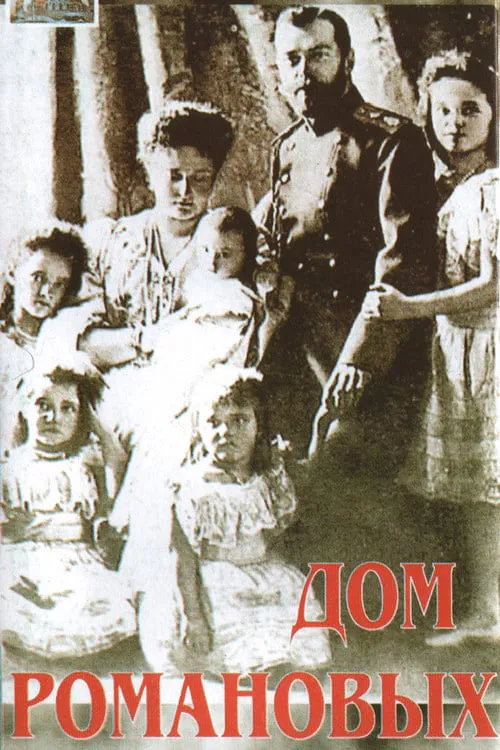
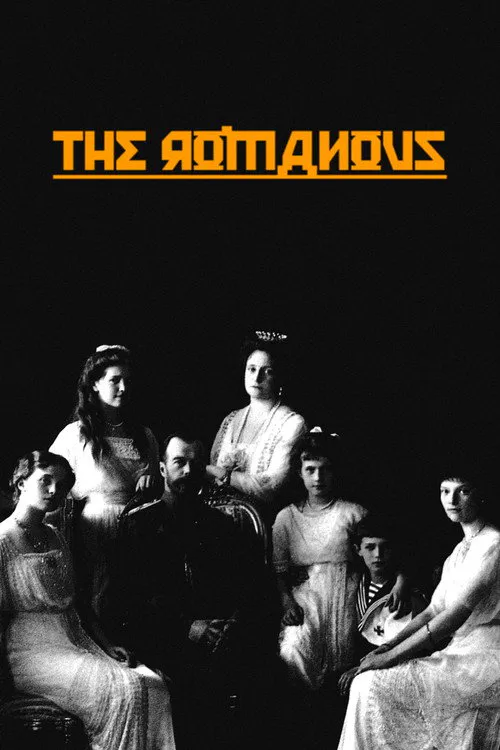
He was father of Grand Duchesses Olga, Tatiana, Maria, Anastasia, and Tsarevich Alexei.
-
15
He was grandson of Tsar Alexander II and Christian IX of Denmark.
-
16
Portrayed by Michael Jayston in Nicholas and Alexandra 1971 and Sir Ian McKellen in Rasputin 1996.
-
17
He initially abdicated in favor of his son Alexei, but changed his mind after doctors warned Alexei would not live long apart from his parents, naming his brother Michael instead.
-
18
He was great-uncle of Olga Romanoff.
-
19
The stress of ruling during World War I took a serious toll on his health, but it improved in the months after his abdication and before his execution.
-
20
When a telegram announced the annihilation of the Russian fleet at Tsushima during the Russo-Japanese War, he immediately realized the war was lost and sent Count Witte to a peace conference.
-
21
He was nine inches shorter than his father, Alexander III.
-
22
His father thought little of him and did not teach him to rule, which contributed to his overthrow.
-
23
He had two faithful servants: Ilya Tatishchev and Prince Vasily Dolgorukov.
-
24
He was nephew of King Frederik VIII, Queen Alexandra, and many other royals.
-
25
He suffered a coronary occlusion on March 11, 1917, four days before his abdication.
-
26
It was disputed whether his enforced abdication was legal and whether he had the right to abdicate on behalf of his son.
-
27
He was first cousin to many royals, including Grand Duke Kirill Vladimirovich and King George V.
-
28
He was 4th cousin of Princess Melita of Leiningen and others.
-
29
He was granduncle of Prince Michael of Kent and Princess Alexandra.
-
30
He was great-great uncle of Francis Mathew.
-
31
He had German and Danish descent.
-
32
He was first cousin once removed of Grand Duke Alexander Mikhailovich and others.
-
33
He was great-great-grandson of Paul I of Russia.
-
34
He was killed by Yakov Yurovsky.
-
35
His pets included Iman the collie, Voron the dog, and Norma the horse.
-
36
He was a chain smoker.
-
37
He had a tattoo of a dragon on his forearm, done during a trip to Japan at age 22. His cousin King George V had a similar tattoo by the same artist.
-
38
He was survived by his mother.
-
39
He spoke perfect English, was fluent in French, and had decent conversational skills in Danish and German.
-
40
He attended the first Hague conference in 1893.
-
41
He was the only Tsar ever to be filmed.
-
42
He was the only Tsar to have his voice recorded.
-
43
His 1902 speech to French President Emile Loubet remains the only surviving audio footage of his voice.
-
44
An assassination attempt in Otsu, Japan in 1891 left him permanently scarred; he received thousands of remorse messages but never forgave Japan.