-
01
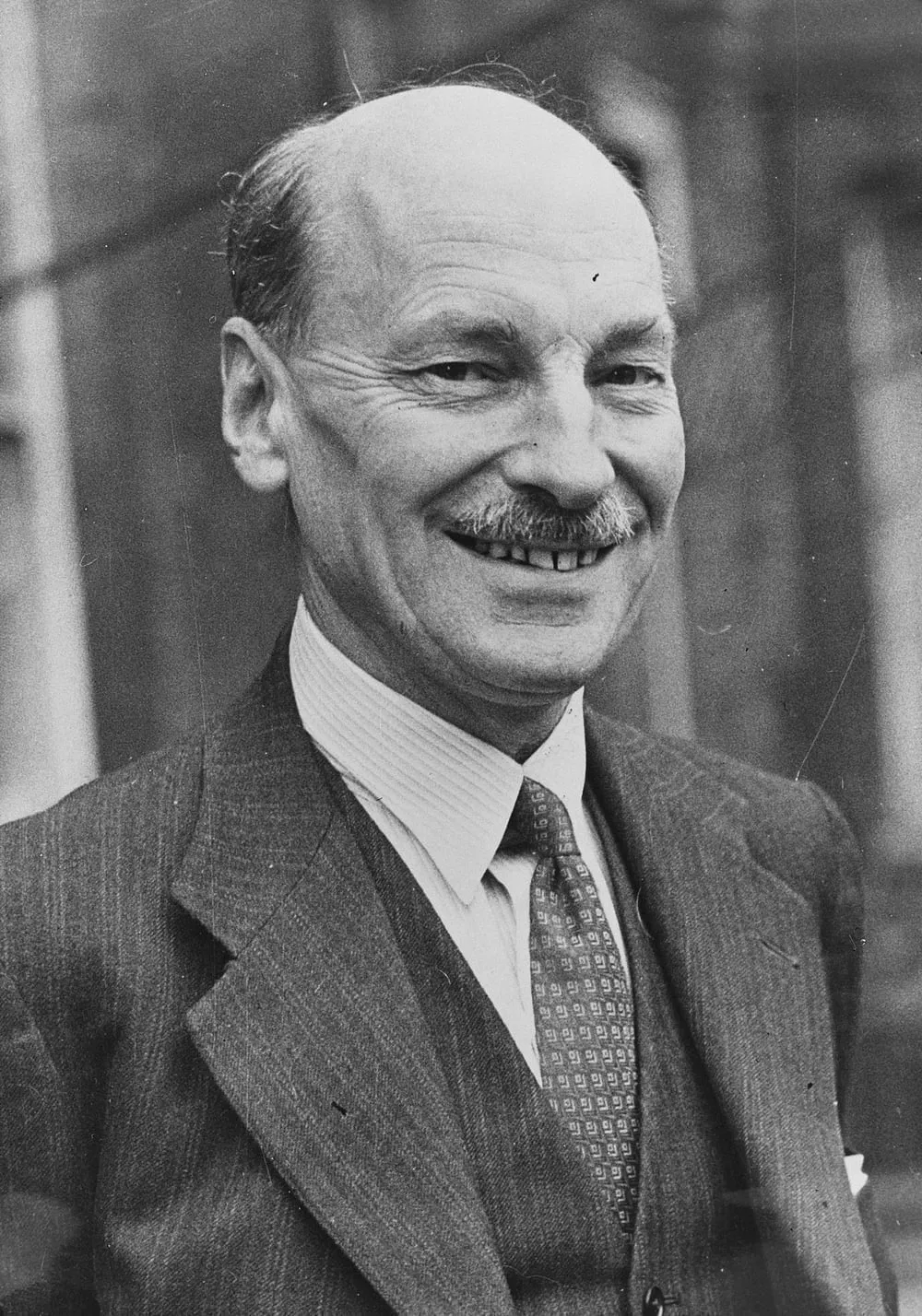
Attlee strongly supported appeasement from 1935 to 1938, then reversed his position and became a vocal critic of the Munich Agreement. The Labour Party opposed rearmament; on 21 December 1933 he said the party was unalterably opposed to anything in the nature of rearmament. On 8 March 1934, he stated the party was out for total disarmament. On 30 July 1934, Labour moved a censure motion against the government for expanding the RAF, and Attlee denied the need for increased air arms. On 22 May 1935, after Hitler’s Reichstag speech, Attlee saw a chance to halt the armaments race. He also denounced the 1937 Defence White Paper.
-
02
His party received more votes than the Conservatives in the 1951 General Election, but lost seats due to the collapse of the Liberal vote.
-
03
Used 13,000 troops to end the London dock strike in 1949.
-
04
Pictured on one of a set of eight British commemorative postage stamps honoring Prime Ministers, issued 14 October 2014. Other prime ministers featured included William Pitt the Younger, Charles Grey, Robert Peel, William Gladstone, Winston Churchill, Harold Wilson, and Margaret Thatcher.
-
05
He believed Anthony Eden had been forced into taking a strong stand on the Suez Crisis by his backbenchers.
-
06
Leader of the Labour Party from October 25, 1935 to December 7, 1955.
-
07
Prime Minister of the United Kingdom from July 26, 1945 to October 26, 1951.
-
08
As a young man he supported the Conservative Party and was a major supporter of imperialism, before moving to the left.
-
09
After becoming Prime Minister in 1945 he initially intended to transform India into a self-governing Dominion of the British Empire in 1948, but in February 1947 he accepted full independence was inevitable.
-
10
Until Rishi Sunak, he was the last UK Prime Minister not to serve under Queen Elizabeth II. His term ended four months before she ascended the throne. He outlived her first Prime Minister, Winston Churchill.
-
11
Attlee authorized the bombing of Dresden in February 1945 while Churchill was at the Yalta Conference.
-
12
He played a major role in crushing the Quit India movement in 1942-43.