-
01
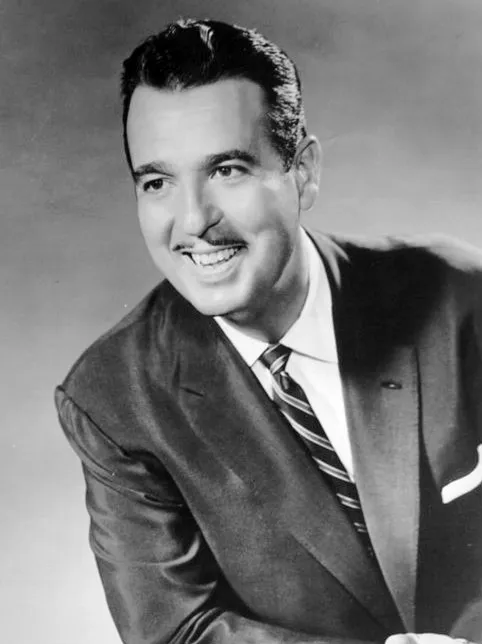
While it never affected his professional work, Ford battled all his life with a drinking problem, something that ultimately undermined his health. In October 1991, he collapsed after leaving a White House dinner and died at an area hospital a few days later, exactly one year to the day after being elected to the Country Music Hall of Fame.
-
02
He used his influence to give many young performers their first break in show business, including San Francisco-area disk jockey turned TV personality Jim Lange, later of The Dating Game, and most notably, the singing duo the Everly Brothers.
-
03
In 1974, he made the first tour of the Soviet Union with a country-western stage show, including Roy Clark.
-
04
His biggest hit Sixteen Tons was credited as being the first rock and roll big hit and for kicking off the rock and roll era of the 1950s.
-
05
He was awarded three stars on the Hollywood Walk of Fame: for Radio at 1600 Vine Street, for Recording at 6922 Hollywood Boulevard, and for Television at 6311 Hollywood Boulevard in Hollywood, California.
-
06
His popular TV program The Ford Show was not named after him, but after his sponsor, the Ford Motor Company.
-
07
He was inducted into the Country Music Hall of Fame in 1990.
-
08
His remains are buried at Alta Mesa Memorial Park in Palo Alto, California.
-
09
His book Tennessee Ernie Ford’s Book of Favorite Hymns was a best-seller when it was published in 1962, and a companion record album on Capitol Records was released later that same year.
-
10
He also sang the title song in the movie River of No Return 1954 starring Robert Mitchum and Marilyn Monroe. It was released as a single and did well on the record charts.
-
11
The album Hymns 1956 was on the USA Billboard Album charts for 350 consecutive weeks.
-
12
He was the father of Jeffrey Buckner Ford.
-
13
His many albums of hymns and sacred music for Capitol and Ranwood records were among the top-sellers in their field, with Hymns 1957 and Sing a Hymn with Me 1961 both achieving Gold Record status.
-
14
His real name was Ernest J. Ford, but since Ernest Ford was unsuitable for a stage name, he adopted the name of his home state – Tennessee.