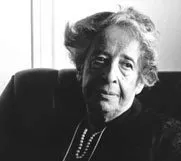
Hannah Arendt.

Johanna Arendt

Hannah Arendt — Academic
Born Hannover, Germany
Died New York City, United States
Citizenship Germany
Would Be 120 yr If Living

6 min read

Reading time

1,164

Words

Published

6

Awards

TL;DR

In 1963, Hannah Arendt introduced the banality of evil in her report on the Eichmann trial. She wrote The Origins of Totalitarianism in 1951. She studied under Martin Heidegger and Karl Jaspers, earning her doctorate in 1928. After being arrested by the Gestapo in 1933, she emigrated from Nazi Germany. She died on December 4, 1975 in New York City at age 69.

Identity & family.

KIN · 2

Names, aliases, and relatives of Hannah Arendt — birth name, kin, and personal ties.

Birth Name Johanna Arendt
Aliases H.Arendt
Spouses
Heinrich Blücher Günther Anders

At a glance.

STATS

Hannah Arendt by the numbers — life, work, and family.

69 Years lived
6 Awards
2 Marriages

Who was Hannah Arendt?

BIOGRAPHY

Hannah Arendt — early life, career, personal life, and legacy.

Early life

Born Johanna Arendt on October 14, 1906 in Hannover, Germany, she was the daughter of Jewish parents with social democratic attitudes. She studied theology and philosophy at the University of Marburg, University of Freiburg, and Heidelberg University, where she was a student of Martin Heidegger, Karl Jaspers, and Edmund Husserl. In 1928 she completed her doctorate under Jaspers with a dissertation on Augustine’s concept of love. After moving to Berlin in 1929, she married philosopher Günther Anders and began research on German Romanticism, resulting in a biography of Rahel Varnhagen, published later in 1959.
Career

In 1951, Arendt published The Origins of Totalitarianism, linking the rise of anti-Semitism to totalitarian regimes and comparing fascism and Stalinism. She released Vita Activa in 1960, a theory of action identifying labor, work, and action as three fundamental human activities. Eichmann in Jerusalem, published in 1963, introduced the phrase banality of evil and criticized the behavior of Jewish councils. The book was based on her New Yorker reporting on the 1961 trial. She taught at Brooklyn College in 1953, the University of Chicago in 1963, and the New School for Social Research in 1967. She served as research director for the Conference on Jewish Relations from 1944 to 1946 and headed the Jewish Cultural Reconstruction organization from 1948 to 1952.

Personal life

Arendt married philosopher Günther Anders in 1929; the marriage ended in divorce in 1937. In 1940 she married Heinrich Blücher, a philosopher and poet. After being arrested by the Gestapo in 1933, she emigrated from Germany to Paris and then to the United States in 1940, becoming an American citizen in 1951. She maintained close friendships with philosopher Walter Benjamin, whom she met in Paris, and later with writer Uwe Johnson in 1966.

Legacy

Arendt’s concepts of totalitarianism and the banality of evil shape political philosophy and public discourse. She received the Sonning Prize in 1975 and an honorary doctorate from Princeton University. The Hannah Arendt Prize for political thought is awarded in her memory.

Awards & honors.

AWARDS · 6

Every award, honor, and recognition received by Hannah Arendt — Grammys, hall-of-fame inductions, civic honors, lifetime achievements.

  • Guggenheim Fellowship
  • Fellow of the American Academy of Arts and Sciences
  • Sigmund Freud Prize
  • Emerson-Thoreau Medal
  • Sonning Prize
  • honorary doctorate from Princeton University

Notable quotes.

QUOTES · 7

A wall of memorable lines from Hannah Arendt — lyrics, interviews, and off-the-cuff remarks captured over a lifetime.

  • On Love: Forgiveness Is the Key to Action and Freedom.

  • The Calamity of the Rightless Is Not That They Are Deprived of Life, Liberty and the Pursuit of Happiness, but That They No Longer Belong to Any Community Whatsoever. Their Plight Is Not That They Are Not Equal Before the Law, but That No Law Exists for Them.

  • No Punishment Has Ever Possessed Enough Power of Deterrence to Prevent the Commission of Crimes. on the Contrary, Whatever the Punishment, Once a Specific Crime Has Appeared for the First Time, the Reappearance Is More Likely Than Its Initial Emergence Could Ever Have Been.

  • Revolutionaries Do Not Make Revolutions! the Revolutionaries Are Those Who Know When Power Is Lying in the Street and When They Can Pick It Up. Armed Uprising by Itself Has Never yet Led to Revolution.

  • The Sad Truth Is That Most Evil Is Done by People Who Never Make up Their Minds to Be Good or Evil.

  • Political Questions Are Far Too Serious to Be Left to the Politicians.

  • Totalitarianism in Power Invariably Replaces All First-rate Talents, Regardless of Their Sympathies, with Those Crackpots and Fools Whose Lack of Intelligence and Creativity Is Still the Best Guarantee of Their Loyalty.

You wanted to know.

FAQ · 28

Quick answers to the questions readers ask most about Hannah Arendt.

Audited & updated by

Michael Hayes

Senior Copy Editor & Editorial Fact Reviewer

Michael is the last person to read a profile before it goes live, which makes him the one who catches what everyone else missed. 5 years as a copy editor has given him a sharp sense for what's off. A wrong year, a vague credit, a sentence that almost makes sense but doesn't quite. He's especially thorough with filmographies. He'll tell you that's where most of the errors hide. He's right.

Report an issue

If something on this page looks off, we genuinely want to know about it. Send us a quick email with the celebrity's name, the detail that seems incorrect, and any sources you're referencing. We review every report and update the page as soon as we can.

Report an issue