-
01
Valéry did not become a full-time writer until 1920, when the man for whom he worked as private secretary, a former chief executive of the Havas news agency, Edouard Lebey, died of Parkinson’s disease. Until then, he had briefly earned his living at the Ministry of War before assuming the flexible post as assistant to the increasingly impaired Lebey, a job he held for some twenty years.
-
02
Oscar-winning Japanese director Hayao Miyazaki’s 2013 film The Wind Rises and the Japanese novel of the same name take their title from Valéry’s verse Le vent se lève… il faut tenter de vivre ! in the poem Le Cimetière marin. The same quote is used in the closing sentences of Anthony Burgess’s 1962 novel The Wanting Seed.
-
03
In 1900, Valéry married Jeannine Gobillard, a friend of Stéphane Mallarmé’s family, who was also a niece of the painter Berthe Morisot. The wedding was a double ceremony in which the bride’s cousin, Berthe Morisot’s daughter, Julie Manet, married the painter Ernest Rouart. Valéry and Gobillard had three children: Claude, Agathe and François.
-
04
Valéry was nominated for the Nobel Prize in Literature in 12 different years.
-
05
Valéry died in Paris in July 1945. He is buried in the cemetery of his native town, Sète, the same cemetery celebrated in his famous poem Le Cimetière marin.
-
06
Valéry served as a juror with Florence Meyer Blumenthal in awarding the Prix Blumenthal, a grant given between 1919 and 1954 to young French painters, sculptors, decorators, engravers, writers, and musicians.
-
07
In 1931, Valéry founded the Collège International de Cannes, a private institution teaching French language and civilization. The Collège is still operating today, offering professional courses for native speakers as well as courses for foreign students.
-
08
Valéry represented France on cultural matters at the League of Nations and served on several of its committees, including the sub-committee on Arts and Letters of the Committee on Intellectual Cooperation. The English-language collection The Outlook for Intelligence 1989 contains translations of a dozen essays related to these activities.
-
09
Valéry was a French poet, essayist, and philosopher.
-
10
Valéry is best known as a poet, and he is sometimes considered to be the last of the French symbolists. On the night of 4 October 1892, during a heavy storm, he underwent an existential crisis that made a huge impact on his writing career. Eventually, around 1898, he quit writing altogether, publishing not a word for nearly twenty years. When, in 1917, he finally broke his great silence with the publication of La Jeune Parque, he was forty-six years old.
-
11
Valéry’s technique is quite orthodox in its essentials. His verse rhymes and scans in conventional ways, and it has much in common with the work of Mallarmé. His poem Palme inspired James Merrill’s celebrated 1974 poem Lost in Translation, and his cerebral lyricism also influenced the American poet Edgar Bowers.
-
12
Valéry was born to a Corsican father and Genoese-Istrian mother in Sète, a town on the Mediterranean coast of the Hérault, but he was raised in Montpellier, a larger urban center close by.
-
13
In addition to his activities as a member of the Académie française, Valéry was also a member of the Academy of Sciences of Lisbon and of the Front national des Ecrivains. In 1937, he was appointed chief executive of what later became the University of Nice. He was the inaugural holder of the Chair of Poetics at the Collège de France.
-
14
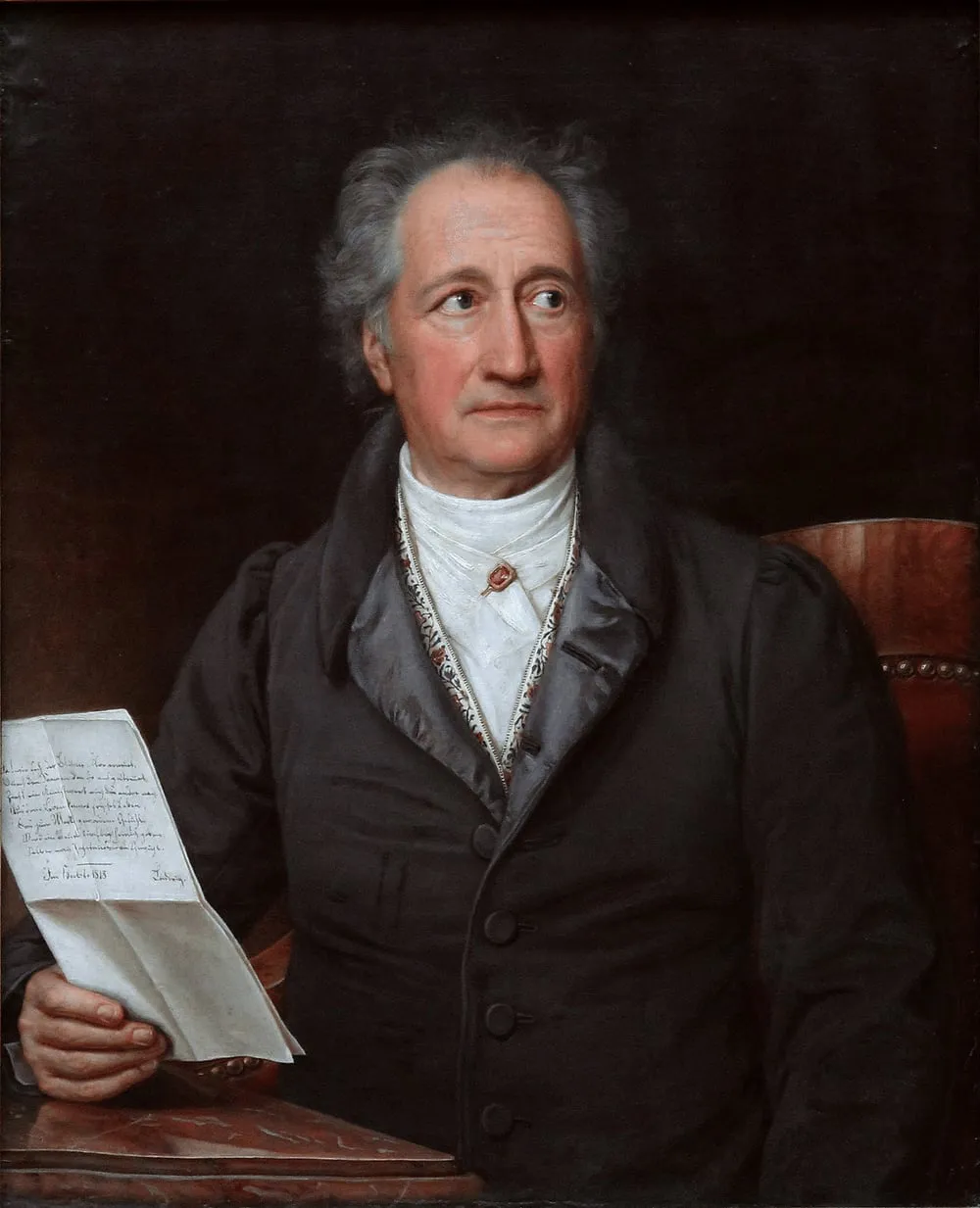
Valéry gave the keynote address at the 1932 German national celebration of the 100th anniversary of the death of Johann Wolfgang Goethe. This was a fitting choice, as Valéry shared Goethe’s fascination with science, specifically biology and optics.
-
15
During World War II, the Vichy regime stripped Valéry of some of his jobs and distinctions because of his quiet refusal to collaborate with Vichy and the German occupation, but he continued to publish and be active in French cultural life, especially as a member of the Académie française.
-
16
It is believed that the Swedish Academy intended to award Valéry the Nobel Prize in Literature in 1945, had he not died that year.
-
17
In addition to his poetry and fiction drama and dialogues, Valéry’s interests included aphorisms on art, history, letters, music, and current events.
-
18
After his election to the Académie française in 1925, Valéry became a tireless public speaker and intellectual figure in French society, touring Europe and giving lectures on cultural and social issues as well as assuming a number of official positions.
-
19
Before La Jeune Parque, Valéry’s only publications of note were dialogues, articles, some poems, and a study of Leonardo da Vinci. In 1920 and 1922, he published two slim collections of verses: Album des vers anciens and Charmes. The latter includes Le Cimetière marin and many smaller poems.
-
20
After a traditional Roman Catholic education, Valéry studied law at university and then resided in Paris for most of the remainder of his life.
-
21
Raymond Poincaré, Louis de Broglie, André Gide, Henri Bergson, and Albert Einstein all respected Valéry’s thinking and became friendly correspondents. Valéry was often asked to write articles on topics not of his choosing, resulting in the five-volume collection Variétés.
-
22
In the book El laberinto de la soledad from Octavio Paz, there are three verses of one of Valéry’s poems: ‘Je pense, sur le bord doré de l’univers / A ce gout de périr qui prend la Pythonisse / En qui mugit l’espoir que le monde finisse.
-
23
Valéry’s most striking achievement is perhaps his monumental intellectual diary, called the Cahiers Notebooks. Early every morning of his adult life, he contributed something to the Cahiers, prompting him to write: Having dedicated those hours to the life of the mind, I thereby earn the right to be stupid for the rest of the day.
-
24
One of three epigraphs in Cormac McCarthy’s novel Blood Meridian is from Valéry’s Writing at the Yalu River 1895: Your ideas are terrifying and your hearts are faint. Your acts of pity and cruelty are absurd, committed with no calm, as if they were irresistible. Finally, you fear blood more and more. Blood and time.
-
25
His obscure but sublimely musical La Jeune Parque, of 512 alexandrine lines in rhyming couplets, took him four years to complete and immediately secured his fame. With Le Cimetière marin and L’Ébauche d’un serpent, it is often considered one of the greatest French poems of the twentieth century.